The rapid growth of NFTs has gradually separated digital asset ownership from content storage. As digital art, blockchain gaming assets, and real-world asset tokenization continue to expand, securely and reliably storing NFT data has become a critical issue.
Within blockchain systems, NFTs are not just a type of asset but a multi-layered data structure. Their security depends not only on the blockchain itself, but also on off-chain storage solutions, data referencing methods, and how users manage access permissions. This layered architecture is key to understanding how NFT storage works.
What Does an NFT Store? Core Data Structure Explained
At its core, an NFT is a structured collection of data rather than a single file. The blockchain records essential information such as the smart contract address and token ID, which together define the NFT’s uniqueness and ownership.
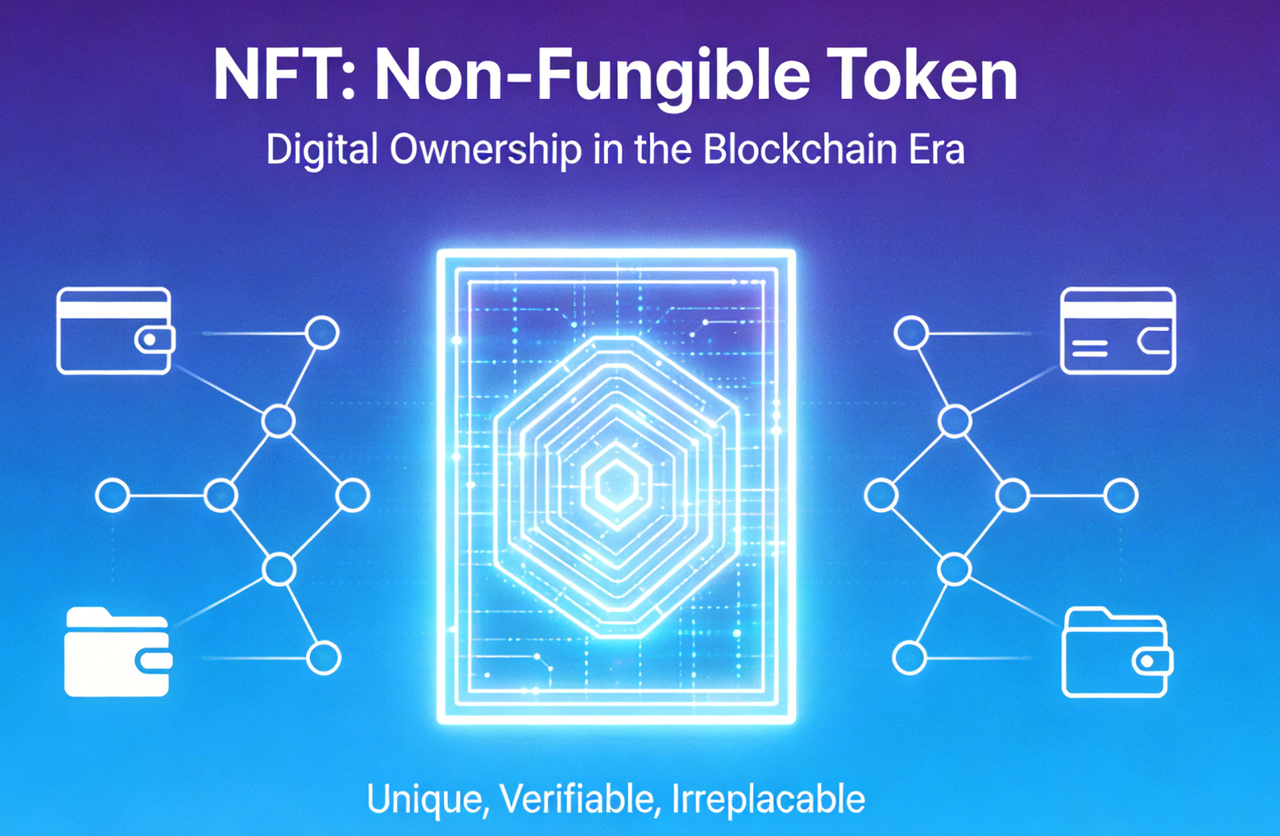
On top of this, NFTs rely on metadata to describe their content, including name, attributes, and the location of associated media files. The actual images, videos, or audio files are usually not stored directly on the blockchain. Instead, they are kept in external systems and referenced through links or hash values within the metadata. This design allows NFTs to maintain uniqueness while avoiding the high cost of on-chain storage.
NFT Storage Models: On-Chain, Off-Chain, and Hybrid
From an architectural perspective, NFT storage falls into three main categories: on-chain storage, off-chain storage, and hybrid storage.
On-chain storage writes all data directly to the blockchain, offering strong immutability. However, due to cost and performance limitations, it is only suitable for small amounts of data. Off-chain storage keeps media files in external systems, while blockchain stores only access paths or hash references. This is the most common approach in practice.
Today, most NFTs use a hybrid model. Ownership and key indexing data are stored on-chain, while large-scale data is stored off-chain. This approach strikes a balance between security, cost, and scalability.
Where Are NFTs Stored? Wallets, Exchanges, and Storage Networks
NFT “storage location” is often misunderstood as being in wallets or trading platforms, but technically, these are just access points.
For example, when users view NFTs through MetaMask, they are actually using their private keys to read blockchain records. Similarly, on platforms like Gate, NFTs are typically held in a custodial manner, where the platform provides management and trading functionality.
The actual storage of NFT data lies in blockchain and off-chain storage networks. Understanding NFT storage requires distinguishing between where ownership is recorded and where content is stored.
How to Evaluate NFT Storage Security
NFT storage security can generally be assessed across three dimensions: whether data can be tampered with, whether it remains accessible over time, and whether the system depends on a single controlling entity.
Blockchains provide strong guarantees for ownership immutability. However, the security of off-chain data depends on the storage system itself. If media files are stored on unstable servers, they may become inaccessible even if the NFT still exists. A complete security evaluation must therefore consider both on-chain and off-chain components.
Centralized vs Decentralized Storage
At the off-chain layer, NFT storage relies on two main types of infrastructure: centralized storage and decentralized storage.
Centralized storage is maintained by a single entity, offering efficiency and stability but introducing the risk of a single point of failure. If the server goes offline or data is deleted, the content linked to the NFT may become unavailable.
Decentralized storage distributes data across a network of nodes, storing redundant copies and verifying integrity through cryptographic hashes. This reduces reliance on a single entity and provides stronger resistance to tampering and censorship.
NFT Cold Storage vs Hot Storage: Security and Use Cases
NFT security involves not only how data is stored, but also how access is managed. Cold storage typically refers to keeping private keys offline, such as in hardware wallets. This significantly reduces exposure to online attacks and is better suited for long-term holding or high-value assets.
In contrast, hot storage involves managing assets through online wallets or exchanges. While more convenient, it is also more vulnerable to attacks. In practice, users often combine both approaches to balance security and usability.
Overview of Major Decentralized Storage Solutions
IPFS
IPFS is a distributed file system based on content addressing. Its core mechanism uses hash values, known as CIDs, to locate data. Once a file is uploaded, its content is bound to a unique hash, making it difficult to alter. IPFS is widely used for storing NFT media files and is one of the most common decentralized storage solutions today.
Arweave
Arweave focuses on long-term data storage. By paying a one-time fee, users can store data on the network permanently. This “permanent storage” model makes it particularly suitable for NFTs that require long-term accessibility.
Filecoin
Filecoin is an incentive-driven decentralized storage network. It allocates storage resources through a market mechanism, where nodes provide storage services in exchange for rewards. This model enhances scalability and makes storage resources more flexible.
Common Ways to Improve NFT Storage Security
Improving NFT storage security typically involves combining multiple layers of architecture. A common approach is to use the blockchain as the ownership layer, decentralized storage networks as the data layer, and cold wallets for private key management, reducing the risk of asset theft.
In addition, ensuring the stability of metadata links, avoiding reliance on a single centralized server, and backing up private keys offline are all critical measures. Together, these practices form a comprehensive NFT storage security framework.
Common Risks and Misconceptions in NFT Storage
In practice, many NFT storage issues stem from misunderstandings of their structure. A common misconception is assuming that NFTs contain the full media file, while overlooking their reliance on off-chain data.
If media files are stored on centralized servers, service disruptions can make NFT content inaccessible. At the same time, losing a private key does not destroy the NFT itself, but it does make the asset impossible to control or transfer. These risks highlight that NFT security depends not only on technology but also on how it is used.
Conclusion
NFT storage is a multi-layered architecture that combines on-chain and off-chain components. The blockchain records ownership and uniqueness, while off-chain systems store the actual content. The prevailing approach uses a hybrid model to balance security, cost, and scalability.
Understanding NFT storage requires distinguishing between data structure and storage location, and evaluating security from a holistic architectural perspective.
FAQs
Are NFTs stored directly on the blockchain?
Most NFTs store only ownership and metadata on-chain, while media files are stored off-chain.
Can NFTs be fully stored on-chain?
Yes, but due to high costs, this is typically limited to small data sizes.
Is storing NFTs on IPFS secure?
IPFS improves data security through distributed networks and hashing, but it usually needs to be combined with persistence solutions.
Do wallets store NFTs?
Wallets manage private keys and provide access, while NFTs themselves always exist on the blockchain.
Is decentralized storage more secure?
It offers advantages in resisting tampering and single points of failure, but still requires a well-designed overall architecture.
How can NFT storage security be improved?
By combining decentralized storage, cold wallet management, and multi-layer backup strategies.