What Is a Directed Acyclic Graph (DAG)?
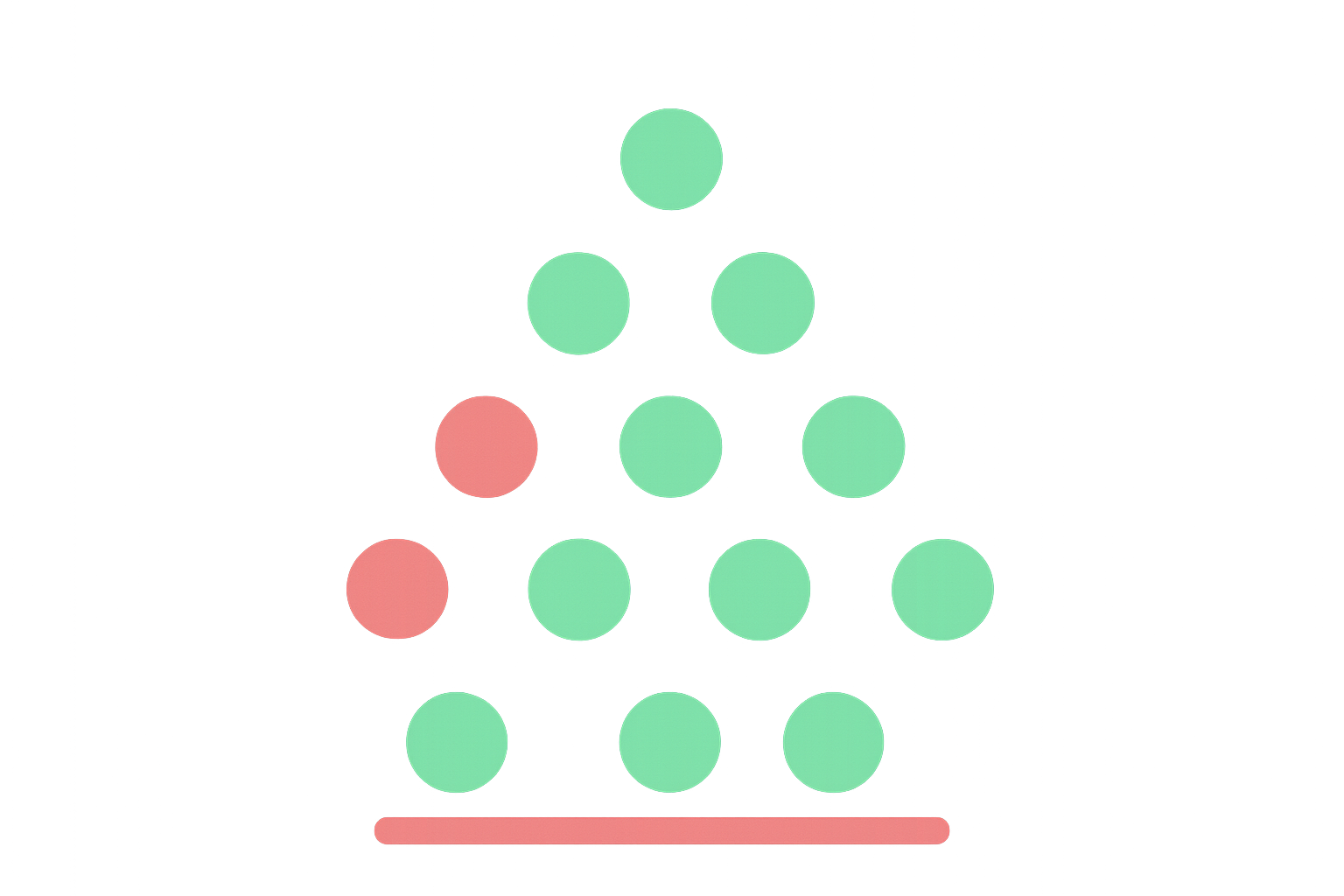
A Directed Acyclic Graph (DAG) is a data structure where each edge (arrow) points forward, forming no loops or cycles. Within crypto networks, DAGs are used to record transactions in parallel rather than arranging every transaction into a single, linear chain.
You can visualize a DAG like a city road network: intersections are nodes, one-way streets are edges, “directed” means you can only follow the arrows, and “acyclic” means you can never return to the starting point no matter which route you take. This setup enables multiple transactions to occur simultaneously and determines their order and validity based on how they reference one another.
DAGs appear in various forms across blockchain projects. For instance, IOTA’s “Tangle” expands by having transactions reference other transactions. Fantom leverages DAG at the consensus layer to record event order. Hedera’s event graph also showcases DAG properties.
How Does a Directed Acyclic Graph Work?
The core principle of DAGs is the “reference relationship.” New transactions reference several existing transactions, allowing the network to determine dependencies, order, and validity.
Structurally, DAG networks maintain an arrangement that never loops back. The commonly mentioned “topological sorting” is essentially organizing items based on their dependencies from earliest to latest, ensuring there are no cycles. As more new transactions reference a particular older transaction, its “recognition” increases and moves closer to confirmation.
In IOTA’s Tangle, nodes use a “tip selection algorithm” to choose unreferenced “tips” (pending transactions) and attach their own transaction to them; the more references a transaction gets, the more secure it becomes. Fantom’s Lachesis achieves consensus via event relationships within the DAG, allowing the network to infer global chronological order. Here, “consensus” means a shared network view of “what happened and in what order.”
Use Cases of DAG in Web3
DAGs are primarily employed to enhance concurrency and confirmation speed, making them ideal for high-frequency, micro-value, and parallel scenarios.
For payments, IOTA targets micropayments and data settlement between IoT devices. Devices act like vehicles in a road network, submitting transactions in parallel and reducing queuing. On public blockchain consensus layers, Fantom uses DAGs to record events, enabling rapid order confirmation and higher throughput—beneficial for DeFi and application chains.
In data on-chain scenarios such as supply chain traceability or sensor data streams, DAG structures allow multiple data points to enter the network concurrently. Reference relationships quickly establish order, improving throughput and real-time performance.
DAG vs. Blockchain: Key Differences
The most fundamental difference lies in data arrangement. Blockchains resemble a timeline where each block follows the previous one. In contrast, DAGs resemble a road network, with transactions or events occurring in parallel and forming a non-circular graph via references.
For confirmation, blockchains typically rely on “batching and producing blocks” to advance time, while DAGs progress confirmations through accumulated recognition—the more new transactions reference an older one, the more solid its confirmation becomes. For users, this means faster concurrent writes; however, true finality (irreversibility) depends on specific implementations and parameters.
On programmability, many blockchains natively support smart contracts—programs that execute automatically on-chain—whereas many DAG projects initially focused more on payments and event recording. Smart contract capabilities were enhanced later or connected via compatibility layers to EVM ecosystems. Actual support varies by project.
How Are Transactions Confirmed in DAG Networks?
Transaction confirmation in DAG relies on accumulated recognition from “new transactions referencing old ones” combined with network consensus processes.
Step 1: A node creates a new transaction and selects “tip” transactions that haven’t been sufficiently referenced yet. The new transaction points its arrows at these tips—akin to connecting a new road segment to two existing one-way streets.
Step 2: The node broadcasts the new transaction across the network. Other nodes verify signatures and reference relationships to ensure there are no cycles or conflicts (such as double-spends from the same account).
Step 3: As more new transactions reference an older transaction, its recognition increases. The network sorts and evaluates consistency within the DAG until finality is reached—meaning the transaction cannot be reversed or reorganized.
Each project handles details differently: IOTA emphasizes tip selection and cumulative weight; Fantom infers block order after consensus is achieved on the event graph. Users benefit from faster confirmations and greater concurrency but should pay attention to each network’s definition of finality.
How to Trade DAG-Based Tokens on Gate?
To participate in assets related to DAG projects, you can trade tokens on Gate. It’s important to note differences among projects and associated risks.
Step 1: Register your account and complete all security settings and necessary verifications to ensure asset safety and compliance.
Step 2: Search for DAG-related tokens on Gate—for example, IOTA (using Tangle), FTM (Fantom’s consensus-layer DAG), HBAR (Hedera’s event graph), NANO (DAG-structured account chains). Technologies vary across projects; always review their documentation carefully.
Step 3: Set price alerts or staggered buying plans within the trading interface. Implement risk controls for volatility—such as limit orders and stop-loss orders.
Step 4: Continuously track project roadmaps and technical progress—throughput, finality, smart contract compatibility, and ecosystem data. When investing funds, make sure you understand all risks and avoid using high leverage.
Risk Notice: Crypto asset prices are highly volatile; technical approaches may evolve or face uncertainty. Always conduct thorough research before trading and accept full responsibility for your decisions.
Risks and Limitations of DAG
The main risks involve complexity and ecosystem maturity. The parallelism and reference mechanisms of DAGs are more intricate; early implementations may require additional security measures. For instance, IOTA introduced the “Coordinator”—a centralized safety feature—to protect its network early on; later versions aim for decentralization, but progress and audit results should be monitored.
In terms of compatibility, some DAG projects don’t fully integrate with mainstream EVM ecosystems; developer tools, smart contract support, cross-chain bridges may limit practical application adoption.
Security-wise, networks must defend against Sybil attacks and double-spending. Projects employ mechanisms like weight accumulation, random selection, reputation systems, or staking to enhance security—but implementation differences affect finality and latency. Users and developers should closely follow actual parameters, audits, and operational metrics.
Adoption Status and Trends of DAG
As of October 2024, public data shows DAG-based projects remain active in areas like high-concurrency payments and event-ordering consensus. IOTA focuses on IoT and data economy; Fantom boosts throughput via DAG consensus while connecting to EVM ecosystems; Hedera’s event graph with aBFT features serves enterprise and regulatory use cases.
Current trends highlight the combination of “DAG + smart contract capabilities,” viable paths for EVM interoperability, and leveraging DAGs for consensus or execution layers in modular architectures to enhance parallelism. Projects often claim high throughput (commonly “thousands of TPS,” based on technical documentation), but real-world performance depends on network size, parameters, and load—always evaluate using empirical data and independent audits.
Summary: Key Takeaways About DAG
DAG enables parallel transaction processing and rapid confirmations via a structure where “transactions reference other transactions,” making it well-suited for high-frequency and concurrent scenarios. Unlike linear blockchains, DAG emphasizes acyclic dependencies and cumulative recognition. When investing in related assets, understand each project’s specific implementation, smart contract and ecosystem compatibility, finality mechanisms, security features—and always maintain risk controls and information tracking during trading on platforms like Gate.
FAQ
How Does DAG Achieve Faster Transaction Speed Than Traditional Blockchains?
DAG systems use parallel processing mechanisms—multiple transactions can be validated at once—whereas blockchains process transactions sequentially by block order. As a result, DAG networks typically deliver higher throughput and much shorter confirmation times under high concurrency.
What Basic Knowledge Should Users Have Before Using DAG Projects?
Understanding the basic concept of DAG (directed acyclic structure) and its transaction confirmation mechanism is sufficient for participation. Typically, DAG projects feature low fees and fast confirmations. Before transferring funds or trading with wallets, review specific project features and risk disclosures on platforms like Gate.
How Are Tokens from DAG Projects Traded on Exchanges?
Most major DAG project tokens are listed on exchanges like Gate. You can trade them directly via spot trading or participate in derivatives for higher returns—but risks apply. It’s recommended to check project info and trading pairs on Gate’s market page before choosing your preferred trading method.
Why Is Activity Lower on Some DAG Projects Compared to Mainstream Blockchains?
DAG technology is relatively new; its developer community and application ecosystem aren’t as mature as established chains like Bitcoin or Ethereum. This means fewer applications run on DAG networks—smaller user bases and market recognition are still building. Before choosing any DAG project, assess its ecosystem development status and team capabilities.
Are There Differences Between Wallets for DAG Projects vs. Ethereum Wallets?
Wallet designs for different DAG projects vary due to protocol differences—but core functions remain similar: storing private keys, signing transactions, managing assets. Always safeguard your private keys; never enter them in public networks—this is a universal security rule for all blockchain wallets.