Understanding Merkle Trees: A Comprehensive Blockchain Guide

Merkle Tree in Blockchain: Understanding Crypto Data Storage
The exponential growth of blockchain networks has created unprecedented challenges in data storage and management. As cryptocurrency transactions accumulate, the burden on network nodes to maintain complete transaction histories continues to intensify. This expansion threatens the core principles of blockchain technology—security, transparency, and decentralization—while demanding increasingly efficient solutions. Merkle trees have emerged as a fundamental cryptographic innovation addressing these challenges, offering an elegant solution to organize and verify blockchain data without compromising network integrity.
What is a Merkle tree in crypto?
A Merkle tree, alternatively known as a hash tree, represents a sophisticated data structure technique specifically designed to organize, summarize, and encrypt transaction data within cryptocurrency blockchain networks. Understanding what is a Merkle tree begins with recognizing this groundbreaking concept that originated from computer scientist Ralph Merkle, who introduced and patented the methodology in 1979. Since its inception, Merkle trees have become an indispensable component of blockchain architecture, serving as a cornerstone technology for processing and arranging information across cryptographic networks.
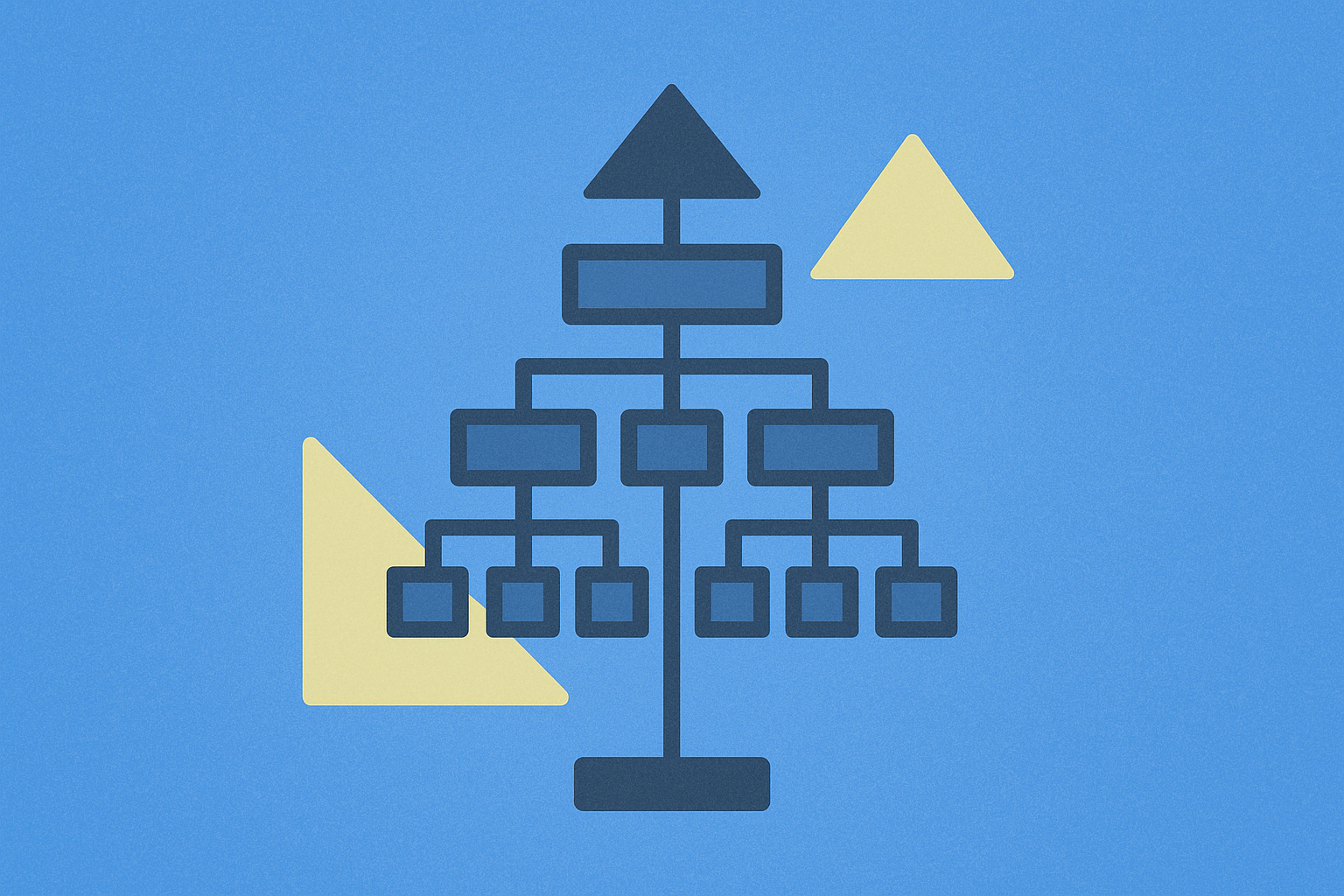
The structural design of Merkle trees mirrors their namesake, exhibiting a hierarchical tree-like organization comprising three fundamental components: the Merkle root, Merkle branches, and Merkle leaves. Each component serves a distinct purpose in the data organization hierarchy. The leaves function as the foundation, containing unique identifiers for individual transactions. Branches occupy the intermediate level, aggregating and containing data from combined leaf transactions. At the apex sits the Merkle root, which encapsulates a comprehensive summary of all transaction information contained within a single block.
This interconnected architecture creates a powerful data compression mechanism. The Merkle root serves as a singular representation of all underlying data, dramatically reducing memory storage requirements for network nodes. Rather than recording every individual transaction in full detail, nodes can maintain blockchain integrity by preserving only the root value. Furthermore, this clear organizational structure significantly enhances data accessibility, enabling node operators and cryptocurrency traders to efficiently navigate transaction histories and locate specific transactions with precision.
How does a Merkle tree work in blockchain?
Understanding what is a Merkle tree and how it functions requires familiarity with cryptographic hash functions, which form the technological foundation of this data structure. A cryptographic hash function operates as a one-way mathematical algorithm that transforms digital data into an irreversible, unique, and fixed-length alphanumeric string. This string, called a hash value, serves as a distinctive fingerprint for the associated input data. In cryptocurrency applications, these input values represent blockchain transactions, ensuring that every crypto transfer receives a distinct hash value through the hashing process.
Merkle trees leverage the deterministic and reliable properties of cryptographic hash functions to create a systematic summary of transaction data through a bottom-up construction process. The process begins at the foundational level, where the blockchain generates individual hash values for each separate transaction, creating the Merkle leaves. Subsequently, the algorithm pairs and combines these leaf values, applying the hash function to create new hash values representing Merkle branches. This iterative hashing process continues hierarchically, with branches combining to form higher-level branches, until the algorithm produces a single hash value—the Merkle root—that cryptographically represents every transaction contained within the block.
For example, if a block contains eight transactions, the Merkle tree would first create eight leaf hashes. These eight leaves would then be paired and hashed to create four branch hashes. The four branches would combine to form two higher-level branches, which would finally merge to produce one Merkle root. This elegant mathematical process ensures data integrity while dramatically reducing storage requirements, as the entire transaction history can be verified through the single root hash.
What are the benefits of Merkle trees in blockchain?
When exploring what is a Merkle tree, it's essential to understand how Merkle trees provide cryptocurrency networks with substantial advantages extending beyond simple data compression, fundamentally enhancing both operational efficiency and security infrastructure. These benefits have established Merkle trees as an essential technology for sustainable blockchain development and scalability.
The primary advantage lies in creating compact files for large datasets. Each Merkle root hash functions as a complete cryptographic representation of multiple transactions within a block, significantly reducing the memory space required for storing and sharing current network activity records. This reduced data burden democratizes blockchain participation by lowering hardware requirements for node operation. Consequently, more individuals and organizations can feasibly operate validation nodes, directly strengthening the network's decentralization, scalability, and overall efficiency. This accessibility is crucial for maintaining the distributed nature of blockchain technology as transaction volumes continue to grow.
Merkle trees also provide robust tamper detection capabilities. The cryptographic interdependence of hash values creates an immutable data structure where each hash mathematically relates to preceding transaction values throughout the tree hierarchy. This relationship makes it computationally infeasible to alter information associated with any leaf, branch, or root without triggering detectable changes across the entire network. The complex cryptographic interrelationship enables nodes to immediately identify signs of data manipulation, maintaining network integrity and error-free operation.
Additionally, Merkle trees boost security through collision resistance, a fundamental property of cryptographic hash functions. Collision resistance ensures that finding two different input values that produce identical hash outputs remains computationally infeasible with current technology. This feature further reinforces blockchain integrity by guaranteeing that all data contained within Merkle trees possesses unique and cryptographically verifiable identifiers, preventing forgery and unauthorized modifications.
What is a Merkle tree proof of reserve?
While Merkle trees are predominantly recognized for their role in processing blockchain transactions, particularly on networks like Bitcoin, their application has expanded significantly into the realm of financial transparency and verification. Understanding what is a Merkle tree in this context reveals one notable implementation involving proof of reserve (PoR) verification for cryptocurrency trading platforms and decentralized applications (dApps).
Proof of reserve represents a transparent reporting mechanism that discloses the assets and liabilities of cryptocurrency businesses or Web3 protocols, providing stakeholders with verifiable evidence of financial solvency. In this application, trading platforms construct Merkle trees using individual client account data as leaves, systematically building up through branches to create a comprehensive Merkle root representing their total liabilities. The inherent tamper-resistance of hash functions within Merkle tree structures enables third-party auditors to efficiently verify the legitimacy of PoR claims, confirming that reported on-hand assets adequately cover current liabilities.
This methodology offers additional benefits for individual crypto traders and clients. The transparent structure of Merkle trees allows users to independently identify and verify their specific transaction data or account leaves within the overarching root function, without requiring access to other users' private information. While trading platforms employ various techniques to demonstrate PoR, including periodic balance screenshots, Merkle trees have emerged as the preferred standard due to their mathematical transparency, cryptographic security, and elimination of third-party intermediary dependencies.
Merkle trees vs. Verkle trees: What's the difference?
The evolution of blockchain data structures continues with innovative developments like Verkle trees, representing the latest iteration in optimizing scalability beyond traditional Merkle tree capabilities. When examining what is a Merkle tree in comparison to emerging technologies, computer scientist John Kuszmaul introduced Verkle trees in 2018, proposing a novel approach to further reduce bandwidth requirements and enhance network efficiency.
The fundamental distinction between Merkle trees and Verkle trees lies in their underlying cryptographic methodology. While Merkle trees utilize cryptographic hash functions to create secure connections between leaves and branches, Verkle trees propose implementing vector commitments as an alternative mechanism for producing cryptographically secure branches. This technological shift aims to minimize the data requirements for nodes when proving transaction validity. In the Verkle tree model, nodes only need to scan relatively small cryptographic proofs rather than traversing associated hash values throughout the entire tree structure, as required in traditional Merkle tree implementations.
Verkle trees promise enhanced scalability for blockchain networks, attracting attention from major projects like Ethereum, which has incorporated Verkle tree research into future upgrade proposals. However, this technology remains in experimental stages within the cryptocurrency sector. The complexity of Verkle tree deployment requires extensive research, testing, and real-world implementation before developers can comprehensively understand the practical advantages and potential limitations compared to established Merkle tree systems. The cryptocurrency community anticipates that ongoing development and evaluation will be necessary to fully assess the viability and optimal use cases for Verkle trees in production blockchain environments.
Conclusion
Merkle trees stand as a foundational innovation in blockchain technology, addressing critical challenges in data storage, verification, and scalability. Understanding what is a Merkle tree reveals how through their hierarchical structure of leaves, branches, and roots, these systems enable efficient compression of vast transaction datasets while maintaining cryptographic security and integrity. The benefits they provide—including compact data representation, tamper detection, and collision resistance—have made them indispensable for cryptocurrency networks like Bitcoin and Ethereum, as well as for applications beyond transaction processing, such as proof of reserve verification.
As blockchain technology continues to evolve, Merkle trees remain central to enabling decentralization and accessibility for network participants. The emergence of next-generation structures like Verkle trees demonstrates ongoing efforts to further optimize blockchain efficiency, though traditional Merkle trees have proven their reliability and effectiveness through years of successful implementation. Understanding what is a Merkle tree is essential for anyone seeking to comprehend the technical foundations that make modern cryptocurrency networks secure, transparent, and scalable. Their elegant mathematical design exemplifies how cryptographic innovations can solve complex real-world problems while preserving the core principles of decentralized technology.
FAQ
What is the meaning of Merkle?
Merkle is a German surname meaning 'guard of the frontier.' In crypto, it's associated with the Merkle tree, a key data structure used in blockchain technology.
What is a Merkle used for?
Merkle trees are used for efficient data verification and synchronization in distributed systems, ensuring data integrity and consistency.
What's the difference between Merkle and hash trees?
Merkle trees and hash trees are essentially the same concept in cryptography. Both use hash functions to create a hierarchical structure for efficient data verification and integrity checks.
Share
Content
How to Buy Cryptocurrency


Trending Cryptocurrencies



XZXX: A Comprehensive Guide to the BRC-20 Meme Token in 2025

Bitcoin Fear and Greed Index: Market Sentiment Analysis for 2025

Top Crypto ETFs to Watch in 2025: Navigating the Digital Asset Boom

5 ways to get Bitcoin for free in 2025: Newbie Guide

Bitcoin Market Cap in 2025: Analysis and Trends for Investors
2025 Bitcoin Price Prediction: Trump's Tariffs' Impact on BTC

XLM vs ETC: A Comprehensive Comparison of Two Emerging Blockchain Networks

What is SUI: A Comprehensive Guide to the Next-Generation Blockchain Platform

What is LTC: A Comprehensive Guide to Litecoin's Technology, Uses, and Investment Potential
What is ZEC: A Comprehensive Guide to Zcash and Its Privacy Features

What is XLM: A Comprehensive Guide to Stellar Lumens and Its Role in Cross-Border Payments