

Trade
Basic
Futures
Futures
Hundreds of contracts settled in USDT or BTC
TradFi
Gold
Trade global traditional assets with USDT in one place
Options
Hot
Trade European-style vanilla options
Unified Account
Maximize your capital efficiency
Demo Trading
Futures Kickoff
Get prepared for your futures trading
Futures Events
Participate in events to win generous rewards
Demo Trading
Use virtual funds to experience risk-free trading
Earn
Launch
CandyDrop
Collect candies to earn airdrops
Launchpool
Quick staking, earn potential new tokens
HODLer Airdrop
Hold GT and get massive airdrops for free
Launchpad
Be early to the next big token project
Alpha Points
Trade on-chain assets and enjoy airdrop rewards!
Futures Points
Earn futures points and claim airdrop rewards
Investment
Simple Earn
Earn interests with idle tokens
Auto-Invest
Auto-invest on a regular basis
Dual Investment
Buy low and sell high to take profits from price fluctuations
Soft Staking
Earn rewards with flexible staking
Crypto Loan
0 Fees
Pledge one crypto to borrow another
Lending Center
One-stop lending hub
VIP Wealth Hub
Customized wealth management empowers your assets growth
Private Wealth Management
Customized asset management to grow your digital assets
Quant Fund
Top asset management team helps you profit without hassle
Staking
Stake cryptos to earn in PoS products
Smart Leverage
New
No forced liquidation before maturity, worry-free leveraged gains
GUSD Minting
Use USDT/USDC to mint GUSD for treasury-level yields

More


Trending Topics
View More77.75K Popularity
5.24K Popularity
1.66K Popularity
2.39K Popularity
6.92K Popularity



Pin
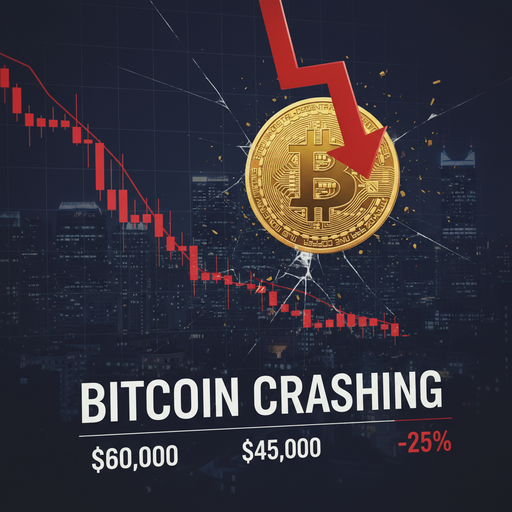
Gate Square | 2/5 Today's Hot Topic: #BuyTheDipOrWaitNow?
🎁 [Community Perk] Post with the topic or #BTC, 10 lucky users * $100 position Voucher.
Market volatility continues as BTC breaks below the $74,000 key support level, with altcoins pulling back in sync. Are you buying the dip in batches or waiting for a better entry point?
💬 Today’s Discussion:
1️⃣ Bottom Signals: Where do you see BTC’s bottom — $70,000 or lower?
2️⃣ Market Drivers: Which recent macroeconomic news or rumors are influencing the market?
3️⃣ Dark Horses: Are there any resilient or outperforming tokens worth watching?
ShTap to Trade in Gate Square, Win up to 50 GT & Merch!
Click the trading widget in Gate Square content, complete a transaction, and take home 50 GT, Position Experience Vouchers, or exclusive Spring Festival merchandise.
Click the registration link to join
https://www.gate.com/questionnaire/7401
Enter Gate Square daily and click any trading pair or trading card within the content to complete a transaction. The top 10 users by trading volume will win GT, Gate merchandise boxes, position experience vouchers, and more.
The top prize: 50 GT.
 was the age of static information. Websites primarily provided one-way information display, lacking user interaction. The interface design was simple, with content mainly consisting of text and knowledge bases, with virtually no multimedia elements. The rise of search engines like Yahoo! and AltaVista marked a transformation in internet information retrieval. This period laid the technical foundation for subsequent internet development.
Web 2.0 Era (2004–present) introduced user interaction and content creation. Web applications like Gmail and Google Maps, social platforms such as Facebook and Twitter, and the proliferation of cloud technology turned the internet into a multimedia and interactive platform. The key feature of this era is that users are both consumers and content creators; community interaction and content sharing became core drivers. However, Web 2.0 also brought a problem: user data and privacy are often centrally controlled and exploited by large tech companies.
Web3 Era is breaking this centralized data control model. Built on principles of decentralization, transparency, and automation, Web3 gives users full control over their data and digital identities.
Deconstructing the Technical Foundations of Web3
Web3’s implementation relies on several key technologies:
Blockchain technology is the core infrastructure of Web3. Blockchain is a distributed database where information is stored across multiple nodes in the network, rather than on a single central server. Each data block is linked to the previous one via cryptographic algorithms, forming an immutable chain. This design ensures data integrity and enhances transparency of online transactions. Anyone can verify records on the blockchain, but no one can modify historical data alone.
Smart contracts are automated executable computer programs. Contract terms are written in code, and once deployed on the blockchain, they cannot be altered. Smart contracts automate business processes, eliminating the need for third-party intermediaries, significantly reducing transaction costs and time. For example, in DeFi applications, lending protocols are executed automatically via smart contracts, allowing users to bypass banks and other intermediaries.
Decentralized applications (DApps) are applications built on blockchain or distributed networks. Unlike traditional apps that rely on centralized servers, DApps do not depend on any single service provider, offering higher security and resistance to censorship. DApps provide users with true independence to participate in and control online services.
Distributed computing is vital in Web3. Computing and data storage are dispersed across multiple network nodes, removing reliance on central servers and creating a more decentralized and secure data ecosystem.
User privacy and data ownership are core features of Web3. Users have complete control over their personal data and how it is used, without being collected and exploited opaquely by large corporations. This shift in data sovereignty has profound implications for protecting user privacy.
Main Features and Advantages of Web3
Decentralization is the most fundamental feature of Web3. Power and control are distributed among network participants rather than concentrated in a few large entities. This eliminates traditional intermediaries and fosters a more democratic online environment.
Permissionless access means anyone can freely participate and develop in Web3 without approval or registration. This creates open conditions for innovation.
Independent payment systems use cryptocurrencies as a means of payment, independent of traditional banking infrastructure. Users can conduct cross-border transactions without third-party intermediaries.
Trustless mechanisms rely on technology and economic incentives rather than dependence on a single institution. Blockchain transparency and automatic execution of smart contracts ensure transaction reliability.
Open-source architecture encourages contributions from developer communities, fostering technological innovation and transparency.
Web3’s advantages are not only technological but also challenge existing power structures. Eliminating intermediaries results in lower costs, faster transactions, and greater user autonomy. Security and privacy are protected at the technical level, preventing cyberattacks and fraud. Blockchain’s transparency helps prevent corruption. The emergence of DeFi opens new opportunities for financial inclusion, allowing unbanked populations access to financial services.
Challenges Facing Web3
Despite its promising prospects, Web3 faces significant challenges. Many technologies are still in early development and testing phases, with performance and stability needing improvement. Some blockchain platforms (especially proof-of-work systems) consume large amounts of energy, raising environmental concerns.
Accessibility remains a bottleneck—especially for ordinary users lacking technical knowledge, using Web3 can still be challenging. While blockchain is considered more secure, vulnerabilities such as 51% attacks and smart contract bugs exist. Cryptocurrency market volatility also presents high risks; investors should exercise caution.
Addressing these challenges requires collaboration among developers, businesses, and regulators to ensure Web3 develops sustainably and benefits everyone.
Investment Opportunities in the Web3 Era
The potential applications of Web3 drive four categories of crypto assets worth关注:
Ethereum (ETH) is not just a cryptocurrency but a leading platform for developing decentralized applications and smart contracts. With the launch of Ethereum 2.0, transaction fees and scalability issues have improved. Currently, Ethereum is priced at $2.11K, with a 24-hour decrease of -3.33%, a circulating market cap of $255.15B, and a 24-hour trading volume of $735.21M. It continues to be regarded as a key infrastructure for Web3.
Polkadot (DOT) is a cross-chain protocol platform aiming to connect multiple independent blockchains into a unified ecosystem. Led by Gavin Wood, one of Ethereum’s co-founders, Polkadot has gained widespread attention in the Web3 community. Currently, DOT’s price is $1.45, with a 24-hour decrease of -1.56%, a market cap of $2.40B, and a 24-hour trading volume of $1.46M.
Chainlink (LINK) bridges smart contracts and off-chain data through its Oracle mechanism. It plays a crucial role in connecting blockchain projects with real-world data. LINK is currently priced at $9.16, with a 24-hour decrease of -1.43%, a market cap of $6.49B, and a 24-hour trading volume of $12.32M. It is one of the most promising projects in Web3 infrastructure.
Filecoin (FIL) is a decentralized storage platform based on blockchain, allowing users to buy and sell storage services and access data. FIL’s current price is $1.05, with a 24-hour decrease of -0.09%, a market cap of $780.80M, and a 24-hour trading volume of $2.33M. With a large ecosystem, Filecoin shows great potential in promoting decentralized storage and data management.
Future Outlook of Web3
The development of Web3 will focus on several core directions:
Expansion of decentralized platforms—Ethereum, Polkadot, Cosmos, and others will continue to evolve, enabling developers to build various decentralized applications. Cross-chain interoperability will become a key focus, making communication between different blockchains more seamless.
Widespread adoption of digital assets and NFTs—The scope of digital assets and non-fungible tokens (NFTs) will expand, creating new opportunities in art, education, e-commerce, and identity verification.
Deepening and diversifying DeFi—Decentralized finance will introduce more innovative products, providing broad access to financial services worldwide without traditional intermediaries. Lending, swapping, derivatives trading, and other functions will become more mature.
Strengthening security and privacy—Web3 will invest more in security audits and privacy-preserving technologies (such as zero-knowledge proofs), especially for protecting personal and financial data.
Improvement of decentralized network infrastructure—Development of new network protocols and node technologies will reduce reliance on traditional service providers, enhancing internet resistance to censorship and scalability.
Conclusion
Web3 marks an important milestone in the evolution of the internet. Through decentralization, transparency, and user autonomy, it offers new possibilities for the digital world. From breaking intermediaries’ dominance to protecting user privacy, from financial innovation to diverse applications, Web3 is reshaping our relationship with networks and data.
Although Web3 still faces technological, regulatory, and user education challenges, its prospects are undoubtedly bright. For developers, entrepreneurs, and ordinary users, understanding and participating in Web3 will be a crucial step to seize future opportunities. Whether as investors or technology users, those well-prepared will better enjoy the benefits brought by this digital revolution.