

Trade
Basic
Futures
Futures
Hundreds of contracts settled in USDT or BTC
TradFi
Gold
Trade global traditional assets with USDT in one place
Options
Hot
Trade European-style vanilla options
Unified Account
Maximize your capital efficiency
Demo Trading
Futures Kickoff
Get prepared for your futures trading
Futures Events
Participate in events to win generous rewards
Demo Trading
Use virtual funds to experience risk-free trading
Earn
Launch
CandyDrop
Collect candies to earn airdrops
Launchpool
Quick staking, earn potential new tokens
HODLer Airdrop
Hold GT and get massive airdrops for free
Launchpad
Be early to the next big token project
Alpha Points
Trade on-chain assets and enjoy airdrop rewards!
Futures Points
Earn futures points and claim airdrop rewards
Investment
Simple Earn
Earn interests with idle tokens
Auto-Invest
Auto-invest on a regular basis
Dual Investment
Buy low and sell high to take profits from price fluctuations
Soft Staking
Earn rewards with flexible staking
Crypto Loan
0 Fees
Pledge one crypto to borrow another
Lending Center
One-stop lending hub
VIP Wealth Hub
Customized wealth management empowers your assets growth
Private Wealth Management
Customized asset management to grow your digital assets
Quant Fund
Top asset management team helps you profit without hassle
Staking
Stake cryptos to earn in PoS products
Smart Leverage
New
No forced liquidation before maturity, worry-free leveraged gains
GUSD Minting
Use USDT/USDC to mint GUSD for treasury-level yields

More


Trending Topics
View More80.14K Popularity
6.81K Popularity
1.96K Popularity
2.93K Popularity
7.5K Popularity



Pin
Gate Square | 2/5 Today's Hot Topic: #BuyTheDipOrWaitNow?
🎁 [Community Perk] Post with the topic or #BTC, 10 lucky users * $100 position Voucher.
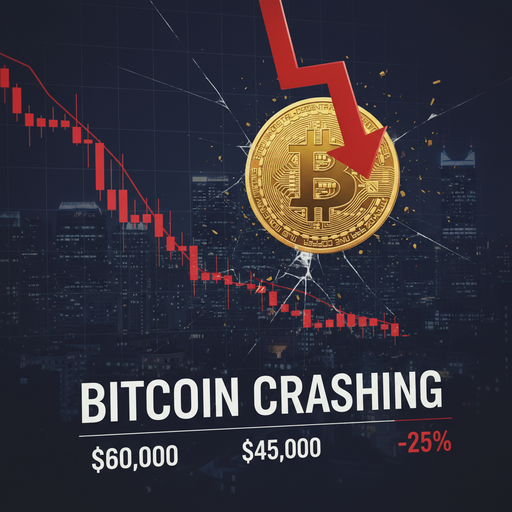
Market volatility continues as BTC breaks below the $74,000 key support level, with altcoins pulling back in sync. Are you buying the dip in batches or waiting for a better entry point?
💬 Today’s Discussion:
1️⃣ Bottom Signals: Where do you see BTC’s bottom — $70,000 or lower?
2️⃣ Market Drivers: Which recent macroeconomic news or rumors are influencing the market?
3️⃣ Dark Horses: Are there any resilient or outperforming tokens worth watching?
ShTap to Trade in Gate Square, Win up to 50 GT & Merch!
Click the trading widget in Gate Square content, complete a transaction, and take home 50 GT, Position Experience Vouchers, or exclusive Spring Festival merchandise.
Click the registration link to join
https://www.gate.com/questionnaire/7401
Enter Gate Square daily and click any trading pair or trading card within the content to complete a transaction. The top 10 users by trading volume will win GT, Gate merchandise boxes, position experience vouchers, and more.
The top prize: 50 GT.
![Spring Festival merchandise](https://exampl
A New Perspective on Layered Understanding of Blockchain Scalability: Vitalik Buterin's Viewpoint
Vitalik Buterin recently elaborated on his layered understanding of blockchain scalability. According to Odaily’s report, the Ethereum co-founder divides the complexity of scaling blockchain systems into three levels, from easiest to hardest: computation, data, and state. This framework offers a new perspective for understanding the current bottlenecks in blockchain systems.
Buterin emphasizes that the varying difficulty in understanding blockchain scalability is key to deepening knowledge in this field. He points out that the computation layer is relatively easier to optimize, and developers can achieve scalability through various methods, including leveraging “tips” provided by block producers for parallel processing or replacing complex on-chain calculations with cryptographic solutions like zero-knowledge proofs. These approaches have been validated in practice and show promising scalability potential.
Optimization Opportunities and Technical Challenges at the Data Layer
Data scalability is positioned in the middle, with moderate difficulty but still requiring innovation. The key at this layer is ensuring data availability without overburdening network nodes. To achieve this balance, industry practices include data sharding, erasure coding, and other technical solutions. The PeerDAS protocol is a representative example, allowing low-capacity nodes to participate in block production without storing the full data. Additionally, designing for “graceful degradation” is also important—meaning that even if some nodes have limited data processing capabilities, the entire system can still operate normally.
The Fundamental Challenge of State Expansion
State scalability is the most difficult challenge. Buterin points out that verifying any individual transaction requires nodes to have complete state information. Even if the state is abstracted into a tree structure, retaining only the root hash, updating this root still depends on accessing and computing the entire state. Existing state sharding solutions often require significant architectural reforms, and their general applicability and feasibility face serious tests.
Strategic Thinking on Scalability Priorities
Based on this layered understanding, Buterin proposes an important principle for optimization strategies. If data mechanisms can replace the role of state without introducing new centralization assumptions, this should be the developers’ top priority. Similarly, if computation can substitute for data functions without compromising decentralization, such solutions are also worth considering. This prioritization reflects a steadfast commitment to protecting the essence of network decentralization—minimizing node state maintenance burdens while ensuring security.
This layered understanding provides theoretical guidance for current and future blockchain scaling solutions, helping developers and researchers clarify their direction amid numerous technical options.