

Trade
Basic
Futures
Futures
Hundreds of contracts settled in USDT or BTC
TradFi
Gold
Trade global traditional assets with USDT in one place
Options
Hot
Trade European-style vanilla options
Unified Account
Maximize your capital efficiency
Demo Trading
Futures Kickoff
Get prepared for your futures trading
Futures Events
Participate in events to win generous rewards
Demo Trading
Use virtual funds to experience risk-free trading
Earn
Launch
CandyDrop
Collect candies to earn airdrops
Launchpool
Quick staking, earn potential new tokens
HODLer Airdrop
Hold GT and get massive airdrops for free
Launchpad
Be early to the next big token project
Alpha Points
Trade on-chain assets and enjoy airdrop rewards!
Futures Points
Earn futures points and claim airdrop rewards
Investment
Simple Earn
Earn interests with idle tokens
Auto-Invest
Auto-invest on a regular basis
Dual Investment
Buy low and sell high to take profits from price fluctuations
Soft Staking
Earn rewards with flexible staking
Crypto Loan
0 Fees
Pledge one crypto to borrow another
Lending Center
One-stop lending hub
VIP Wealth Hub
Customized wealth management empowers your assets growth
Private Wealth Management
Customized asset management to grow your digital assets
Quant Fund
Top asset management team helps you profit without hassle
Staking
Stake cryptos to earn in PoS products
Smart Leverage
New
No forced liquidation before maturity, worry-free leveraged gains
GUSD Minting
Use USDT/USDC to mint GUSD for treasury-level yields

More


Trending Topics
View More77.98K Popularity
5.59K Popularity
1.66K Popularity
2.46K Popularity
6.92K Popularity



Pin
Gate Square | 2/5 Today's Hot Topic: #BuyTheDipOrWaitNow?
🎁 [Community Perk] Post with the topic or #BTC, 10 lucky users * $100 position Voucher.
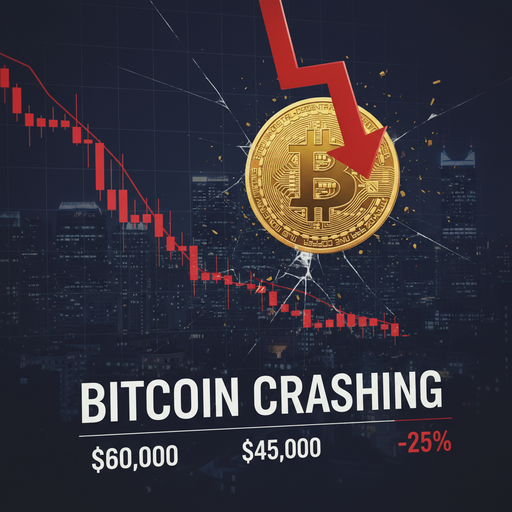
Market volatility continues as BTC breaks below the $74,000 key support level, with altcoins pulling back in sync. Are you buying the dip in batches or waiting for a better entry point?
💬 Today’s Discussion:
1️⃣ Bottom Signals: Where do you see BTC’s bottom — $70,000 or lower?
2️⃣ Market Drivers: Which recent macroeconomic news or rumors are influencing the market?
3️⃣ Dark Horses: Are there any resilient or outperforming tokens worth watching?
ShTap to Trade in Gate Square, Win up to 50 GT & Merch!
Click the trading widget in Gate Square content, complete a transaction, and take home 50 GT, Position Experience Vouchers, or exclusive Spring Festival merchandise.
Click the registration link to join
https://www.gate.com/questionnaire/7401
Enter Gate Square daily and click any trading pair or trading card within the content to complete a transaction. The top 10 users by trading volume will win GT, Gate merchandise boxes, position experience vouchers, and more.
The top prize: 50 GT.
![Spring Festival merchandise](https://exampl
Vitalik Buterin Adjusts Perspective: The Three Duy in Blockchain State Commitment Design
Recently, Vitalik Buterin has publicly acknowledged a shift in his thinking regarding one of the fundamental concepts of blockchain: whether a blockchain needs to commit to state or not. According to ChainCatcher, the Ethereum founder has detailed the reasons behind this adjustment and emphasized the importance of the three virtues in modern blockchain design.
From Skepticism to Acceptance: Why Stateless Design Is Feasible
Initially, Buterin disagreed with the idea of allowing a blockchain to operate without explicit state commitments. The main reason is that if a network is not bound to a state, users would have to verify the entire transaction history from the genesis block or rely on a single trusted intermediary service. Both scenarios fail to achieve the three virtues that a decentralized blockchain system should have. However, recent technological developments have changed this picture.
Ethereum employs a different approach: it commits to the root of the state in each block header. This method allows users to verify the state based on the assumption that the majority of network participants are honest, through the use of Merkle proofs. This design strikes a balance between security and efficiency, although it is not always perfect.
Zero-Knowledge Proofs: The Key to the Three Virtues for Development
Buterin’s change of perspective mainly stems from the maturity of zero-knowledge technology, especially ZK-SNARKs. These technologies represent a significant breakthrough because they enable systems to verify the correctness of a blockchain without re-executing every transaction. This opens the possibility of truly achieving the three virtues: ensuring high security while maintaining scalability to serve millions of users.
With zero-knowledge proofs, a user can confirm that the current state of the blockchain is valid without having to review the entire history. This is a major advancement over previous solutions.
Autonomy as a Foundation: Building a Secure Network for the Future
Beyond technical advances, Buterin also emphasizes another critical factor: the existence of independent self-verification options. He reflected on the real risks faced by blockchain systems: network disruptions, service provider outages, concentrated power in consensus, and dangers of centralized censorship.
According to Buterin, the concept known in the community as the “mountain cabin” is not meant for everyday use. Instead, it serves as a last-resort safety net in extreme crisis situations and as a tool to resist control by intermediaries. The three virtues of blockchain lie in the ability for anyone to verify independently without relying on others.
Maintaining this minimal yet feasible self-verification path is the key to Ethereum’s long-term development. It ensures that even in the worst cases, users retain full control over their assets and data.