

Trade
Basic
Futures
Futures
Hundreds of contracts settled in USDT or BTC
TradFi
Gold
Trade global traditional assets with USDT in one place
Options
Hot
Trade European-style vanilla options
Unified Account
Maximize your capital efficiency
Demo Trading
Futures Kickoff
Get prepared for your futures trading
Futures Events
Participate in events to win generous rewards
Demo Trading
Use virtual funds to experience risk-free trading
Earn
Launch
CandyDrop
Collect candies to earn airdrops
Launchpool
Quick staking, earn potential new tokens
HODLer Airdrop
Hold GT and get massive airdrops for free
Launchpad
Be early to the next big token project
Alpha Points
Trade on-chain assets and enjoy airdrop rewards!
Futures Points
Earn futures points and claim airdrop rewards
Investment
Simple Earn
Earn interests with idle tokens
Auto-Invest
Auto-invest on a regular basis
Dual Investment
Buy low and sell high to take profits from price fluctuations
Soft Staking
Earn rewards with flexible staking
Crypto Loan
0 Fees
Pledge one crypto to borrow another
Lending Center
One-stop lending hub
VIP Wealth Hub
Customized wealth management empowers your assets growth
Private Wealth Management
Customized asset management to grow your digital assets
Quant Fund
Top asset management team helps you profit without hassle
Staking
Stake cryptos to earn in PoS products
Smart Leverage
New
No forced liquidation before maturity, worry-free leveraged gains
GUSD Minting
Use USDT/USDC to mint GUSD for treasury-level yields

More


Trending Topics
View More79.51K Popularity
6.33K Popularity
1.91K Popularity
2.91K Popularity
7.21K Popularity



Pin
Gate Square | 2/5 Today's Hot Topic: #BuyTheDipOrWaitNow?
🎁 [Community Perk] Post with the topic or #BTC, 10 lucky users * $100 position Voucher.
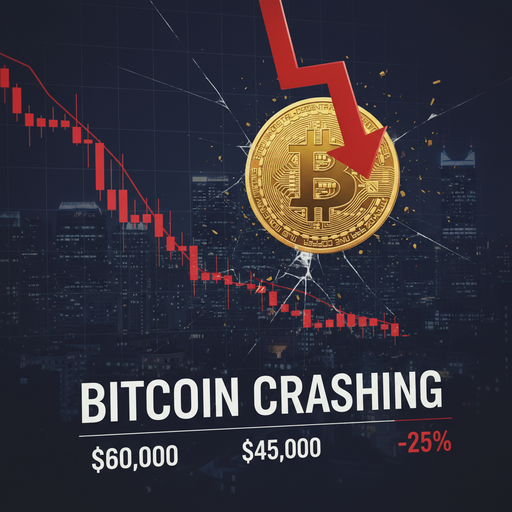
Market volatility continues as BTC breaks below the $74,000 key support level, with altcoins pulling back in sync. Are you buying the dip in batches or waiting for a better entry point?
💬 Today’s Discussion:
1️⃣ Bottom Signals: Where do you see BTC’s bottom — $70,000 or lower?
2️⃣ Market Drivers: Which recent macroeconomic news or rumors are influencing the market?
3️⃣ Dark Horses: Are there any resilient or outperforming tokens worth watching?
ShTap to Trade in Gate Square, Win up to 50 GT & Merch!
Click the trading widget in Gate Square content, complete a transaction, and take home 50 GT, Position Experience Vouchers, or exclusive Spring Festival merchandise.
Click the registration link to join
https://www.gate.com/questionnaire/7401
Enter Gate Square daily and click any trading pair or trading card within the content to complete a transaction. The top 10 users by trading volume will win GT, Gate merchandise boxes, position experience vouchers, and more.
The top prize: 50 GT.
 system, which allowed ordinary people to encrypt their correspondence. For the cypherpunks, this was not just a technical development but a tool for embodying their fundamental principle — the right of every individual to privacy.
Technological Precursors and the Path to Digital Money
Ideas of privacy and cryptographic protection required practical implementation. In 1997, Adam Back introduced Hashcash — a system that uses computational resources to prevent spam in email. This mechanism became a prototype for the proof-of-work system, which would later be applied in Bitcoin.
Development continued in 1998 when Wei Dai published a description of B-Money, a concept of electronic currency based on cryptographic principles and distributed computing. Hal Finney in 2004 expanded on the idea of reusable proof of work, and Nick Szabo in 2005 proposed the Bitgold project, which combined cryptography with economic principles. Each of these experiments contributed new knowledge, bringing humanity closer to the ideal of a fully decentralized digital currency.
October 2008: The Birth of Bitcoin and the Triumph of Cypherpunk Ideas
When in October 2008, the author using the pseudonym Satoshi Nakamoto sent his white paper “Bitcoin: A Peer-to-Peer Electronic Cash System” to the cypherpunk mailing list, it was not just a technological proposal. It was a synthesis of all the ideas that the cypherpunks had been developing and defending for over a decade and a half.
Nakamoto solved problems that had stumped previous developers. He proposed an elegant solution to the double-spending problem without the need for a central verifying authority. The blockchain — his innovative approach to maintaining a distributed ledger — guaranteed transaction integrity solely through cryptographic methods and network consensus.
In January 2009, Nakamoto mined the genesis block, the first block in the Bitcoin network. This moment marked not just the creation of a new currency but the emergence of a fully functional system embodying all the principles that cypherpunks believed were necessary for humanity’s financial freedom. Privacy, cryptographic protection, the absence of a central authority, transparent rules for all participants — all of this became a reality.
Thus, the story of Bitcoin does not begin in 2008 but traces back to the cypherpunk movement of the 1990s. The vision of these pioneers — that cryptography can guarantee personal freedom and privacy — was fully realized in the architecture of the first successful cryptocurrency. Today’s boom in blockchain and digital assets is the result of the seed planted by the cypherpunks more than three decades ago.