
Futures
Access hundreds of perpetual contracts
TradFi
Gold
One platform for global traditional assets
Options
Hot
Trade European-style vanilla options
Unified Account
Maximize your capital efficiency
Demo Trading
Introduction to Futures Trading
Learn the basics of futures trading
Futures Events
Join events to earn rewards
Demo Trading
Use virtual funds to practice risk-free trading
Launch
CandyDrop
Collect candies to earn airdrops
Launchpool
Quick staking, earn potential new tokens
HODLer Airdrop
Hold GT and get massive airdrops for free
Pre-IPOs
Unlock full access to global stock IPOs
Alpha Points
Trade on-chain assets and earn airdrops
Futures Points
Earn futures points and claim airdrop rewards


More

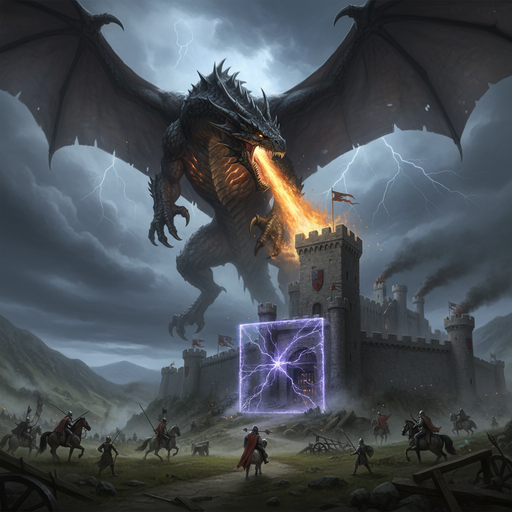




Mythos turns cutting-edge AI into a defensive weapon: Closed-source vendors gain the upper hand, and computing power pricing may deviate from reality.
Mythos Forces AI Labs to Take Sides in the Security Race
Claude Mythos, a preview system leaked quietly by Anthropic, isn’t just a technical document update—it shifts cutting-edge AI from “showing off capabilities” to “building defense,” and because of the risk of zero-day exploit use, it is intentionally not made public. Mythos is tied to Project Glasswing, providing partners like Google and Microsoft with a total of about $100 million in compute and points support; it follows a “controllable deployment” route, in contrast to OpenAI’s more aggressive push for capability expansion. The security conversation also moves from abstract ethics to concrete cybersecurity deployment: Mythos can chain vulnerabilities by itself within an open-source codebase, including cryptographic libraries relied on by DeFi.
Discussion on social media quickly split into two camps: one praised Mythos’s token efficiency and benchmark results (ARC-AGI-2 scoring 68.8%), while the other was concerned that the DeFi ecosystem’s attack surface would expand. External signals are echoing the shift as well—after the Drift vulnerability incident, Solana rolled out the STRIDE plan, as the chain layer accelerates formal verification to counter AI-assisted attacks. But the market reaction was overestimated: AI-related tokens (NEAR briefly rose 6% to $1.33; TAO rose 7% then fell back 3%) quickly gave it back, suggesting that sentiment played a bigger role than real compute demand. The view that “Mythos will immediately pass the death sentence on DeFi” doesn’t hold up—most attacks still require human operators, and in enterprise scenarios, the penetration speed of defensive AI is very likely to be faster than the misuse speed on the attack side.
The current information environment paints a split AI landscape: Mythos amplifies concerns about “wide-area exploitation,” but what it truly sparks is a defense-led security race, aligned with signals like Zcash using AI to patch vulnerabilities. Looking ahead, the compute bottleneck is more likely to drive on-chain solutions, while enterprises will prefer “closed-loop” model systems with a safety valve.
Conclusion: Mythos’s disclosure confirms that a structural shift from AI to network security is underway: builders and enterprise purchasers benefit most from controllable deployments like Glasswing; the market still has some bias in pricing compute demand; over the next 12 to 18 months, the open-source camp (including Meta) will likely be at a relative disadvantage, and the advantages of proprietary closed-source approaches will further solidify.
Significance: High
Category: Model release, AI security, market impact
Assessment: You’re still in the early-to-mid phase of this narrative; the ones truly benefiting are the builders following a controllable deployment path and patient institutional capital. Short-term traders will likely get hit amid sentiment swings, and the open-source weighted-model camp won’t be in a favorable position over the next 12 to 18 months.**