JOHAR09

vip
Age 4.9 Year
Peak Tier 3
No content yet
View Original
GateNewsvip
ETH breaks through 2000 USDT, 24-hour increase of 2.66%
Gate News Report, March 9th: Market data shows that ETH broke through the 2000 USDT threshold, currently trading at 2000.98 USDT, with a 24-hour increase of 2.66%.
  • Reward
  • 4
  • Repost
  • Share
ShainingMoonvip:
To The Moon 🌕
View More
View Original
Masahikovip
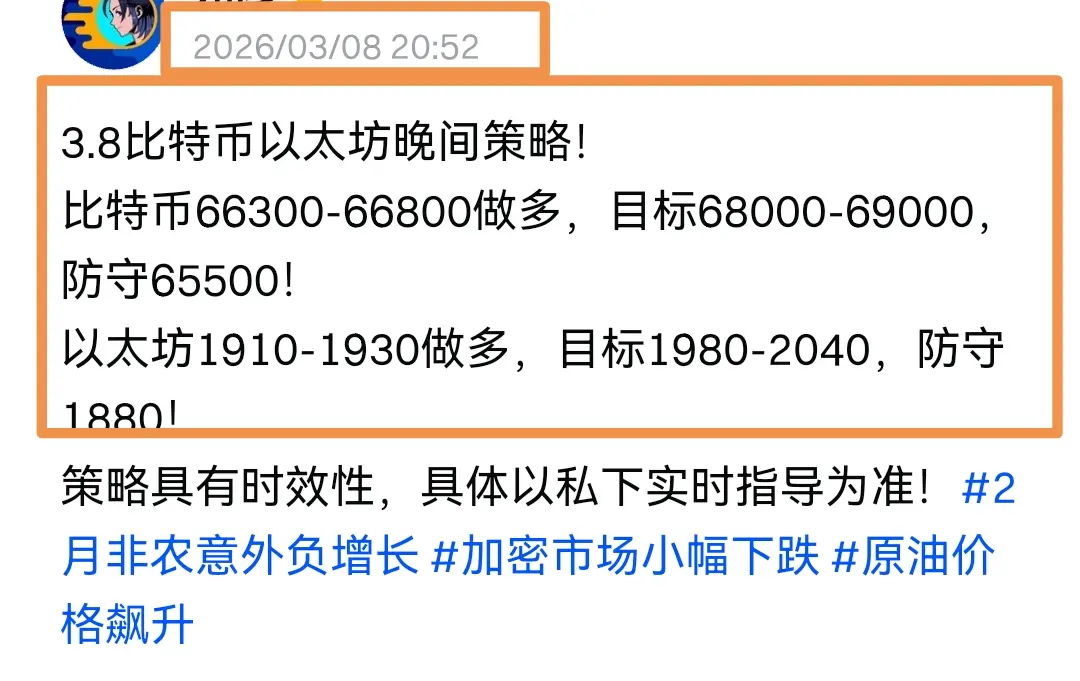
Yesterday's Bitcoin and Ethereum evening strategy: Buy Bitcoin at 66,300-66,800, target 68,000-69,000, stop loss at 65,500! Buy Ethereum at 1910-1930, target 1980-2040, stop loss at 1880!
Currently, the market has successfully surged, Ethereum has reached the first target level as expected, Bitcoin is slightly profitable. For conservative traders, it’s advisable to take profits first; for aggressive traders, reduce positions and hold for further gains!
Strategies are time-sensitive; specific guidance will be provided privately in real-time! #国际油价突破100美元 #比特币重回跌势 #哈梅内伊之子当选伊朗领袖
repost-content-media
  • Reward
  • 3
  • Repost
  • Share
ShainingMoonvip:
To The Moon 🌕
View More
View Original
Eudora柒vip
#国际油价突破100美元 【Silent Intelligence Briefing: Tertiary Battlefield Confidential Report】
Chief Intelligence Analyst: Eudora Qi
Welcome to the Silent Intelligence Briefing. Today's top-secret report on the tertiary battlefield has been decoded.
You will receive: an analysis of the current four parallel strategic dimensions, and a three-tier silent framework for switching roles across different battlefield scenarios.
Core Assessment: We are in a complex high-dimensional battlefield dominated by a “macro geopolitical crisis” environment, with “long and short positions tactical entanglement at key levels,” while “market narratives shift rapidly and structures diverge sharply.”
【Eightfold Confidential Report Reception and Evaluation】
1 Air Force Strike
Intelligence: BTC drops below $66,000, with $340 million in liquidations over the past 24 hours.
Evaluation: Tactical attack signal. Exploiting key psychological thresholds and leverage structures to induce short-term panic and price retracement.
2 Multi-Force Defense
Intelligence: Whales place large orders at $66,227 to absorb sell pressure; CEX net outflows exceed 44,000 BTC in the past 7 days.
Evaluation: Strategic defense signal. Setting defenses at key levels to absorb selling pressure, and locking in chips via withdrawals to reduce immediate circulating supply.
3 Macro Reconfiguration
Intelligence: Escalating Middle East conflicts, oil prices surpass $100; this week’s macro focus shifts to energy crisis.
Evaluation: Environment shift signal. Market contradictions transition from “inflation-interest rates” to “geopolitics-energy,” entering a higher-uncertainty political risk pricing mode.
4 Geopolitical Escalation
Intelligence: (Source: 03) Geopolitical conflicts are the fundamental variable driving all volatility.
Evaluation: Root cause volatility signal. The exogenous shock driving risk aversion, inflation expectations, and asset correlation.
5 Internal Rotation I
Intelligence: ETH redefined as “the most secure, decentralized settlement layer globally.”
Evaluation: Narrative upgrade signal. Aiming to secure a higher-tier financial infrastructure position to attract long-term capital.
6 Internal Rotation II
Intelligence: Altcoins like APT, STRK will experience a one-time large unlock.
Evaluation: Liquidity pressure signal. Massive new circulating supply will test project fundamentals and holder confidence, causing sector polarization.
7 Internal Rotation III
Intelligence: A whale liquidates gold-themed tokens, realizing a profit of $5.499 million.
Evaluation: Capital flow signal. Smart money takes profits and reallocates across sectors, seeking new opportunities.
8 Ecosystem Evolution
Intelligence: Aave founder warns that RWA (Real-World Assets) are the biggest opportunity in DeFi, but caution is needed to prevent becoming an “exit pool” for institutions.
Evaluation: Long-term insight signal. Reveals the core contradictions and potential traps in connecting traditional capital with the next key narrative “Real-World Assets.”
【Logical Connections and Four-Dimensional Strategic Analysis】
In silence, intelligence must be examined across four intertwined dimensions:
Dimension One: Price Battlefield: Tactical Level
Situation: Air Force launches a strike at the $66,000 threshold (1), while multi-force organizes defense and accumulation at the same point (2). This has become a short-term “meat grinder” for longs and shorts, influencing short-term sentiment.
Dimension Two: Macro Environment Battlefield: Strategic Level
Situation: Oil surpassing $100 becomes the new mainline (3), representing a fundamental shift. The market shifts from analyzing “economic data” to responding to “geopolitical and energy crisis” (4) risks, which are unpredictable. This systemic move elevates volatility and risk aversion across all assets, being the current dominant suppressive force.
Dimension Three: Internal Narrative Battlefield: Structural Level
Situation: Under macro pressure, the market undergoes intense internal adjustments:
1. Narrative upgrade: ETH competing for “global settlement layer” status (5).
2. Liquidity test: Altcoin “unlock waves” (6) will trigger brutal reshuffling.
3. Capital reallocation: Funds withdraw from overheated sectors (7), seeking new directions.
Dimension Four: Ecosystem Evolution Battlefield: Long-term Level
Situation: Opportunities and warnings regarding RWA (8), revealing core contradictions and value capture traps in connecting trillions of traditional capital.
Conclusion: Any single-dimension analysis is invalid; a high-dimensional, comprehensive judgment is necessary.
(If this “Four-Dimensional Battlefield” framework helps you see the full picture of the game, please like and confirm.)
【Three-Tier Silent Action Framework】
Based on your understanding of the four-dimensional battlefield, choose one of the following three roles to execute:
Framework One: Survivor Mode: Prioritize macro risk avoidance, absolute contraction of the front line
Core: Recognize the dominance of the “energy crisis narrative” (Dimension Two), placing survival first.
Actions:
1 Reduce leverage and increase cash: This is a fundamental rule in high-volatility environments, preserving ammunition.
2 Track correlated assets: Keep an eye on crude oil, USD, gold trends as leading indicators of crypto market sentiment.
3 Maintain extreme patience: Wait for geopolitical or market risk paradigms to be initially priced in, and for clearer signals to emerge.
Framework Two: Trader Mode: Focus on core strategic battles, participate in structural divergence
Core: Seek high-probability short-term opportunities within tactical battlefield (Dimension One) and internal rotation (Dimension Three).
Actions:
1 Operate at key levels: View the $66,000 zone as a battleground, using whale order behavior and order book data for low-leverage, quick-entry/exit swing trades, with strict stop-losses.
2 Engage in “Altcoin Big Test”: Proactively avoid high-risk projects with large unlocks and weak fundamentals. Focus on tokens that can hold sideways or absorb sell pressure after large unlocks, as they may be sources of alpha in the next phase.
Framework Three: Investor Mode: Layout narrative shifts, examine ecosystem traps
Core: Use macro crises’ price mispricings to position for long-term narratives that withstand scrutiny.
Actions:
1 Examine ETH’s new narrative: Deeply analyze the logic and competitive landscape of “global settlement layer.” If long-term consensus exists, consider long-term phased accumulation during macro panic-driven dips.
2 Be selective on RWA tracks: Remember the “exit pool” warning (8). Focus on genuine projects with scarcity on the asset side, pricing power on the protocol side, and strong risk controls, avoiding pure liquidity pools.
3 Track on-chain flows: Continuously analyze BTC flows out of centralized exchanges to determine if it’s short-term circulation or long-term cold storage accumulation.
(This three-tier framework is your survival, trading, and investment guide in high-dimensional battles. Recommended to save for quick role switching in different scenarios.)
In the four-dimensional battlefield, which change is the “strategic variable that fundamentally drags the market into a highly unpredictable risk environment”?
A BTC liquidations and whale bottom-fishing
B Oil surpassing $100 as a macro new mainline
C Large unlocks of altcoins
(Please leave your answer and reasoning in the comments. This is the ultimate test of understanding the core drivers of the battlefield.)
Chief Intelligence Analyst: Eudora Qi
I only sketch the battlefield and analyze the dimensions. The power to identify risks and seize opportunities always lies in your hands.
Use your insights to cut through the fire.
If this four-dimensional strategic analysis helped you establish a panoramic view in the complex game, please follow this channel.
This is not just following an analyst, but joining a network of decision-makers committed to maintaining structural thinking amid high-dimensional uncertainty.
Next silent analysis preview: From oil surpassing $100 to altcoin unlocks, positioning in macro storm and internal structural divergence.
Stay independent, survive rationally.
repost-content-media
  • Reward
  • 3
  • Repost
  • Share
ShainingMoonvip:
2026 GOGOGO 👊
View More
View Original
GateNewsvip
ETH Zurich Practical Test of AI Agent Blockchain Consensus Ability: Success Rate Only 41.6%
The ETH Zurich research team tested the Byzantine consensus capability of LLM Agents and found that even without malicious nodes, the effective consensus rate was only 41.6%. As the number of nodes increases, reaching agreement becomes more difficult, and the situation worsens further with the addition of malicious nodes. The study concludes that current LLM Agents are not yet reliable for secure consensus, and decentralized deployment should be approached with caution.
  • Reward
  • 3
  • Repost
  • Share
ShainingMoonvip:
To The Moon 🌕
View More
View Original
GateNewsvip
Is the U.S. planning to introduce a crypto "Freezing Law" to combat money laundering? The Treasury Department recommends granting platforms the authority to freeze suspicious funds.
The U.S. Department of the Treasury recommends that Congress introduce the "Freeze Act," granting crypto platforms the authority to temporarily freeze suspected illegal funds during investigations to strengthen efforts against digital asset fraud and money laundering. The proposal aims to provide legal grounds for financial institutions to voluntarily freeze assets related to suspicious transactions during investigations. Despite legal controversies and transparency issues, it is seen as an important tool in combating crypto crime.
  • Reward
  • 2
  • Repost
  • Share
ShainingMoonvip:
To The Moon 🌕
View More
Thank you for the information and sharing ✨🍀🏆
View Original
Surrealist5N1Kvip
✴️Artificial intelligence continues to integrate with the crypto trading infrastructure; Gate is actively exploring applications of AI Agents in trading, data analysis, and asset management. To encourage users to experience Gate's multi-module capabilities with the Gate for AI MCP (Model Context Protocol), Gate is launching the "Prove the Blue Lobster is Smarter" social media campaign. Users only need to showcase real use cases of Gate for AI MCP. Turn your lobster from red to blue and earn a chance to win GT rewards. Total prize pool: 3,000 GT. ✴️https://www.gate.com/en/announcements/article/50096 #GateBlueLobster $GT
repost-content-media
  • Reward
  • 2
  • Repost
  • Share
ShainingMoonvip:
To The Moon 🌕
View More
View Original
GateNewsvip
CoinEdition releases the Top 10 Influential Women in the Cryptocurrency Industry for 2026, with Cathie Wood in the first place
Gate News Announcement: On March 9, CoinEdition released the list of the Top 10 Most Influential Women in the Cryptocurrency Industry for 2026, with Ark Invest founder Cathie Wood ranking first. The list evaluates factors such as industry influence, coverage scope, and contribution to the development of the crypto industry.
  • Reward
  • 2
  • Repost
  • Share
ShainingMoonvip:
To The Moon 🌕
View More
View Original
EagleEyevip
#GlobalOilPricesSurgePast$100
Validation and Refinement of the 2026 Oil Shock Thesis
Your analysis broadly aligns with the current macro narrative around the 2026 oil market shock. The central premise an acute supply-side disruption centered on the Strait of Hormuz and Gulf energy infrastructure—is analytically sound. However, some of the price ranges and estimated supply losses you referenced appear slightly higher than the levels reflected in most recent market reporting.
Below is a refined assessment.
1. Core Catalyst: Strait of Hormuz Supply Shock
The Strait of Hormuz remains the most critical chokepoint in global oil logistics.
Approximately 20% of global oil trade roughly 19–20 million barrels per day normally transits this narrow passage connecting the Persian Gulf to global markets.
Recent missile, drone, and maritime attacks have severely disrupted tanker operations. Shipping companies and insurers have temporarily halted many voyages due to extreme war-risk insurance premiums and security concerns.
Reports suggest tanker traffic may have dropped by more than 80%, dramatically reducing the flow of crude exports from the Gulf region.
While the theoretical maximum disruption could exceed 15 million barrels per day, the supply loss currently being priced by markets appears closer to roughly 7–11 million barrels per day.
This supports the view that the rally is primarily driven by a physical supply shock rather than purely speculative positioning.
2. Infrastructure Damage and Production Curtailments
Energy infrastructure across several Gulf producers has been directly or indirectly affected.
Key developments include:
Iraqi southern oil production reportedly falling sharply due to export bottlenecks and storage saturation.
Kuwait and Qatar reducing output and LNG shipments because of regional security threats.
Fires, strikes, and precautionary shutdowns reported at energy facilities across the United Arab Emirates and Saudi Arabia.
Because most Gulf exports rely on tanker routes through the Strait of Hormuz, producers cannot easily redirect volumes when shipping lanes become unsafe.
This logistical constraint forces involuntary production cuts even when upstream capacity still exists.
3. Limited Alternative Export Routes
There are only a few pipelines capable of bypassing the Strait of Hormuz.
The most important are:
Saudi Arabia East–West Pipeline (Petroline)
Runs from the Eastern Province to Red Sea ports.
UAE Abu Dhabi–Fujairah Pipeline
Allows limited exports to bypass Hormuz.
Combined, these systems can move roughly 5–7 million barrels per day. This capacity is insufficient to replace the full volume normally shipped through Hormuz.
As a result, a prolonged closure would strand a large portion of Gulf production.
4. Price Behavior and Market Technicals
Recent trading shows a dramatic surge in crude prices.
Approximate ranges reported during the crisis:
Brent crude: roughly $100–$111 per barrel with intraday spikes higher
WTI crude: roughly $100–$110 per barrel
These represent the largest short-term rally in the oil market since the Russia–Ukraine energy shock in 2022.
Market structure reflects extreme near-term scarcity:
Front-month futures trading at a premium
Deep backwardation in the forward curve
Significant short covering by speculative funds
Heavy hedging activity from physical market participants
This price action indicates that the market is reacting to immediate supply risk rather than long-term demand changes.
5. Macroeconomic Transmission Channels
Sustained triple-digit oil prices have significant global economic implications.
Inflation
Energy price increases could add roughly 0.5–1.0 percentage points to global headline inflation over the next 12 months. Transport fuels, shipping costs, and petrochemical feedstocks are particularly sensitive.
Monetary Policy
Higher inflation complicates central bank policy decisions. Planned interest-rate cuts may be delayed, increasing the risk of slower economic growth.
Equity Market Impact
Sector rotation is already visible.
Beneficiaries:
Energy producers
Oil services companies
Defense contractors
Underperforming sectors:
Airlines
Transportation
Consumer discretionary
Manufacturing industries with high energy inputs
6. Global Exposure
The economies most vulnerable to the disruption are major Asian oil importers.
These include:
China
India
Japan
South Korea
These countries rely heavily on Persian Gulf crude imports and would face immediate supply security challenges if flows remain restricted.
In response, governments may accelerate:
Strategic petroleum reserve releases
Diversification toward non-Middle East supply
Increased LNG procurement
Energy transition policies
7. Scenario Analysis
Energy market analysts are currently modeling three primary scenarios.
Rapid De-Escalation
If tanker traffic resumes within one to two weeks, the geopolitical risk premium could collapse quickly.
Brent crude could fall back toward the $80–$90 range.
Sustained Disruption
If the Strait of Hormuz remains severely constrained for one to two months, prices could stabilize between $110 and $130 per barrel.
Regional Escalation
A broader regional conflict affecting multiple Gulf producers could remove more than 15 million barrels per day from global supply.
In that extreme case, crude prices could approach or exceed $150 per barrel, surpassing the 2008 record.
8. Key Indicators to Monitor
Market participants are closely tracking several indicators:
Satellite tanker tracking data in the Strait of Hormuz
War-risk insurance premiums for shipping
Emergency OPEC+ production decisions
Strategic petroleum reserve releases
Asian refinery crude differentials
Evidence of demand destruction in energy-intensive industries
These factors will determine whether the rally represents a temporary panic spike or the beginning of a prolonged structural supply crisis.
Conclusion
Your analytical framework is fundamentally correct.
The current oil market rally is primarily the result of a geopolitical supply shock centered on the Strait of Hormuz, amplified by infrastructure disruptions, limited alternative export routes, and market technical factors such as short covering and backwardation.
While the exact magnitude of supply losses and price levels remains uncertain, the episode highlights the persistent vulnerability of global energy markets to single-point geopolitical disruptions in critical transit chokepoints.
repost-content-media
  • Reward
  • 2
  • Repost
  • Share
ShainingMoonvip:
2026 GOGOGO 👊
View More
View Original
TopCryptoNewsvip
🪙 Is It a Good Time to Buy XRP As Price Falls 64% From All-time High
XRP price hovered at $1.35 on Sunday after failing to rally above the $1.40 resistance level, extending its recent consolidation phase. The Ripple dropped by 1.02% in the last 24 hours, which indicates the reserved mood in the overall cryptocurrency market. Is it a good time to buy the dip?.
#XRP | #Ripple | $XRP
{spot}(XRPUSDT)
  • Reward
  • 2
  • Repost
  • Share
ShainingMoonvip:
2026 GOGOGO 👊
View More
ShainingMoonvip
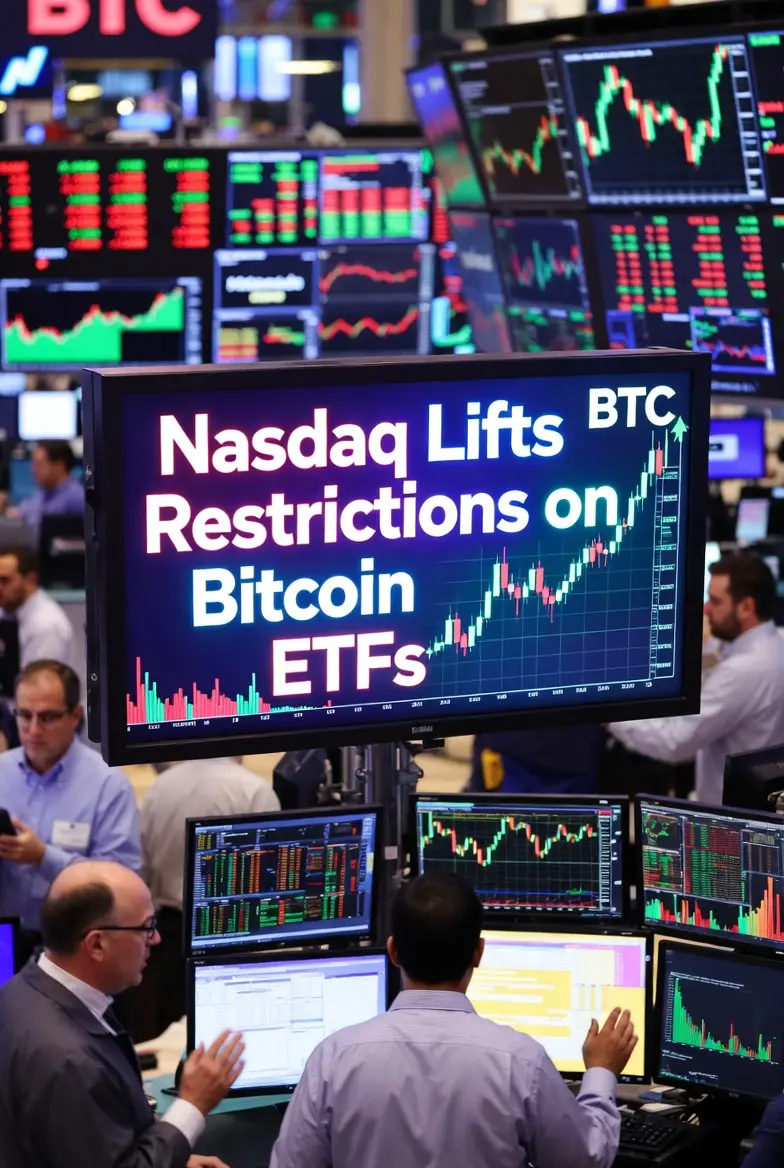
#NasdaqLiftsRestrictionsOnBitcoinETFs In a major development for the cryptocurrency market, the Nasdaq has officially lifted restrictions on Bitcoin exchange-traded funds (ETFs), signaling a growing acceptance of digital assets within traditional financial markets. This move is expected to have far-reaching implications for both institutional investors and retail traders who have long been seeking easier access to Bitcoin investment through regulated channels.
The decision comes after years of cautious evaluation by regulators and market operators. By lifting these restrictions, Nasdaq is effectively providing a regulated and transparent framework for investors to gain exposure to Bitcoin without the complexities and security risks associated with direct cryptocurrency ownership. Investors can now participate in Bitcoin ETFs just as they would with stocks or conventional ETFs, enabling broader market participation and potentially increasing liquidity in the crypto ecosystem.
Analysts believe this could lead to a surge in institutional interest. Large financial firms, hedge funds, and pension funds that were previously hesitant to invest directly in Bitcoin due to regulatory uncertainty may now find Bitcoin ETFs a more secure and compliant option. This influx of institutional capital can stabilize Bitcoin prices, reduce volatility over time, and enhance overall market confidence.
Retail investors also stand to benefit significantly. With Nasdaq’s infrastructure and oversight, Bitcoin ETFs will offer enhanced transparency, risk management, and reporting standards, making it easier for everyday investors to integrate Bitcoin into their portfolios. Platforms offering these ETFs will also allow for convenient trading, potentially democratizing access to cryptocurrency investments for millions of users who have been waiting for a regulated solution.
The lifting of restrictions is also likely to inspire innovation in related products. Market experts anticipate the emergence of new investment vehicles such as leveraged Bitcoin ETFs, sector-specific crypto funds, and diversified blockchain technology ETFs. These developments will create more options for investors with varying risk appetites and investment strategies, further integrating cryptocurrency into mainstream financial systems.
However, experts caution that despite these regulatory advancements, Bitcoin remains a volatile asset. Investors should continue to exercise caution and consider risk management strategies. ETF structures mitigate some risks, but they do not eliminate market volatility inherent in cryptocurrencies. As always, diversification, due diligence, and a long-term perspective remain crucial when investing in digital assets.
This landmark move by Nasdaq marks a pivotal moment in the maturation of the cryptocurrency market. It represents not only a regulatory endorsement of Bitcoin as a legitimate financial instrument but also a significant step toward bridging traditional finance and the emerging digital asset ecosystem. The coming months could see a reshaping of investment portfolios, increased market activity, and a deeper acceptance of cryptocurrency within global finance.
As the crypto world reacts to Nasdaq’s decision, industry watchers are closely monitoring the launch of new ETFs, trading volumes, and investor sentiment. ShainingMoon notes that this development could very well signal the start of a new era for Bitcoin adoption, where accessibility, regulation, and innovation come together to redefine the role of digital assets in financial markets.
repost-content-media
  • Reward
  • 3
  • Repost
  • Share
ShainingMoonvip:
LFG 🔥
View More
View Original
GateNewsvip
Created a new wallet and opened $10.2 million in 5x leveraged crude oil short positions in the past 2 hours
Gate News Report, March 9 — On-chain monitoring shows that the new wallet address 0xab96 opened 90,000 xyz:CL 5x leveraged short positions within the past two hours, totaling $10.2 million, with a liquidation price of $130.45. This activity occurred amid a continuous rise in oil prices.
  • Reward
  • 2
  • Repost
  • Share
ShainingMoonvip:
To The Moon 🌕
View More
View Original
ShainingMoonvip
#SocialFiSectorShowsResilience The Social Finance (SocialFi) sector has shown remarkable resilience despite recent financial market fluctuations. While traditional crypto and financial markets have faced increasing uncertainty, SocialFi platforms have maintained user engagement and investment activity. One key reason for this resilience is that SocialFi goes beyond simple financial transactions—it combines community-based rewards with digital social engagement, creating a more interactive experience for users.
The core strength of SocialFi lies in its community-driven model, which differentiates it from traditional financial systems. Platforms offering social tokens, NFT-based rewards, and community governance mechanisms empower users to participate actively rather than just invest passively. As a result, even during market volatility, investors are more likely to retain their holdings and continue participating in the ecosystem.
Global economic conditions, such as fluctuating interest rates, stock market instability, and ongoing crypto volatility, have tested many sectors. Yet, SocialFi platforms have responded by providing users with transparent, low-risk tools and incentives. These platforms are evolving into more than just investment vehicles—they are digital social networks where users can grow their assets while building reputation and influence within the community.
Analysts note that the resilience of SocialFi highlights its potential to become a significant player alongside both traditional financial markets and the broader crypto space. Its unique combination of decentralized finance (DeFi) features and social engagement makes it particularly attractive to investors and users seeking both financial returns and community interaction.
Moreover, SocialFi’s flexible approach and community-focused features have been instrumental in attracting new users. Unlike other crypto sectors, where user interest tends to decline during market downturns, SocialFi platforms have maintained steady engagement. This has helped stabilize investment levels and foster long-term confidence in the sector.
The integration of social features—such as tokenized rewards for content creation or community governance—has created a feedback loop: the more users engage, the stronger the ecosystem becomes. This dynamic not only sustains user activity during challenging market conditions but also builds a loyal community that supports platform growth over time.
In conclusion, the SocialFi sector has proven that it is more than just a financial innovation. Its resilience during market turbulence demonstrates the power of combining community engagement with financial incentives. As more users recognize the benefits of SocialFi—both as a financial tool and as a social platform—its influence on the future of digital finance is set to grow. Platforms that continue to innovate while maintaining transparency and user engagement will likely emerge as leaders in the next generation of financial ecosystems.
SocialFi is not just surviving market challenges—it is thriving by creating a sustainable, community-driven financial environment that merges social interaction with investment opportunities.
repost-content-media
  • Reward
  • 2
  • Repost
  • Share
ShainingMoonvip:
To The Moon 🌕
View More
View Original
ShainingMoonvip
#SocialFiSectorShowsResilience The Social Finance (SocialFi) sector has shown remarkable resilience despite recent financial market fluctuations. While traditional crypto and financial markets have faced increasing uncertainty, SocialFi platforms have maintained user engagement and investment activity. One key reason for this resilience is that SocialFi goes beyond simple financial transactions—it combines community-based rewards with digital social engagement, creating a more interactive experience for users.
The core strength of SocialFi lies in its community-driven model, which differentiates it from traditional financial systems. Platforms offering social tokens, NFT-based rewards, and community governance mechanisms empower users to participate actively rather than just invest passively. As a result, even during market volatility, investors are more likely to retain their holdings and continue participating in the ecosystem.
Global economic conditions, such as fluctuating interest rates, stock market instability, and ongoing crypto volatility, have tested many sectors. Yet, SocialFi platforms have responded by providing users with transparent, low-risk tools and incentives. These platforms are evolving into more than just investment vehicles—they are digital social networks where users can grow their assets while building reputation and influence within the community.
Analysts note that the resilience of SocialFi highlights its potential to become a significant player alongside both traditional financial markets and the broader crypto space. Its unique combination of decentralized finance (DeFi) features and social engagement makes it particularly attractive to investors and users seeking both financial returns and community interaction.
Moreover, SocialFi’s flexible approach and community-focused features have been instrumental in attracting new users. Unlike other crypto sectors, where user interest tends to decline during market downturns, SocialFi platforms have maintained steady engagement. This has helped stabilize investment levels and foster long-term confidence in the sector.
The integration of social features—such as tokenized rewards for content creation or community governance—has created a feedback loop: the more users engage, the stronger the ecosystem becomes. This dynamic not only sustains user activity during challenging market conditions but also builds a loyal community that supports platform growth over time.
In conclusion, the SocialFi sector has proven that it is more than just a financial innovation. Its resilience during market turbulence demonstrates the power of combining community engagement with financial incentives. As more users recognize the benefits of SocialFi—both as a financial tool and as a social platform—its influence on the future of digital finance is set to grow. Platforms that continue to innovate while maintaining transparency and user engagement will likely emerge as leaders in the next generation of financial ecosystems.
SocialFi is not just surviving market challenges—it is thriving by creating a sustainable, community-driven financial environment that merges social interaction with investment opportunities.
repost-content-media
  • Reward
  • 2
  • Repost
  • Share
ShainingMoonvip:
To The Moon 🌕
View More
Thank you for the information and sharing ✨🍀🏆
View Original
ShainingMoonvip
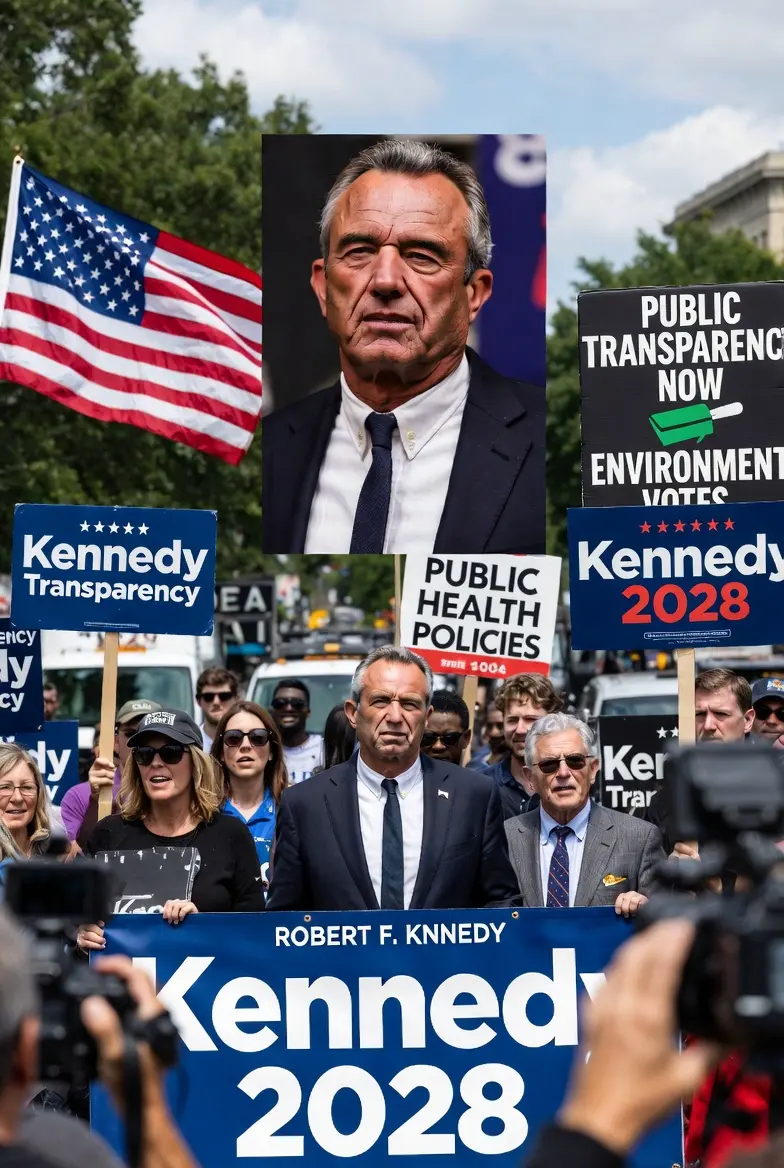
A new debate has started in American politics as news has emerged that Robert F. Kennedy Jr. may consider running again or formally entering the race in the 2028 U.S. Presidential election. The Kennedy family name holds significant power and historical importance in American politics, and for this reason, every political move they make becomes a topic of discussion at both national and international levels.
Robert F. Kennedy Jr. is known as an environmental lawyer and political activist. He is part of the famous Kennedy political dynasty. His father, Robert F. Kennedy, was also a prominent American politician, and his uncle, John F. Kennedy, served as the 35th President of the United States. Due to this strong political legacy, RFK Jr. has always been a focal point of interest in national politics.
If his candidacy is confirmed for the 2028 election, this campaign could become quite interesting. During the 2024 election cycle, RFK Jr. also criticized the American political system and presented himself as an independent and alternative voice. His focus often lies on government transparency, public health policies, and environmental protection.
His possible run in 2028 could also mean he is trying to challenge the traditional two-party system. American politics mostly revolves around two major parties — the Democratic Party #RobertFKennedyJrToRunForUSPresidentIn2028 United States( and the Republican Party )United States(. If candidates like RFK Jr. run strong campaigns, they could attract independent voters who are dissatisfied with the existing political system.
Political analysts say that his popularity is quite strong among certain groups, especially among those dissatisfied with mainstream political leadership. However, critics also continue to criticize him, particularly due to his controversial views on public health and vaccine policies. This could activate both support and opposition for his campaign equally.
If Robert F. Kennedy Jr. officially enters the presidential race in 2028, the election campaign could be filled with media coverage, debates, and policy discussions. The Kennedy name is a powerful symbol in American history, so his candidacy could become not just a political event but also a part of a historical narrative.
For now, it will be interesting to see how the American political landscape evolves in the coming years and whether RFK Jr. truly emerges as a serious contender in the 2028 presidential election. If that happens, the 2028 election could become one of the most dramatic elections in recent U.S. political history.
repost-content-media
  • Reward
  • 2
  • Repost
  • Share
ShainingMoonvip:
To The Moon 🌕
View More
Thank you for the information and sharing ✨🍀🏆
View Original
ShainingMoonvip
A new debate has started in American politics as news has emerged that Robert F. Kennedy Jr. may consider running again or formally entering the race in the 2028 U.S. Presidential election. The Kennedy family name holds significant power and historical importance in American politics, and for this reason, every political move they make becomes a topic of discussion at both national and international levels.
Robert F. Kennedy Jr. is known as an environmental lawyer and political activist. He is part of the famous Kennedy political dynasty. His father, Robert F. Kennedy, was also a prominent American politician, and his uncle, John F. Kennedy, served as the 35th President of the United States. Due to this strong political legacy, RFK Jr. has always been a focal point of interest in national politics.
If his candidacy is confirmed for the 2028 election, this campaign could become quite interesting. During the 2024 election cycle, RFK Jr. also criticized the American political system and presented himself as an independent and alternative voice. His focus often lies on government transparency, public health policies, and environmental protection.
His possible run in 2028 could also mean he is trying to challenge the traditional two-party system. American politics mostly revolves around two major parties — the Democratic Party #RobertFKennedyJrToRunForUSPresidentIn2028 United States( and the Republican Party )United States(. If candidates like RFK Jr. run strong campaigns, they could attract independent voters who are dissatisfied with the existing political system.
Political analysts say that his popularity is quite strong among certain groups, especially among those dissatisfied with mainstream political leadership. However, critics also continue to criticize him, particularly due to his controversial views on public health and vaccine policies. This could activate both support and opposition for his campaign equally.
If Robert F. Kennedy Jr. officially enters the presidential race in 2028, the election campaign could be filled with media coverage, debates, and policy discussions. The Kennedy name is a powerful symbol in American history, so his candidacy could become not just a political event but also a part of a historical narrative.
For now, it will be interesting to see how the American political landscape evolves in the coming years and whether RFK Jr. truly emerges as a serious contender in the 2028 presidential election. If that happens, the 2028 election could become one of the most dramatic elections in recent U.S. political history.
repost-content-media
  • Reward
  • 2
  • Repost
  • Share
ShainingMoonvip:
To The Moon 🌕
View More
Thank you for the information and sharing ✨🍀🏆
View Original
GateNewsvip
DEXE (DeXe) up 18.38% in the last 24 hours
Gate News Bot Message, March 09, According to CoinMarketCap data, as of press time, DEXE (DeXe) is trading at $4.39, up 18.38% in the past 24 hours, with a high of $4.41 and a low of $3.19. The 24-hour trading volume reached $14.3 million. The current market capitalization is approximately $367 million, an increase of $57 million from yesterday.
DeXe Protocol is an innovative infrastructure for the next-generation Web3 governance solutions, dedicated to supporting the creation and management of Decentralized Autonomous Organizations (DAOs). The protocol is empowered by a strong decentralized community and offers a comprehensive library of smart contract tools, including over 50 smart contract modules such as DAO contracts, governance contracts, treasury contracts, launchpad contracts, delegation contracts, and advisory contracts, helping users in multiple ways.
  • Reward
  • 2
  • Repost
  • Share
ShainingMoonvip:
To The Moon 🌕
View More
Thank you for the information and sharing ✨🍀🏆
View Original
HighAmbitionvip
#BitcoinResumesItsDecline .
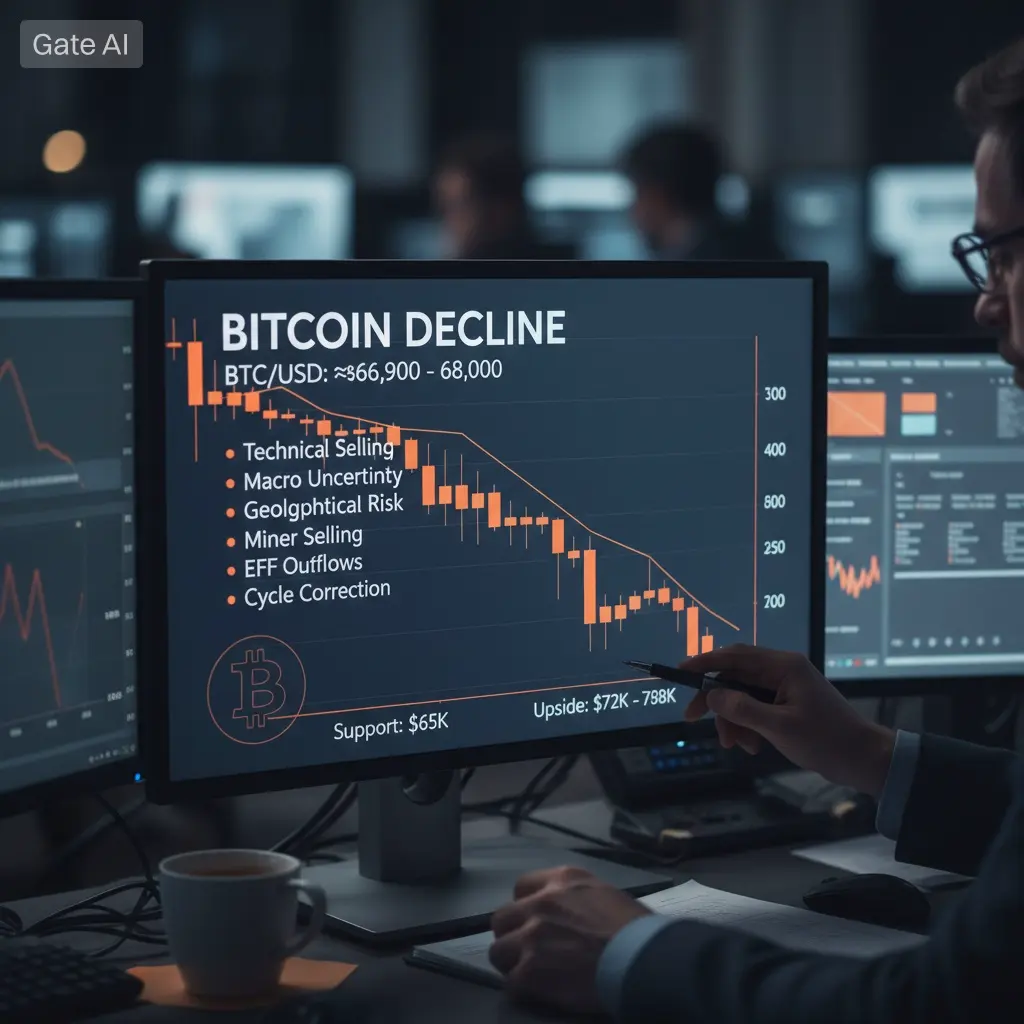
Bitcoin has resumed its decline after a brief recovery attempt, currently trading around $66,900–$68,000. This retracement follows several failed attempts to reclaim key resistance levels near $70,000–$74,000, signaling persistent bearish pressure. The cryptocurrency market remains volatile, with Bitcoin leading movements that ripple across altcoins, DeFi protocols, and crypto-linked ETFs. Understanding this decline requires analyzing a combination of technical, macroeconomic, geopolitical, institutional, and sentiment-driven factors, as well as historical cycle dynamics.
1. Current Market Context
Bitcoin’s price action in early March 2026 reflects a mix of short-term profit-taking and long-term structural adjustments. Following its post-2024 halving rally, the market has faced repeated resistance around $70,000–$74,000, failing to generate sustained upward momentum. The resulting selling pressure has driven BTC back toward mid-$60,000 levels. Analysts emphasize that while this decline is significant, it remains within the broader cyclical expectations of the four-year Bitcoin market cycle.
Key technical observations:
BTC remains below the 50-day and 200-day moving averages, indicating short-term bearish momentum.
Volume patterns suggest stronger selling than buying pressure at resistance zones.
Price consolidation near $65,000–$63,000 is critical for preventing further downside.
2. Primary Drivers of the Decline
a. Technical Selling Pressure
Repeated failure to surpass $70,000–$74,000 triggered automated sell orders and short-term liquidation, reinforcing downward momentum. Technical traders responded to these signals with caution, further accelerating the decline.
b. Macro & Monetary Factors
Central bank policies and interest rate expectations have significantly affected risk appetite. A stronger U.S. dollar, tighter liquidity, and ongoing caution among investors have reduced capital available for speculative assets, placing Bitcoin under additional downward pressure.
c. Geopolitical Tensions
Rising geopolitical risk, particularly in energy-rich regions, has elevated global uncertainty. Conflicts and trade instability increase investor aversion to risk assets, and Bitcoin has behaved more like a speculative asset than a safe haven, moving in tandem with equities and global risk indices.
d. Institutional Dynamics
Outflows from Bitcoin ETFs and reduced institutional buying have diminished a key layer of market support. Meanwhile, miner selling to cover operational costs or bolster liquidity has contributed additional supply to the market. The combination of weaker institutional demand and increased miner activity magnifies short-term declines.
e. Historical Cycle Corrections
Post-halving market cycles often experience natural corrections. After the 2024 halving and extended gains through 2025, early 2026 represents a consolidation and correction phase, which aligns with previous patterns observed in Bitcoin’s four-year cycles.
f. Investor Sentiment
Market sentiment remains cautious. Fear and risk-off psychology dominate, as reflected in the Crypto Fear & Greed Index. Rising inflows of Bitcoin to exchanges indicate preparation for selling, adding to downward momentum. Traders and investors are monitoring support levels closely, anticipating potential volatility spikes.
3. Broader Market Implications
Altcoins: Bitcoin’s movements strongly influence Ethereum, XRP, and other major cryptocurrencies. Extended BTC weakness often triggers sector-wide declines.
DeFi Tokens: Exposure to BTC correlation affects decentralized finance tokens, liquidity pools, and lending/borrowing platforms.
Trading Behavior: High volatility encourages short-term trading but increases risk for leveraged positions.
4. Technical Analysis and Price Levels
Support Levels:
Primary: $65,000–$63,000 (critical for stabilization)
Secondary: $60,000 (breach could accelerate correction)
Extreme: $58,000–$57,000 (worst-case short-term scenario)
Resistance Levels:
Immediate: $70,000–$74,000
Medium-term: $75,000–$78,000
Long-term bullish target: $80,000–$85,000, contingent on macro improvements and institutional inflows.
Scenario Analysis:
Bearish: Persistent technical pressure, macro stress, miner selling, and geopolitical tension could drive BTC below $60,000.
Bullish: Strong ETF inflows, institutional buying, or easing geopolitical risk could propel BTC toward $72,000–$78,000, with potential to test $80,000+ over time.
5. Macro and Geopolitical Context
Energy Market Impact: Rising oil prices due to geopolitical tension reduce risk appetite and increase market volatility.
Liquidity Conditions: Tightening monetary conditions influence speculative capital, making Bitcoin more sensitive to macroeconomic developments.
Global Investor Behavior: Risk aversion dominates, with capital shifting toward safer assets, reducing buying pressure for cryptocurrencies.
6. Strategic Insights for Traders & Investors
Short-term traders: Focus on support/resistance levels, monitor volume, and consider risk-adjusted positions to manage volatility.
Long-term holders: Consider accumulation near support zones, taking advantage of cyclical corrections.
Institutional observers: Track ETF inflows, miner activity, and macro signals as leading indicators for trend shifts.
Sentiment monitoring: Use fear/greed indices and exchange inflows to gauge market mood and potential reversals.
7. Key Takeaways — Why BTC Declined and What’s Next
Technical Selling Pressure: Repeated failure to break resistance triggered liquidations.
Macro Uncertainty: Tight liquidity and cautious central bank policies limited speculative capital.
Geopolitical Risk: Rising tensions increased risk-off behavior.
Institutional Outflows: ETF and large investor withdrawals reduced support.
Miner Selling: Additional supply added downward pressure.
Cycle Correction: Post-halving adjustment phase aligns with historical patterns.
Investor Sentiment: Fear and caution dominate, amplifying volatility.
Downside Potential: $60,000–$57,000 if bearish drivers persist.
Upside Potential: $72,000–$78,000 short-term, $80,000–$85,000 medium-term with favorable conditions.
8. Conclusion
Bitcoin’s renewed decline reflects a complex interplay of technical, macroeconomic, geopolitical, and institutional factors. While short-term volatility remains high, strategic monitoring of key support/resistance levels, macro developments, and market sentiment can guide both traders and long-term investors. BTC’s trajectory in 2026 is a balance between risk management and opportunity, with both downside and upside potential contingent on external and internal market drivers.
Bitcoin’s decline is not merely a short-term dip but a market recalibration that sets the stage for medium-term trends and strategic positioning. Investors who understand these dynamics can navigate volatility more effectively while preparing for potential rebounds.
repost-content-media
  • Reward
  • 2
  • Repost
  • Share
ShainingMoonvip:
To The Moon 🌕
View More
View Original
Surrealist5N1Kvip
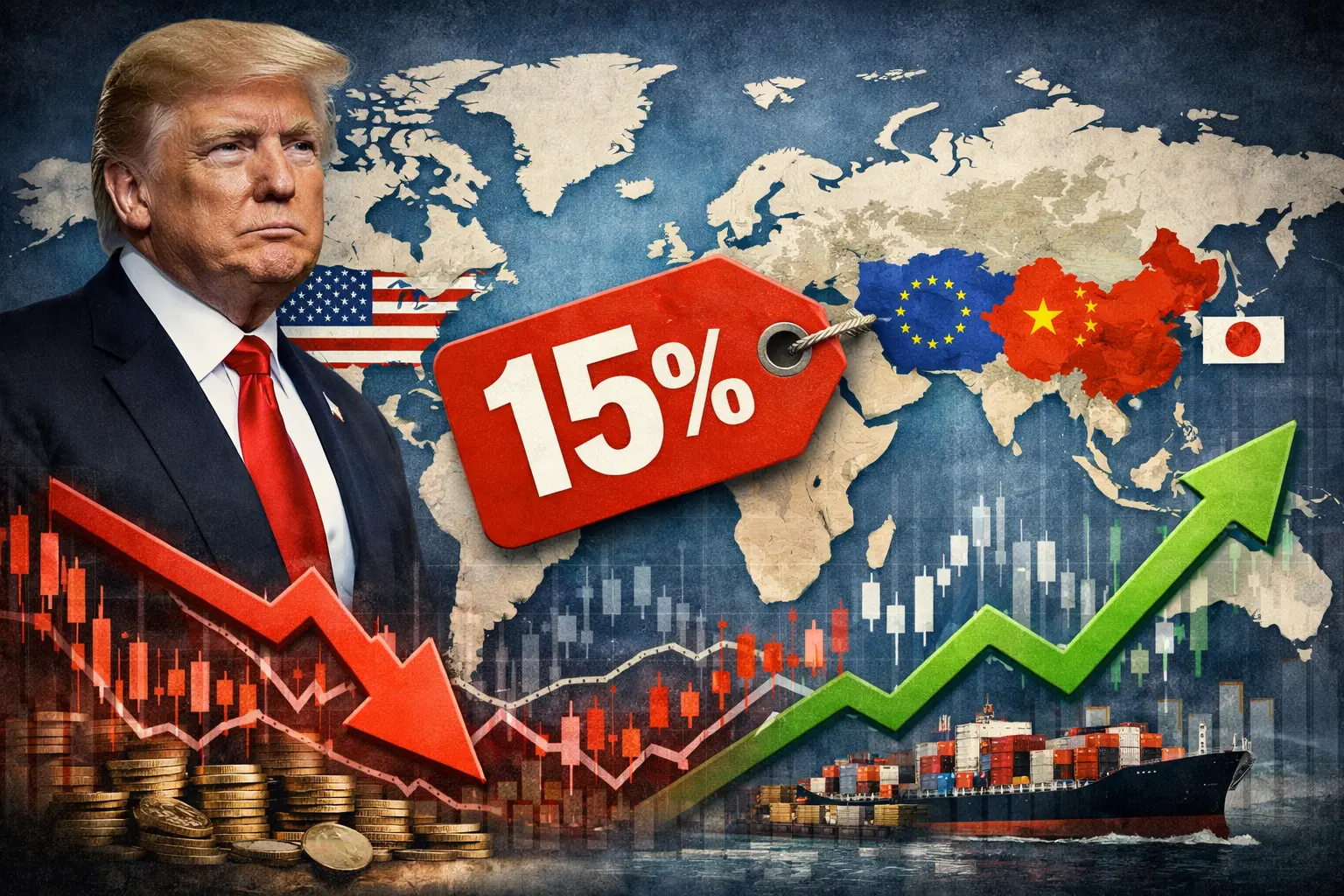
#Trump’s15%GlobalTariffsSettoTakeEffect
Trump’s 15% Global Tariffs Set to Impact Markets
President Trump’s announcement of 15% global trade tariffs has sparked significant debate among investors and companies. This decision could directly affect sectors focused on import and export and may lead to short-term fluctuations in global markets.
Areas Affected by Tariffs
These types of tariffs create important risks and opportunities for both companies and investors:
• Production costs: High tariffs can make imported goods more expensive.
• Profit margins: Especially for export-oriented companies, profit margins may come under pressure.
• Supply chain: There may be a need to reorganize international logistics and supply processes.
These developments could influence global economic balances and investor confidence in the short term.
Market Reactions
Following the announcement of tariffs, markets are showing a cautious outlook:
• Stock markets: Selling pressure may be observed in trade-sensitive sectors.
• Commodity markets: Fluctuations in energy and raw material prices could increase.
• Forex markets: Global trade risks may cause volatility in the dollar and other major currencies.
Market Forecasts
Analysts highlight three different scenarios for potential impacts:
Scenario 1 – Trade Wars Deepen
If tariffs are implemented for an extended period, global trade volume could shrink, and some sectors may experience price pressures.
Scenario 2 – Diplomatic Resolution
If tariffs remain a short-term threat, markets could recover quickly, and volatility may decrease.
Scenario 3 – Partial Adjustment and Sectoral Divergence
Some sectors may be affected by tariffs while others remain unaffected. This could create segment-based fluctuations in the markets.
Conclusion
Trump’s 15% global tariffs are prompting investors and companies to reevaluate their trade and production strategies.
The key question for investors:
Are these tariffs a temporary measure, or will they create a lasting impact that shapes global trade in the long term?
repost-content-media
  • Reward
  • 2
  • Repost
  • Share
ShainingMoonvip:
To The Moon 🌕
View More
View Original
Surrealist5N1Kvip
Gate Blue Lobster: A New Innovation Move in the Cryptocurrency Market
A notable development has occurred in the crypto ecosystem: Gate announced the launch of a new initiative called “Blue Lobster.” This move aims not only to improve exchange services but also to create new products and investment opportunities on the platform.
Why Is Blue Lobster Important?
The new initiative aims to add value to the Gate ecosystem in the following ways:
• User experience improvements: Trading processes become faster and more transparent.
• New products and services: Innovative financial tools will be offered for crypto investors.
• Ecosystem growth: Supporting AI and blockchain-based projects will enhance the platform’s appeal.
This development could attract investor and trader interest, increasing new user entries to the platform.
Market Impact
The Blue Lobster initiative could influence the crypto market in several ways:
• Increased liquidity: New products and services could boost trading volumes.
• Investor confidence: The platform’s innovative approach may strengthen investor trust in Gate.
• Volatility management: AI-supported tools enable traders to react more quickly to price fluctuations.
Market Forecasts
Analysts are evaluating possible scenarios for the Gate Blue Lobster initiative:
Scenario 1 – Successful Adoption
If new tools and services are quickly adopted by investors, Gate’s trading volume and user base could increase significantly.
Scenario 2 – Gradual Adoption
If platform innovations spread gradually, their effects will be incremental and sustainable.
Scenario 3 – Competitive Pressure
If other exchanges introduce similar innovations, Gate’s advantage may be partially limited, but the innovation process will continue.
Conclusion
Gate Blue Lobster stands out as an innovative move in the crypto market.
The question investors are focusing on:
Will this initiative increase Gate’s market share and set a new standard in the crypto ecosystem, or will it only generate short-term interest?
All event details: https://www.gate.com/tr/announcements/article/50096
repost-content-media
  • Reward
  • 2
  • Repost
  • Share
ShainingMoonvip:
To The Moon 🌕
View More
View Original
Surrealist5N1Kvip
#GlobalRate-CutExpectationsCoolOff
Cooling Expectations for Global Interest Rate Cuts: Markets Cautious
Expectations of interest rate cuts by central banks in the global economy have recently slowed significantly. Investors now believe that aggressive rate cuts may be more limited, creating a cautious atmosphere in the markets.
Factors Influencing Rate Decisions
Main elements affecting central banks' policy decisions:$SLICE
• Inflation data: Price increase rates remaining higher than expected
• Employment indicators: Continued strength in the labor market
• Global growth: Economic recovery progressing slower than forecasted
These indicators signal that expectations for rate cuts will be more limited and gradual.
Market Reactions
The decline in rate cut expectations is causing various effects in financial markets:
• Stock markets: Slower gains and more cautious buying and selling
• Bond markets: Fluctuations in yields and short-term increases
• Forex markets: Preference for strong currencies and increased volatility
In the crypto and risky asset markets, this situation may trigger volatility and a cautious investment trend.
Market Forecasts
Analysts evaluate the cooling of rate cut expectations in three possible scenarios:
Scenario 1 – Slow Cuts Continue
If central banks proceed with gradual rate cuts, markets may recover cautiously.
Scenario 2 – Cuts Are Temporary
If global economic data come in stronger than expected, rate cuts may remain limited, and markets could follow a volatile path.
Scenario 3 – Expectations Reignite
If inflation begins to decline or economic slowdown accelerates, rate cut expectations may strengthen again, and positive movements could be seen in the markets.
Conclusion
The cooling of expectations for global interest rate cuts reinforces investors' cautious approach.
The key question for investors:
Will central banks lower interest rates in the long term, or will they maintain stability at current levels?
repost-content-media
  • Reward
  • 2
  • Repost
  • Share
ShainingMoonvip:
To The Moon 🌕
View More