Front-running in crypto exploits pending transactions for profit, capitalizing on blockchain transparency. Learn how traders, bots, and validators manipulate transaction ordering, the impact on Decentralized Finance, and the possible ways of protecting your transactions.
2026-04-02 08:52:52
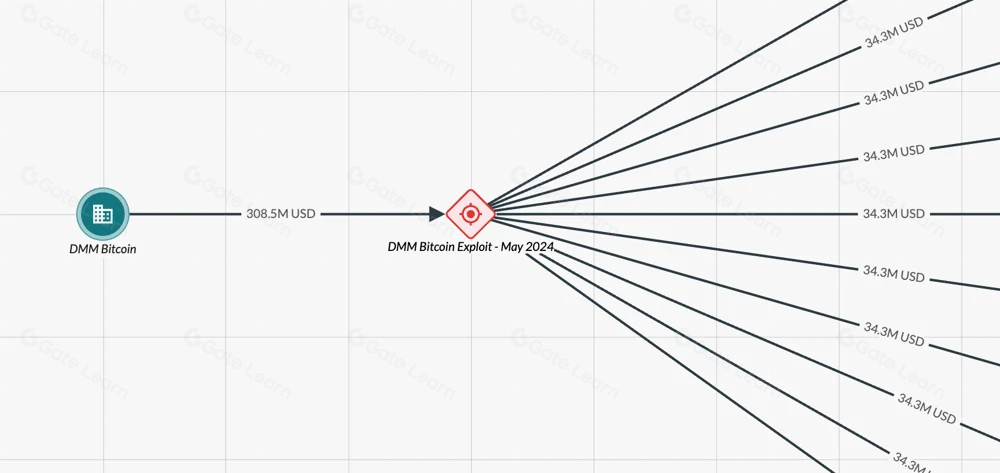
This article delves into the top 10 most shocking crypto hacks in history. We will explore notorious hacker groups, common attack methods, and sophisticated money laundering techniques used in the crypto world. Additionally, we will compare traditional hacking vs. crypto hacking and provide valuable security tips to help investors avoid potential risks.
2026-04-02 05:49:25
Nillion has always been dedicated to the field of data privacy and security. With its innovative "blind computation" concept and a comprehensive set of application development tools, it enables developers to easily and efficiently build privacy-enhancing applications, supporting a wide range of use cases, including AI, DeFi, Social, gaming, and healthcare.
2026-04-02 05:18:03
This article introduces the concept of Regenerative Finance (ReFi), its market potential, application scenarios, operational mechanisms, and noteworthy projects. It also compares ReFi with DeFi, exploring its future development trends and potential risks.
2026-04-02 05:06:49
A Ring Signature is a digital signature in which a transaction is signed on behalf of a group. This makes it computationally infeasible to determine which group member created the signature. Ring signatures are used in privacy-focused cryptocurrencies like Monero to hide the sender's identity.
2026-04-02 05:03:44
The Lazarus Group is a hacking organization associated with the North Korean government. Since its activity in cyberspace began in 2009, it has been suspected of numerous major cyberattacks, including the 2016 theft from the Central Bank of Bangladesh and the 2022 attack on the Ronin Network, resulting in the theft of billions of dollars.
2026-04-02 04:57:18
Remote work scams in the cryptocurrency industry are on the rise. Scammers pose as legitimate companies on social platforms, luring job seekers with promises of high-paying remote positions to steal their money and personal data. They employ various tactics—charging training fees, marketing fraudulent training programs, and tricking victims into downloading malware. High-profile cases like GrassCall and CrowdStrike show how these criminals use phishing and malware attacks to steal crypto assets. To stay safe, job seekers must watch for warning signs like upfront payment demands, rushed hiring processes, and unverified company credentials.
2026-04-02 04:49:39
This article explores the role of cryptocurrency as evidence in criminal cases, its classification as illegal gains, and how it is treated before and after court rulings. It highlights that while cryptocurrencies are widely acknowledged in legal contexts as having monetary value, there are still numerous legal and practical challenges in their management.
2026-04-02 03:01:52
This research delves into the current state of hacking attacks and presents a detailed analysis of their multifaceted impact on the crypto market, based on several major cryptocurrency hacking incidents. The analysis examines both direct and indirect effects, including market volatility and changes in investor behavior. The research highlights potential risks that the crypto market faces and explores possible strategies for mitigating these risks in the future.
2026-04-02 01:24:06
Through data and case analysis, this article reveals how sandwich attacks have evolved from "guerrilla warfare" to "assembly line harvesting," and how the distortion of the priority fee mechanism exacerbates user burdens and trust crises.
2026-04-02 00:58:12
This article explores why NFT holders have become prime targets for hackers, analyzing common NFT theft tactics such as sudden increases in wallet assets. Through real-world cases, we’ll uncover the hidden threats of NFT scams and provide practical security tips to help you protect your assets and boost wallet security.
2026-04-02 00:36:21
In the realm of digital assets, security protection is crucial. This article provides systematic security recommendations focusing on seven key areas: account security, device protection, phishing attack identification, data encryption, payment safety, on-chain privacy protection, and personal information management. Real-world cases are analyzed to reveal potential security risks and corresponding countermeasures. In the future, exchanges must adopt more cutting-edge technologies, such as artificial intelligence and blockchain analytics, to enhance their security capabilities.
2026-04-02 00:13:37
The Nakamoto Coefficient is a critical metric for assessing the decentralization level of a blockchain. Learn about its definition, calculation method, influencing factors, and its role in blockchain security and governance to ensure network stability and fairness.
2026-04-01 19:39:04
This article will provide a detailed discussion on various aspects, including the current state of Web3 security threats, self-custody of personal assets, device and network environment, zero-trust strategy, and global security incident statistics. It aims to offer an effective Web3 security prevention guide for industry professionals and investors.
2026-04-01 18:23:07
Gate Research: In March 2025, the Web3 industry experienced eight security incidents, resulting in total losses of $14.43 million—a significant decrease compared to the previous month. The majority of attacks involved smart contract vulnerabilities and account compromises, accounting for 62.5% of all crypto-related incidents during the period. Major cases included a $5 million exploit targeting 1inch (with 90% of the stolen funds recovered) and two separate attacks on Zoth involving a contract flaw and a private key leakage, leading to combined losses of $8.575 million. In terms of blockchain distribution, only one project this month reported losses on the public blockchain BSC.
2026-04-01 15:53:53