


Futures
Access hundreds of perpetual contracts
TradFi
Gold
One platform for global traditional assets
Options
Hot
Trade European-style vanilla options
Unified Account
Maximize your capital efficiency
Demo Trading
Introduction to Futures Trading
Learn the basics of futures trading
Futures Events
Join events to earn rewards
Demo Trading
Use virtual funds to practice risk-free trading
Launch
CandyDrop
Collect candies to earn airdrops
Launchpool
Quick staking, earn potential new tokens
HODLer Airdrop
Hold GT and get massive airdrops for free
Launchpad
Be early to the next big token project
Alpha Points
Trade on-chain assets and earn airdrops
Futures Points
Earn futures points and claim airdrop rewards


More



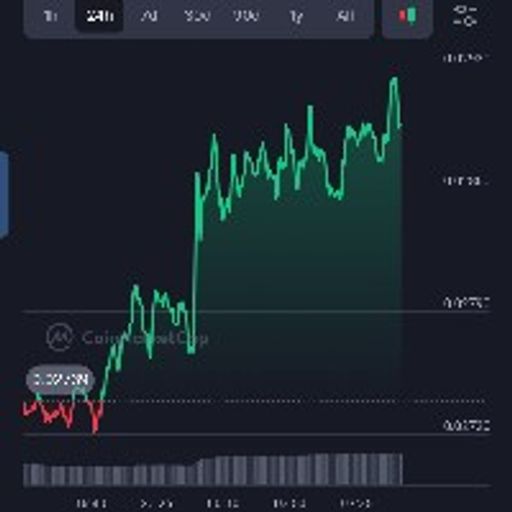


Solana dropping more than 4% in a single day looks dramatic on the surface, but the more interesting story is not the red candle itself. It is the tension building underneath between price, adoption, and structural risk.
At around 126 dollars, SOL is trading far below its recent highs near 250. That puts the token more than 50% down from peak levels, which is painful for short-term holders and uncomfortable even for long-term believers. Yet despite this pullback, trading activity remains heavy. Over 5 billion dollars in volume moved in the last 24 hours, which tells us this is not a market being abandoned. It is a market being actively debated.
On the fundamentals side, Solana still looks unusually strong for a network under price pressure. The chain processes billions of transactions, supports tens of millions of active users, and continues to dominate areas like payments, NFTs, gaming, and consumer-facing applications. Fees remain negligible, performance remains fast, and energy efficiency is no longer just a talking point but a measurable advantage. Integrations like Solana Pay being adopted by Shopify show that this is not only a crypto-native story anymore.
What makes the current moment complex is how institutional interest is moving in the opposite direction of price. Solana futures are now being offered through major financial infrastructure, and spot ETFs have seen consistent net inflows, not outflows. Nearly a billion dollars is already parked in SOL ETFs, with steady weekly additions. That kind of behavior usually reflects longer time horizons. Institutions are not reacting to daily candles. They are positioning around where they believe usage and relevance will be years from now.
At the same time, there is a real issue that cannot be ignored. Validator concentration is becoming a serious concern. A sharp decline in the number of validators, combined with rising capital requirements to operate nodes, introduces a structural risk that price charts alone cannot capture. Solana’s strength has always been performance at scale, but scale without sufficient decentralization can become a long-term liability. If smaller validators continue to exit, the network’s resilience and censorship resistance could be tested in ways that markets have not fully priced in yet.
This is why the current phase feels less like panic and more like a stress test. Price is correcting hard, fundamentals remain strong, institutional rails are expanding, but network health is entering a new and more delicate phase. Solana is no longer just fighting for speed or adoption. It is now balancing growth with decentralization under real-world economic pressure.
From a market perspective, this explains the hesitation. Buyers exist, but conviction is cautious. Sellers exist, but they are not in full control. SOL right now is not a simple bullish or bearish narrative. It is a network proving that real adoption does not eliminate risk, it just changes its shape.
The next chapter for Solana will not be decided by one green candle or one red day. It will be decided by whether the ecosystem can keep scaling without hollowing out the foundation that made it credible in the first place.
$SOL #sol #SolanaLiquidityAndPrice #SOlEcosystemSentimentDivergence
#CryptoMarketRebound #XRPSentimentAndKeySupport