


Futures
Access hundreds of perpetual contracts
TradFi
Gold
One platform for global traditional assets
Options
Hot
Trade European-style vanilla options
Unified Account
Maximize your capital efficiency
Demo Trading
Futures Kickoff
Get prepared for your futures trading
Futures Events
Join events to earn rewards
Demo Trading
Use virtual funds to practice risk-free trading
Launch
CandyDrop
Collect candies to earn airdrops
Launchpool
Quick staking, earn potential new tokens
HODLer Airdrop
Hold GT and get massive airdrops for free
Launchpad
Be early to the next big token project
Alpha Points
Trade on-chain assets and earn airdrops
Futures Points
Earn futures points and claim airdrop rewards






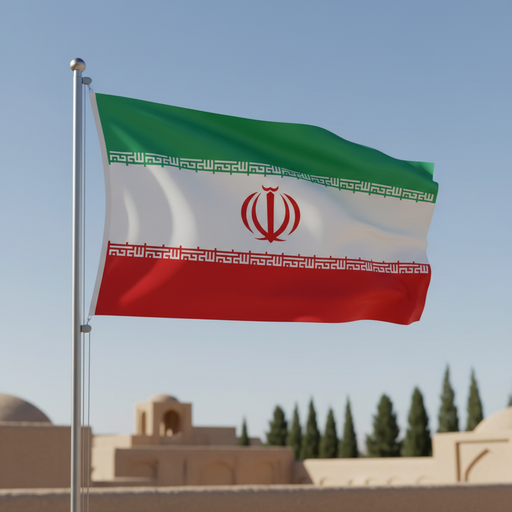
Iran’s supreme leader concedes thousands killed in unrest
Iran’s Supreme Leader Ayatollah Ali Khamenei on Saturday said “several thousand people” died in this month’s anti-government demonstrations, his first acknowledgment of the deadly scale of the unrest.
Recommended Video
Some of those were killed “brutally and inhumanely,” Khamenei said without offering detail in a public meeting broadcast on state TV. He accused the US and Israel of aiding the killings and said the Islamic Republic has evidence to support the claim.
Iran doesn’t intend to push the country toward war, but won’t allow either domestic or international criminals to go unpunished, Khamenei said.
He said US President Donald Trump was culpable for “deaths, damage, and accusations he has inflicted on the Iranian people,” and that Washington’s broader policy goal was to place Iran under military, political, and economic domination.
The toll suggested by Khamenei was in line with estimates from human rights groups and others that some 3,500 people had perished. The groups estimate that more than 22,000 people have been detained.
Trump told Politico that Iran needs new leadership and said Khamenei is guilty of “the complete destruction of the country and the use of violence at levels never seen before.”
The protests have taken place during a record long internet blackout for Iran’s population of about 92 million people.
Read more: Trump Signals He’ll Hold Off Another Attack on Iran for Now
Earlier, local media reported that internet connectivity had been partially restored, even as most residents appeared to remain largely cut off from the outside world for a ninth day.
Iran’s government shut down internet and mobile phone services on Jan. 8 to quell rising unrest sparked by a currency crisis late last month.
“Internet access has now been restored for some subscribers,” the semi-official Mehr news agency said without specifying which restrictions had been lifted or whether users had regained access to international platforms and services.
The semi-official Fars news agency also reported that mobile text messages had been reactivated after being blocked earlier.
The internet traffic monitoring group NetBlocks said there had been a “very slight rise” in connectivity on Saturday, adding that overall access remained at about 2% of normal levels, with “no indication of a significant return.”
Users in Iran appeared largely offline as of early Saturday afternoon local time, with few signs of activity evident on platforms such as Telegram, Instagram, and X — services they previously accessed via virtual private networks (VPNs).
Near‑total communications blackouts have become a familiar tool for Islamic Republic authorities during critical situations, from this month’s nationwide protests to the June conflict with Israel. That’s cut off much of the population from the global internet, and diverted users onto a government‑controlled domestic network that operates independently of the wider web.
NetBlocks on Friday said the current blackout had surpassed the internet shutdown imposed during the country’s 2019 protests.
Read more: Iran’s Exiled Prince Is Buoyed by Nation Desperate for Change
Earlier on Saturday, Fars cited authorities who weren’t identified as saying that internet and other communications services were being gradually restored, but that some restrictions would remain in place “as long as security conditions require.”
**Join us at the Fortune Workplace Innovation Summit **May 19–20, 2026, in Atlanta. The next era of workplace innovation is here—and the old playbook is being rewritten. At this exclusive, high-energy event, the world’s most innovative leaders will convene to explore how AI, humanity, and strategy converge to redefine, again, the future of work. Register now.