


Futures
Access hundreds of perpetual contracts
TradFi
Gold
One platform for global traditional assets
Options
Hot
Trade European-style vanilla options
Unified Account
Maximize your capital efficiency
Demo Trading
Introduction to Futures Trading
Learn the basics of futures trading
Futures Events
Join events to earn rewards
Demo Trading
Use virtual funds to practice risk-free trading
Launch
CandyDrop
Collect candies to earn airdrops
Launchpool
Quick staking, earn potential new tokens
HODLer Airdrop
Hold GT and get massive airdrops for free
Launchpad
Be early to the next big token project
Alpha Points
Trade on-chain assets and earn airdrops
Futures Points
Earn futures points and claim airdrop rewards


More





#OilPricesSurge 🔥
The $90 Barrel: Why This Oil Spike is Different and What It Means for Your Wallet 🛢️🔥
There is a specific tension that grips the global economy when the price of crude oil starts climbing. It is not the tension of a stock market correction or a crypto dip those are paper losses, numbers on a screen. No, when oil surges, it is the tension of physical reality. It is the cost of moving food, the price of heating homes, the math behind every airplane ticket and every gallon of gasoline. And right now, that tension is palpable. 🚛⛽
West Texas Intermediate crude has blasted through the $90 per barrel handle, marking a level that economists and central bankers have dreaded for months. Brent crude, the global benchmark, is flirting with $95, threatening to triple-digit territory that hasn't been visited since the early days of the Ukraine conflict . This isn't just a blip on a commodity chart. This is a regime shift. This is the market pricing in a reality where the Middle East is no longer a stable energy provider, where supply chains are rewiring in real-time, and where the era of cheap energy is officially a memory. 📈
The Geopynamic Trigger: The Strait of Hormuz Holds Its Breath
To understand why this surge feels different from the seasonal fluctuations of years past, you have to look at a map. Look at the narrow choke point between the Persian Gulf and the Gulf of Oman. The Strait of Hormuz. Every day, roughly 20 million barrels of oil about one-fifth of the world's consumption passes through this sliver of water .
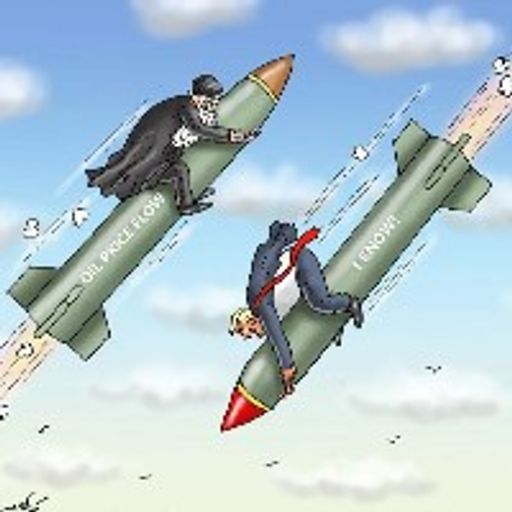
When the United States and Israel launched coordinated operations against Iranian military targets in response to escalating provocations, the Iranian retaliation wasn't just about missiles and drones. It was about threatening the thing that hurts the global economy the fastest: the flow of oil. Iranian officials, through back channels and public statements, made it clear that if the conflict escalated further, the Strait would not be safe for tankers . 🚢⚔️
The market heard that message loud and clear. Traders don't wait for the bullet to hit; they react when the finger tightens on the trigger. The risk premium baked into every barrel of oil has expanded from perhaps $5 to nearly $20 overnight . That is the cost of fear.
The Supply Side Squeeze: OPEC+ and the Empty Spigots
But geopolitics is only half the story. The other half is written in the boardrooms of Vienna and Riyadh. OPEC+, the cartel of oil-producing nations, has been playing a game of supply discipline that would make a chess grandmaster proud. Despite repeated calls from the White House to open the spigots and cool prices, the alliance has stuck to production cuts that were initially announced in late 2024 and extended through the first half of 2026 .
Saudi Arabia, in particular, has signaled that it is willing to tolerate higher prices even if they hurt Western consumers in order to fund its ambitious Vision 2030 economic transformation . The Kingdom needs oil at $80 to $90 to balance its budget. They are not interested in saving the American consumer. They are interested in saving their own economy. 🏜️💰
Russia, the other heavyweight in the OPEC+ alliance, is dealing with its own calculus. Sanctions and price caps have forced Moscow to sell its oil to India and China at discounted rates, but those discounts are shrinking. With the conflict in Ukraine grinding on and drone strikes hitting Russian refineries, the actual volume of Russian crude reaching the market is lower than the official numbers suggest . Every disrupted refinery in Russia is a barrel that isn't being processed and a tanker that isn't sailing.
The Domestic Ripple Effect: From the Pump to the Grocery Store
For the average American or European consumer, the surge in oil prices doesn't become real until they see the numbers flashing at the gas station. And those numbers are climbing. The national average for a gallon of regular gasoline in the United States is pushing toward $4.20, with some West Coast stations already crossing the $5 threshold . ⛽💸
But the pain doesn't stop at the pump. Oil is the lifeblood of the modern economy. When diesel prices rise, everything that moves on a truck gets more expensive. That means your grocery bill goes up. That means the cost of building a house goes up. That means the price of the clothes on your back, shipped from factories overseas, goes up.
We are looking at a potential resurgence of goods inflation just as the Federal Reserve was beginning to celebrate its victory over rising prices. The February Consumer Price Index report, released just as the oil surge accelerated, showed that the "last mile" of inflation services and shelter remained stubbornly sticky . Now, with energy costs feeding back into the system, the Fed's path to a soft landing just got a lot narrower. 📊😰
The Fed's Nightmare: Stagflation Lite
This is the scenario that keeps Jerome Powell awake at night. The United States economy just printed a shocking jobs report a loss of 92,000 nonfarm payrolls while wages continued to climb . That is the definition of stagflation: slowing growth, rising unemployment, but prices that refuse to cool.
Now add $95 oil to that cocktail. Every dollar increase in the price of oil acts like a tax on consumers and businesses. It siphons spending power away from discretionary goods and toward necessities. It squeezes corporate margins. It forces airlines to raise fares and shipping companies to add surcharges.
The market's reaction has been swift and brutal. Stock indices sold off sharply as traders realized that the "soft landing" narrative might be dead. The two-year Treasury yield, sensitive to Fed policy expectations, tumbled as traders priced in the likelihood that the economy might be too weak to handle higher rates, yet inflation might be too high to justify cuts . The Fed is stuck between a rock and a hard place, and that rock is made of crude oil. 🪨🏦
The Energy Transition Reality Check
There is a bitter irony in this oil surge that deserves attention. For the past five years, the world has been rushing headlong toward an energy transition. Electric vehicle adoption has soared. Solar and wind capacity have broken records. Governments have pledged trillions to decarbonize their economies.
Yet here we are, in 2026, more dependent on the whims of the Middle East than ever. The transition is happening, but it is happening slowly. Global oil demand hit an all-time high in 2025 and is projected to remain elevated through 2027 . The developing world India, Southeast Asia, Africa is hungry for energy, and for now, that energy comes from crude.
This surge is a reminder that the old energy economy isn't dead. It's just angry. And when it gets angry, the whole world feels it. 🔋🌍
The Trading Floor: Speculation, Hedging, and the $100 Question
On the trading floors of New York, London, and Singapore, the question on everyone's lips is simple: do we hit triple digits? The options market is pricing in a significant chance of $100 oil by the end of the second quarter. Hedge funds have piled into crude futures at the highest rate in 18 months, betting that the geopolitical premium will persist and possibly expand .
But there are voices of caution. Analysts at Goldman Sachs point out that strategic petroleum reserves, while lower than they were, still exist. The United States could coordinate another release with allies to cool prices, though such a move would be politically contentious in an election year. China's economy, while recovering, is not the insatiable demand machine it once was. A prolonged slowdown in Beijing could put a ceiling on prices, regardless of what happens in the Gulf. 🇨🇳📉
The Verdict: Brace for Impact
As the sun sets on another volatile trading week, the message from the oil markets is clear: the era of cheap and stable energy is over. We are entering a period of sustained higher prices, driven by a combination of geopolitical risk, supply discipline, and a global economy that still runs on fossil fuels.
For consumers, this means tightening the belt. For businesses, it means reevaluating margins and supply chains. For policymakers, it means impossible choices between fighting inflation and preventing recession. And for the world, it means that the conflict in the Middle East is no longer a distant tragedy it is a line item on every household's monthly budget.