
Futures
Access hundreds of perpetual contracts
TradFi
Gold
One platform for global traditional assets
Options
Hot
Trade European-style vanilla options
Unified Account
Maximize your capital efficiency
Demo Trading
Introduction to Futures Trading
Learn the basics of futures trading
Futures Events
Join events to earn rewards
Demo Trading
Use virtual funds to practice risk-free trading
Launch
CandyDrop
Collect candies to earn airdrops
Launchpool
Quick staking, earn potential new tokens
HODLer Airdrop
Hold GT and get massive airdrops for free
Launchpad
Be early to the next big token project
Alpha Points
Trade on-chain assets and earn airdrops
Futures Points
Earn futures points and claim airdrop rewards


More


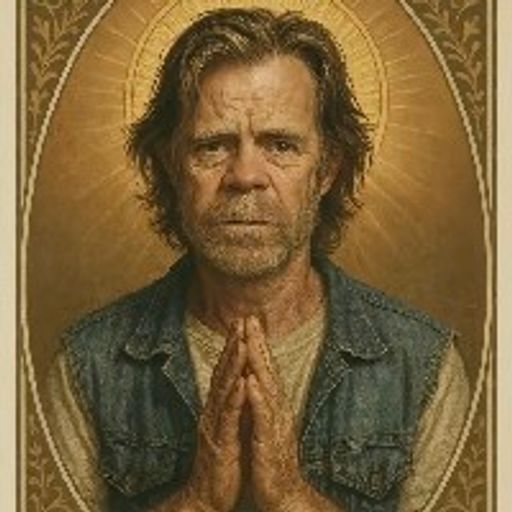

Just stumbled on one of the most underrated trader stories in finance history, and honestly, it's been on my mind all day. Takashi Kotegawa—most people know him only as BNF (Buy N' Forget)—went from inheriting about $15,000 after his mother passed to building a $150 million net worth in roughly eight years. No fancy pedigree, no elite education, no connections. Just pure discipline and technical mastery.
What gets me about this story is how different it is from the noise we hear today. Everyone's chasing moonshots and listening to influencers drop "secret formulas." BNF did the complete opposite.
He started in early 2000s Tokyo with basically nothing but time and hunger. Spent 15 hours a day—and I mean every single day—studying candlestick patterns, reading company filings, watching price movements. While his peers were out socializing, he was building what he called his trading system. No shortcuts, no get-rich-quick schemes.
Then 2005 hit. Japan's markets went haywire. The Livedoor scandal tanked investor confidence, and then there was that infamous Fat Finger incident at Mizuho Securities—a trader accidentally sold 610,000 shares at 1 yen each instead of 1 share at 610,000 yen. Complete market chaos. Most traders either panicked or froze.
But here's where Kotegawa's preparation paid off. He recognized the pattern, saw the opportunity in the panic, and moved fast. Within minutes, he'd scooped up mispriced shares and walked away with $17 million. That single trade validated everything he'd been building. And it wasn't luck—it was the payoff of years of studying how markets behave when fear takes over.
His actual trading system was refreshingly simple: pure technical analysis. He completely ignored fundamentals. Earnings reports? Didn't matter. CEO interviews? Didn't care. Company news? Irrelevant. He only looked at price action, volume, and recognizable patterns.
He'd spot oversold stocks—ones that had crashed not because the companies were broken, but because panic had pushed prices way below actual value. Then he'd use RSI, moving averages, support levels to predict rebounds. When signals aligned, he entered. If a trade went against him, he cut it immediately. No hesitation. No ego. No hope. Some winners lasted hours or days. Losers got exited the moment they signaled weakness.
That discipline is what separated him from everyone else. While other traders held onto losing positions hoping for a comeback, BNF treated losses as data points and moved on. He thrived in bear markets because he didn't see falling prices as tragedy—he saw them as inventory on sale.
But here's the thing most people miss: his real edge wasn't technical knowledge. It was emotional control. He had this quote that stuck with me: "If you focus too much on money, you cannot be successful." He treated trading like a precision game, not a path to fast riches. Executing his system flawlessly was the win. The money was just the scoreboard.
He ignored hot tips, ignored news chatter, ignored social media noise. The only signal that mattered was his system. Even during absolute market chaos, he stayed calm. He knew that panic was profit's enemy, and traders who lost emotional control were basically transferring their money to people who didn't.
What's wild is how simple his life stayed despite accumulating that takashi kotegawa net worth. He monitored 600-700 stocks daily, managed 30-70 open positions, and his workdays ran from before sunrise past midnight. But he kept his life incredibly unburdened. Instant noodles for meals. No parties, no luxury cars, no expensive watches. His Tokyo penthouse wasn't about status—it was a strategic investment.
The only major purchase he made was a commercial building in Akihabara valued at around $100 million. Even that wasn't about flexing. It was portfolio diversification. Beyond that? Nothing. No sports cars, no entourage, no fund management, no coaching other traders. He deliberately stayed anonymous.
That anonymity was intentional. He understood that silence gave him an edge. Less attention meant more focus. No followers to manage, no reputation to protect—just results. And his takashi kotegawa net worth speaks for itself.
Now, I know what some of you are thinking: "That's a stock market story from the early 2000s. What does it have to do with crypto and Web3 trading today?" Fair question. The markets have changed, the tech is new, everything moves faster. But the core principles? They're timeless, and honestly, they're exactly what's missing in today's hype-driven landscape.
Most traders today are chasing overnight wealth, getting swayed by influencers, diving into tokens based on Twitter vibes. Then they panic-sell when things dip. It's a cycle that destroys accounts.
BNF's lessons hit different. True success comes from discipline, humility, and obsession with process over outcome. In crypto, that means ignoring the noise. Stop reading every news headline. Stop listening to every take. Focus on price action and what the market is actually doing, not what some narrative says it should do.
Trust data over stories. Yeah, "this token will revolutionize finance" sounds compelling, but BNF would ask: what's the chart telling you? What's the volume saying? What pattern is forming? That's the signal that matters.
Discipline beats talent every time. You don't need a genius-level IQ to succeed in trading. You need consistency and execution. BNF's edge was his work ethic and self-control, not some innate brilliance.
Cut your losses fast. Let winners run. This is maybe the most important rule and the one traders break constantly. BNF's success came partly from ruthlessly cutting losers and giving winners room to breathe. That's a differentiator between elite traders and everyone else.
And stay silent. In a world obsessed with clout and engagement, silence is power. Less talking means more thinking. More thinking means sharper strategy. Less distraction means better edge.
The takashi kotegawa net worth story is ultimately about building character and mastering your mind. He started with nothing, no safety net, just grit and patience. His legacy isn't headlines—it's the quiet example of what happens when you commit fully to the craft.
If you want to trade like that, here's what it takes: study price action relentlessly, build a system you actually believe in and stick to it, cut losses without hesitation, avoid the hype and noise completely, focus on process not profits, stay humble and stay sharp.
Great traders aren't born. They're built through years of work and unwavering discipline. If you're willing to put in that effort, you can build something real.