Nazdej

vip
Age 0.1 Yıl
Peak Tier 0
No content yet
MrFlower_XingChenvip
#RIVERUp50xinOneMonth RIVER Token Surges 50× in Just 30 Days — A Case Study in Extreme Crypto Momentum
The crypto market has once again captured global attention as RIVER token delivered a staggering 50× surge within a single month. The hashtag #RIVERUp50xinOneMonth has quickly become a symbol of the speed, intensity, and raw volatility that continue to define digital asset markets in 2026.
This move was not merely a statistical outlier. Instead, it reflects the convergence of market psychology, speculative liquidity, and the growing appetite for asymmetric return opportunities in high-beta crypto assets.
⚡ Rapid Price Discovery: From Obscurity to Market Focus
A 50× move in 30 days places RIVER into the rare category of rapid price discovery assets. Typically emerging from a low-market-cap base, such tokens can experience vertical repricing once attention and liquidity arrive simultaneously.
When demand overwhelms limited circulating supply, price action becomes self-reinforcing. Volume accelerates, visibility expands across social platforms, and momentum begins to dominate traditional valuation metrics. In these phases, perception often becomes more powerful than fundamentals.
🔄 Speculative Capital and Rotation Dynamics
RIVER’s rally also reflects a broader market behavior. When major cryptocurrencies remain range-bound, speculative capital tends to rotate toward assets offering exponential upside potential.
This rotation is often driven by: • Early adopter positioning
• Social media amplification
• Narrative acceleration
• Short-term performance chasing
Once momentum ignites, participation expands rapidly — pulling in both retail traders and high-risk speculative funds seeking outsized returns.
🧠 Market Psychology and Herd Behavior
At the core of extreme rallies lies human behavior.
Fear of missing out, herd mentality, and momentum-based trading converge to create powerful short-term demand waves. In such environments, sentiment frequently overrides analysis, and price becomes its own justification.
RIVER’s 50× expansion serves as a textbook example of how collective psychology can compress months — or even years — of valuation adjustment into mere weeks.
⚠️ The Risks of High-Velocity Assets
However, vertical growth is always a double-edged sword.
Assets that rise rapidly also face elevated risks: • Sharp corrective pullbacks
• Aggressive profit-taking
• Liquidity vacuum zones
• Extreme volatility expansion
In these conditions, disciplined execution becomes essential. Position sizing, risk management, and predefined exit strategies matter far more than prediction. Emotional trading often proves far more dangerous than market direction itself.
💧 Liquidity Stress and Infrastructure Pressure
Explosive rallies also test market infrastructure. Sudden surges in volume can expose thin order books, increase slippage, and create execution inefficiencies across centralized and decentralized platforms.
Understanding liquidity depth becomes just as critical as understanding the token itself — because realized profits depend not only on price movement, but on the ability to enter and exit efficiently.
🌐 Community Power and Network Effects
RIVER’s rise also underscores the influence of community-driven momentum. Active participation across Telegram, Discord, and social platforms amplified visibility, creating a feedback loop between attention, volume, and price behavior.
In modern crypto markets, strong communities can function as accelerators — magnifying both upside velocity and downside risk.
📈 Broader Implications for the Crypto Market
Extreme rallies send important signals across the ecosystem:
• Institutional observers monitor speculative intensity
• Regulators increase scrutiny during overheated phases
• Portfolio risk allocation shifts across sectors
High-beta tokens like RIVER often act as pressure points, revealing the current risk appetite of the entire market.
🏁 Conclusion: Volatility Is the Rule, Not the Exception
The #RIVERUp50xinOneMonth event reinforces a core truth of crypto markets: valuation can realign at extraordinary speed.
Opportunity and risk coexist inseparably. Explosive upside potential exists — but so does the possibility of equally rapid drawdowns. In 2026, volatility is not an anomaly. It is the operating environment.
RIVER stands as both a showcase of decentralized market potential and a reminder of essential discipline. Education, preparation, and emotional control remain the most valuable tools for navigating high-momentum cycles.
In crypto, extraordinary gains are possible —
but only those who respect risk are positioned to keep them.
repost-content-media
  • Reward
  • Comment
  • Repost
  • Share
MrFlower_XingChenvip
#DOGEETFListsonNasdaq Dogecoin Goes Mainstream as ETF Debuts on Nasdaq
The listing of a Dogecoin (DOGE) exchange-traded fund on Nasdaq marks a historic milestone for the cryptocurrency market. On January 22, 2026, the 21Shares Dogecoin ETF (TDOG) officially began trading, providing investors with regulated exposure to Dogecoin without the need to directly hold or manage the token.
This development represents the first SEC-approved spot Dogecoin ETF, symbolizing a major shift in how digital assets — even meme-born cryptocurrencies — are perceived within traditional finance. What began as internet culture has now entered Wall Street infrastructure.
🐶 Dogecoin’s Evolution: From Meme to Market Asset
Dogecoin was created in 2013 by Billy Markus and Jackson Palmer as a parody of early crypto speculation. Built around the Shiba Inu “Doge” meme, it was never intended to become a financial heavyweight.
Yet over time, DOGE developed one of the strongest communities in crypto — the “Doge Army.” Fueled by online virality, tipping culture, and high-profile public support, Dogecoin evolved into a top-tier digital asset by market capitalization, proving that community-driven value can persist far beyond its origins.
Following the approval of Bitcoin and Ethereum ETFs in 2024, institutional interest in alternative crypto exposure increased steadily. The 21Shares DOGE ETF filing in 2025 reflected growing confidence that Dogecoin had reached sufficient liquidity, market depth, and regulatory clarity to support a mainstream investment vehicle.
📊 21Shares Dogecoin ETF (TDOG): Key Features
• Ticker: TDOG (Nasdaq)
• Structure: Physically backed, holding real DOGE at a 1:1 ratio
• Annual Management Fee: 0.50%
• Accessibility: Available via major brokerages including Robinhood, Fidelity, and TD Ameritrade
• Partnerships: Supported by the Dogecoin Foundation, House of Doge, and FalconX for liquidity and execution
This structure allows both retail and institutional investors to gain DOGE exposure without wallets, private keys, or exchange risk.
⚡ Trading, Liquidity, and Market Infrastructure
The ETF launched with FLOW TRADERS U.S. LLC serving as lead market maker, ensuring efficient spreads and consistent liquidity. Pricing transparency is supported through Nasdaq TotalView-ITCH and UTP Level 1 data feeds, aligning TDOG with institutional trading standards.
Market analysts estimate potential $1–2 billion in assets under management within the first year, driven by Dogecoin’s global brand recognition and the regulatory simplicity ETFs provide.
🔗 Expanding DOGE Investment Products
Alongside TDOG, other Dogecoin-linked products are emerging, including:
• 21Shares 2× Long Dogecoin ETF (TXXD) — leveraged exposure
• Grayscale Dogecoin Trust ETF (GDOG) — designed for broader institutional participation
However, TDOG remains distinct due to its SEC approval and foundation-level backing, positioning it as the benchmark DOGE investment vehicle.
🏛 Regulatory Significance
SEC approval signals a major evolution in U.S. crypto policy. Historically cautious toward volatile assets, regulators are now acknowledging that liquidity, transparency, and surveillance — not narrative origin — determine eligibility.
This sets a precedent that even community-driven cryptocurrencies can qualify for regulated financial products, potentially opening doors for future altcoin ETFs.
📉 Market Reaction and Investor Sentiment
On listing day, DOGE experienced mild volatility — dipping approximately 1.6% — after a 5% pre-listing rally. As of January 23, 2026, Dogecoin trades near $0.124–$0.125 USD, reflecting a classic “sell-the-news” response rather than structural weakness.
Across social platforms, the message was clear:
“Doge has officially reached Wall Street.”
💡 Potential Advantages of TDOG
• Simplified access without crypto custody
• Regulatory legitimacy and institutional confidence
• Increased liquidity and market participation
• Symbolic bridge between internet culture and traditional finance
⚠️ Risks and Considerations
Despite ETF approval, Dogecoin remains:
• Highly sentiment-driven
• Influenced by social media narratives
• Vulnerable to rapid volatility shifts
Leveraged ETFs introduce compounding risk, and investors must also consider fees, tax treatment, and regulatory changes.
🔮 Final Outlook
The Nasdaq debut of TDOG represents a defining chapter in Dogecoin’s journey — from meme to market infrastructure. While its cultural origins continue to influence price behavior, ETF inclusion fundamentally changes how DOGE is accessed, analyzed, and allocated.
This is not merely a product launch.
It is a signal.
2026 is shaping up as a year where culture, finance, and technology converge, and Dogecoin’s transition into regulated markets highlights how far the crypto ecosystem has matured.
From internet joke to Wall Street ticker —
Dogecoin has officially entered the mainstream.
repost-content-media
  • Reward
  • Comment
  • Repost
  • Share
MrFlower_XingChenvip
#IranTradeSanctions Global Trade Enters a New Phase
As 2026 unfolds, Iran’s trade sanctions have moved beyond traditional economic pressure and are now reshaping the architecture of global commerce itself. What was once a regional containment strategy has transformed into a system-wide stress test for international trade rules, financial neutrality, and diplomatic alignment. Governments, corporations, and investors are increasingly forced to assess not only profitability but geopolitical exposure in every transaction involving the Middle East.
The most significant shift is the evolution of sanctions from direct penalties on Iran into secondary and tertiary enforcement mechanisms. These measures no longer target only Iranian institutions but extend to logistics companies, insurers, commodity traders, ports, and even software providers indirectly connected to Iranian trade. This expansion has created unprecedented uncertainty across global supply chains.
In early 2026, the United States intensified its approach by signaling broader tariff enforcement tied to Iran-related trade exposure. While implementation remains uneven, the message itself has rattled markets. Even the possibility of blanket trade penalties has forced multinational corporations to pause contracts, delay shipments, and re-evaluate regional partnerships across Asia and the Middle East.
Energy markets remain the most sensitive pressure point. Iran’s crude exports continue under heavy restrictions, but shadow trade routes — often routed through blended shipments and indirect resales — persist. However, tighter vessel tracking, satellite monitoring, and financial surveillance have significantly raised transaction costs, reducing profitability even where trade technically continues.
China and Russia have emerged as central players in Iran’s economic survival strategy. Long-term energy-for-infrastructure arrangements, local currency settlements, and bilateral clearing mechanisms are expanding. Yet these alternatives remain structurally limited — unable to replace access to dollar liquidity, global insurance markets, and Western trade financing.
Meanwhile, regional economies find themselves caught in the middle. Turkey, Iraq, the UAE, and parts of Central Asia must balance geography against geopolitics. Informal trade channels still operate, but rising compliance risks have forced banks and transport firms to quietly withdraw, slowing commerce even without formal bans.
Inside Iran, economic strain continues to deepen. Inflation remains elevated, household purchasing power weakens, and currency volatility erodes long-term planning. While domestic production has increased in some sectors, lack of advanced technology, spare parts, and foreign investment limits meaningful recovery. Economic resilience exists — but growth momentum does not.
Social pressure remains a defining internal factor. Economic frustration, employment instability, and reduced subsidy capacity have heightened tensions across urban centers. International human-rights-related sanctions further complicate negotiations, tying economic relief to political and governance expectations that remain unresolved.
Financial isolation has accelerated experimentation. Iran is expanding digital settlement platforms, barter-style trade frameworks, and regional payment corridors. While innovative, these systems lack scale and trust beyond aligned partners. As a result, Iran’s economy increasingly operates in parallel rather than integrated global systems.
For global investors, Iran-linked sanctions now function as a broader market signal. Risk premiums across emerging markets have risen, particularly where political alignment with major powers is ambiguous. Currency markets, shipping insurance, and commodity derivatives increasingly price geopolitical exposure alongside traditional fundamentals.
Diplomatically, 2026 may define whether sanctions remain a pressure mechanism or evolve into a permanent structural divide in global trade. Quiet negotiations, limited waivers, and backchannel talks continue — but progress is fragile. Any regional escalation could instantly reset diplomatic momentum and trigger further economic fragmentation.
Looking forward, Iran’s sanctions are no longer just about Iran. They represent a turning point in how global power influences trade access, financial participation, and economic sovereignty. The outcome will shape future sanction models worldwide — determining whether globalization adapts, fractures, or reorganizes into competing economic spheres well beyond 2026.
Key Outlook:
Iran’s trade sanctions have become a global stress point — influencing energy security, currency stability, investment confidence, and diplomatic alignment. The world is not merely watching Iran’s economy — it is watching the future rules of global trade being rewritten in real time.
repost-content-media
  • Reward
  • Comment
  • Repost
  • Share
MrFlower_XingChenvip
#GateTradFi1gGoldGiveaway Where Digital Commitment Shapes the Future of Value
As 2026 progresses, the relationship between digital finance and real-world assets is entering a decisive new phase. Gate TradFi’s 1g Gold Giveaway is no longer viewed simply as a promotional campaign — it is increasingly recognized as an early blueprint for how next-generation financial platforms will reward participation, loyalty, and discipline. In a rapidly maturing crypto environment, this initiative stands out as a signal of where the industry is heading, not where it has been.
Unlike traditional reward systems that rely heavily on volatile tokens or short-lived bonuses, this campaign anchors digital activity to something universally understood: physical value. Gold does not rely on algorithms, narratives, or market hype. Its worth is recognized across borders, cultures, and economic cycles. By tying trading engagement to a tangible asset, Gate TradFi reinforces confidence at a time when global investors are actively searching for stability.
What makes this evolution particularly important is the behavioral shift it encourages. The platform is quietly redefining success in trading — moving it away from aggressive speculation and toward structured participation. Users are rewarded not for extreme risk-taking, but for consistency, activity, and commitment. This mirrors how traditional financial institutions operate, bringing professional discipline into the digital trading space.
New developments expected throughout 2026 further strengthen this model. Gate TradFi is increasingly aligning reward mechanics with long-term ecosystem growth, emphasizing transparency, fairness, and equal opportunity. Rather than favoring high-volume accounts, participation frameworks are designed to keep the playing field balanced, allowing everyday traders to compete under the same measurable conditions as larger participants.
The integration of physical gold also reflects a deeper macro awareness. With inflation uncertainty, currency fluctuations, and geopolitical tensions continuing to influence markets, gold’s role as a psychological and financial anchor has grown stronger. By incorporating it into its incentive structure, Gate TradFi aligns itself with global investor sentiment — one that values protection, durability, and real backing alongside innovation.
Another emerging dimension in 2026 is community-driven finance. The giveaway is not operating in isolation; it is closely connected to social engagement across trading communities. Participants share progress, strategies, and insights, turning individual effort into collective momentum. This interaction builds trust organically, something that cannot be manufactured through advertising alone.
From a platform perspective, the long-term benefits are significant. Steady engagement improves liquidity quality, reduces erratic trading behavior, and fosters a healthier internal market environment. These structural advantages position Gate TradFi not just as an exchange, but as a sustainable financial ecosystem designed for longevity rather than short-term excitement.
Looking ahead, campaigns like the 1g Gold Giveaway may become the standard rather than the exception. The future of finance is not about choosing between traditional assets and digital innovation — it is about merging them intelligently. Platforms that successfully blend speed, transparency, and tangible value will be the ones that earn lasting trust in the years to come.
At its foundation, this initiative represents balance — between technology and tradition, ambition and patience, digital effort and real-world reward. In a market often driven by urgency, Gate TradFi delivers a quieter but more powerful message: value is built over time, and consistency still wins.
💬 Community Pulse:
Are you actively building toward real gold through digital discipline — or waiting for the next phase of momentum to unfold?
repost-content-media
  • Reward
  • Comment
  • Repost
  • Share
MrFlower_XingChenvip
#GrowthPointsDrawRound16 Where Community Power Turns Activity Into Opportunity
With the arrival of the Year of the Horse, Gate.io has kicked off 2026 with renewed energy by launching the 16th edition of the Growth Value New Year Lottery — Growth Points Draw Round 16. This campaign reflects Gate.io’s ongoing commitment to building a vibrant, interactive, and reward-driven community ecosystem where every user’s activity truly matters.
Rather than focusing solely on trading volume, this event highlights the importance of participation and connection. Users can earn Growth Points simply by being active on Gate Square — posting content, commenting on discussions, liking updates, and engaging in community chats. Once a user reaches 300 Growth Points, they become eligible to enter the lottery draw, with higher activity unlocking more chances to win.
Round 16 introduces an exciting prize pool designed to blend digital engagement with real-world value. Participants have the opportunity to win a brand-new iPhone 17, exclusive New Year-themed merchandise, along with various crypto tokens and surprise digital gifts. These rewards reflect Gate.io’s approach of combining entertainment, value, and motivation within one unified experience.
The event runs from January 21 at 16:00 until January 31 at 24:00 (UTC+8), allowing users sufficient time to steadily build points without pressure. This extended window encourages consistent daily engagement rather than rushed participation, reinforcing healthy and sustainable community behavior.
Beyond prizes, Growth Points Draw Round 16 represents a broader shift in how crypto platforms evolve in 2026. Community interaction is no longer secondary — it has become a core pillar of ecosystem growth. Through Gate Square, users not only earn rewards but also exchange ideas, market perspectives, and insights that strengthen the collective knowledge of the platform.
This lottery also promotes fairness and inclusivity. Every participant, regardless of account size or trading experience, competes under the same transparent rules. Success is driven by consistency and contribution, not capital alone — a model increasingly favored across modern digital finance platforms.
As global markets remain dynamic, Gate.io continues emphasizing engagement-based incentives that build loyalty and long-term trust. Growth Points function as a bridge between attention and value, turning everyday interaction into measurable opportunity and reinforcing the importance of community presence.
To participate, users simply need to head to Gate Square, stay active, and track their Growth Points progress. Strategic and consistent engagement increases draw entries and improves the odds of securing top-tier rewards.
As the Year of the Horse symbolizes movement, resilience, and progress, Growth Points Draw Round 16 invites the community to move forward together — celebrating the New Year through activity, interaction, and shared rewards.
✨ Community Pulse:
Are you already stacking Growth Points for the next draw — or just starting your New Year journey on Gate Square?
repost-content-media
  • Reward
  • Comment
  • Repost
  • Share
MrFlower_XingChenvip
#NextFedChairPredictions The Decision That Could Define the Direction of Global Markets
As 2026 unfolds, global financial markets are increasingly centered on one critical question: who will become the next Chair of the Federal Reserve, and what direction will that leadership impose on global liquidity? This decision is far more than a political appointment. It represents control over the world’s most influential central bank — and the tone it sets can reshape capital flows across every asset class.
From U.S. Treasuries to emerging markets and cryptocurrencies, investors are positioning not around today’s data, but around expectations of tomorrow’s policy framework.
Recent speculation suggests Kevin Warsh has emerged as a leading contender, with market-implied probabilities reportedly climbing near 60%. Warsh is widely viewed as fiscally disciplined, cautious toward excessive monetary expansion, and highly focused on protecting long-term inflation credibility. Even without an official announcement, these expectations have already begun influencing interest-rate futures, bond yields, and U.S. dollar positioning.
What makes this potential transition especially sensitive is timing. The global economy stands at a crossroads. Inflation has cooled but remains structurally elevated, growth is uneven, and sovereign debt levels sit near historic highs. In such an environment, the philosophy of the Fed Chair may matter more than any single economic report. Markets are no longer pricing rates alone — they are pricing ideology.
A hawkish-leaning Chair would likely prioritize credibility and inflation control over short-term growth. That path typically supports higher yields and a stronger dollar while suppressing speculative risk-taking. Equities could face valuation pressure, and crypto markets may experience temporary liquidity contraction as leverage becomes more expensive and risk appetite fades.
Conversely, a more pragmatic or flexible leadership approach could signal openness to easing if growth slows meaningfully. In that scenario, markets may begin anticipating earlier rate cuts, balance sheet stabilization, and renewed liquidity cycles. Historically, such conditions have been highly supportive for Bitcoin, Ethereum, and high-beta digital assets.
Crypto markets are uniquely sensitive to expectations rather than outcomes. Bitcoin does not wait for rate cuts — it reacts to the probability of them. Changes in tone, guidance, and credibility often move prices long before policy decisions occur. This is why Fed leadership transitions frequently generate volatility well ahead of any official action.
From a technical perspective, macro liquidity expectations often interact directly with key price levels. Improving liquidity sentiment tends to strengthen support zones and sustain breakouts. Hawkish surprises, on the other hand, frequently produce sharp but temporary drawdowns that flush leverage before markets stabilize.
Beyond U.S. policy alone, global conditions will still matter. Emerging market strength, commodity demand, fiscal stress, and geopolitical risks can all constrain or amplify the Fed’s flexibility — regardless of who occupies the Chair.
This is why experienced investors focus less on headlines and more on confirmation. Employment trends, wage pressures, inflation momentum, and credit-market stress ultimately define the boundaries of policy. The Chair sets direction — but data sets the limits.
During periods of leadership uncertainty, patience becomes a strategic advantage. Gradual positioning, balanced exposure, and controlled leverage often outperform aggressive predictions. Volatility during transitions creates opportunity — but only for those prepared to manage risk rather than chase narratives.
Ultimately, the next Fed Chair will not merely influence interest rates. They will help determine how liquidity behaves within an increasingly fragile global system. For crypto markets in particular, this decision may define the rhythm of the entire 2026 cycle. Because in modern markets, prices are not driven by policy alone — they are driven by expectations.
💬 Community Question:
Do you expect the next Fed Chair to prioritize liquidity support in 2026 — or maintain strict monetary discipline? Share your view below 👇
repost-content-media
  • Reward
  • Comment
  • Repost
  • Share
MrFlower_XingChenvip
#TheWorldEconomicForum A Turning Point for Global Governance, AI, and Geopolitics
As the 56th Annual Meeting of the World Economic Forum (WEF) wrapped up in Davos, Switzerland (January 19–23, 2026), the gathering drew an unprecedented assembly of world leaders, CEOs, policymakers, and civil society figures under the theme “A Spirit of Dialogue.” With nearly 3,000 participants from over 130 countries — including a record turnout from major economies — this year’s meeting reflected the complex geopolitical and economic crossroads confronting the world today.
Geopolitical strains and rising trade tensions dominated discussions. Leaders grappled with the implications of renewed tariff pressures and economic nationalism, particularly involving the United States, Europe, and other major blocs. U.S. President Donald Trump addressed the forum, outlining his foreign policy priorities while navigating tensions over territories like Greenland and pushing back against escalating tariff risks — moves that briefly nudged markets toward risk‑off sentiment before mitigation efforts quelled sharper reactions. European and North Atlantic leaders responded with steadfast caution, underscoring their commitment to cooperative frameworks even as fault lines emerged in global economic relations.
Artificial intelligence (AI) was arguably the most prominent subject of discussion, with tech leaders, policymakers, and international financial officials weighing in on both its transformative potential and societal risks. CEOs from leading tech firms emphasized how AI is driving productivity, fueling new industries, and reshaping labor markets, with estimates suggesting the technology could add trillions to the global economy in the coming years. Yet voices from labor unions and international institutions cautioned that rapid AI adoption could deepen inequality and create disproportionate disruptions, particularly in entry‑level and middle‑class jobs. This spectrum of optimism and caution underscored the need for responsible governance, ethical frameworks, and inclusive policy design as AI scales across sectors.
Forum sessions highlighted that the global economy is resilient yet fragile. Inflationary pressures have moderated, but core inflation and sovereign debt ceilings remain elevated, while trade growth and fiscal space for policymakers are constrained. Leaders reiterated that coordinated public‑private action is essential to confront near‑term shocks and unlock long‑term productivity, particularly by harnessing innovation responsibly and ensuring the benefits of growth reach broader populations. Economic projections remain cautious, with growth forecasts dependent on both structural reforms and geopolitical stability.
In a notable outcome from Davos 2026, announcements of future collaboration frameworks and strategic meetings emerged. Saudi Arabia confirmed it will host the WEF Global Collaboration and Growth Meeting in Jeddah on April 22–23, 2026, aimed at building momentum on economic cooperation, stability, and inclusive growth strategies across regions. Meanwhile, the UAE signed a series of agreements with the WEF focused on AI research, health systems innovation, humanitarian action, and strategic intelligence cooperation — an indicator of how states are using Davos as a platform to elevate bilateral and multilateral commitments beyond dialogue to tangible cooperation frameworks.
Emerging economies also made their mark at Davos. Panels highlighted the need for deeper structural reforms, food security initiatives, and enhanced integration in global value chains — reflecting aspirations from nations in Africa, Asia, and Latin America to shape global economic discourse on their own terms. Nigeria, for example, launched its first-ever national pavilion at the forum to spotlight agricultural resilience and food system priorities, reaffirming that inclusive participation from the Global South is increasingly central to WEF dialogues.
Despite the expansive debates and high-level exchanges, critiques from civil society and independent analysts persisted: meaningful implementation of ambitious agendas remains a central challenge. Translating summit rhetoric into equitable, on-the-ground outcomes for vulnerable communities is a core test for the forum’s relevance in an era of widening inequality and structural risk. Yet organizers and participants alike championed Davos 2026 as a critical platform for sustaining dialogue across divides — from geopolitics and economic fragmentation to technological disruption and climate imperatives.
The 2026 World Economic Forum served as a dynamic convergence of power, policy, and possibility — a space where leaders confronted the realities of economic volatility, technological transformation, and geopolitical fragmentation, even as they sought collaborative and forward-looking pathways to shape global resilience and prosperity in the years ahead.
repost-content-media
  • Reward
  • Comment
  • Repost
  • Share
MrFlower_XingChenvip
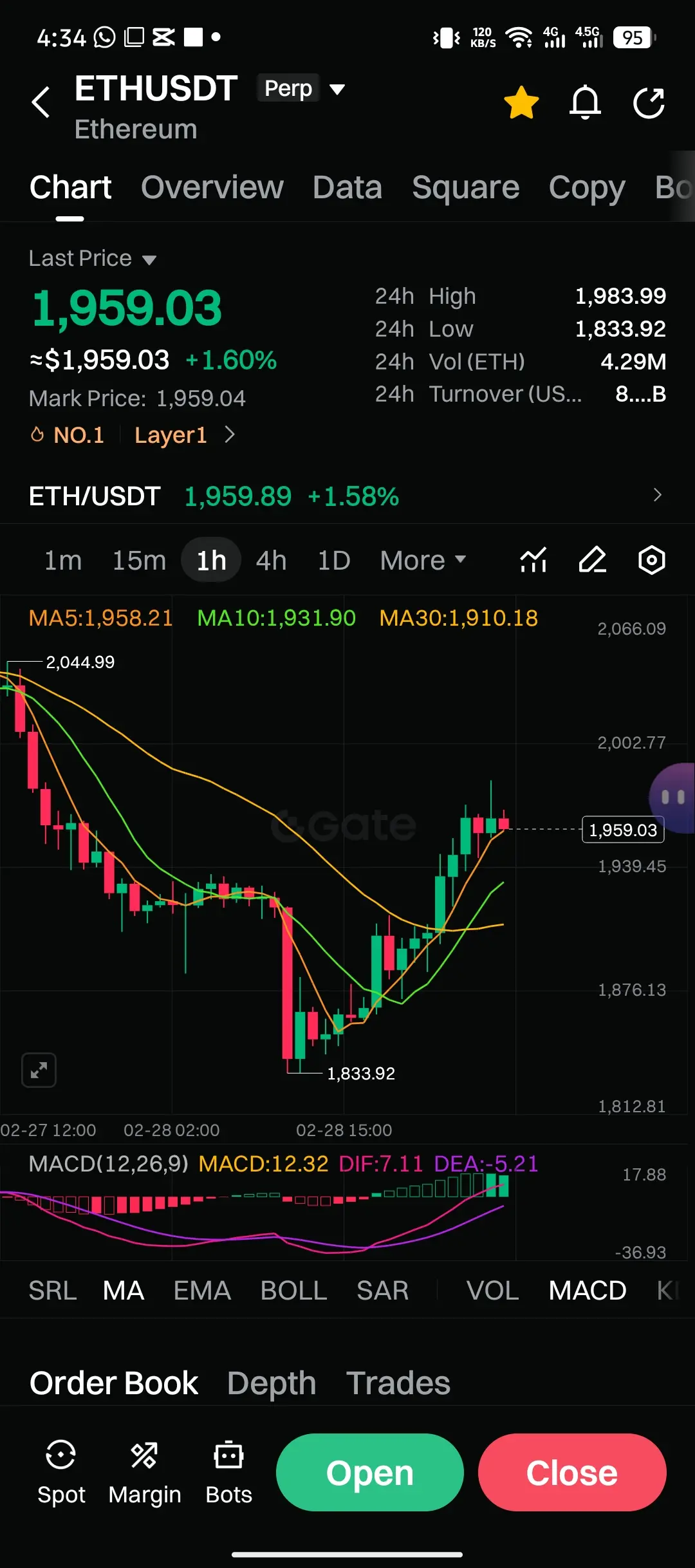
#ETHTrendWatch Ethereum Trend Watch: Navigating Consolidation and Strategic Positioning
Ethereum (ETH), the world’s second-largest cryptocurrency, is currently moving through a consolidation phase marked by elevated volatility and cautious market participation. Price action remains confined within the $2,970–$3,200 range, reflecting a market caught between accumulation interest and hesitation. Over the past month, ETH has largely fluctuated between $2,950 and $3,260, suggesting that traders are balancing short-term opportunities with broader uncertainty.
Demand has consistently appeared near the $3,100–$3,200 zone, supported by short-term moving averages and psychologically important levels. Resistance continues to emerge around $3,250–$3,400, where rallies have repeatedly met profit-taking pressure. This structure indicates that bullish momentum has not disappeared but remains restrained, awaiting stronger confirmation from both technical signals and macro conditions.
From a longer-term perspective, Ethereum continues to trade above its 200-week moving average, a level historically defining structural trend strength. While this supports the broader bullish framework, ETH’s repeated inability to break decisively above the $3,400–$3,450 resistance zone confirms that the market is currently in a transitional phase rather than a trending expansion.
Volume behavior reinforces this view. Accumulation activity is most visible near lower support levels, while upward moves encounter consistent distribution near resistance. This pattern reflects controlled, range-bound participation rather than panic selling or speculative excess — a typical signature of markets consolidating before a meaningful directional move.
Macro conditions remain a key influence on Ethereum’s behavior. ETH continues to track Bitcoin’s directional bias while responding strongly to global liquidity expectations and risk sentiment. During periods of rising risk appetite, Ethereum often outperforms BTC. Conversely, tighter financial conditions compress volatility and reinforce sideways price discovery — the environment currently dominating markets.
As a result, strategies diverge by time horizon. Short-term traders are monitoring potential momentum breaks above $3,250–$3,400, using indicators such as RSI and MACD to identify confirmation and potential upside targets in the $3,400–$3,650 region. Range traders remain focused on accumulation near $3,100–$3,200, maintaining tight risk controls and scaling positions cautiously within the established structure.
Long-term investors continue to view the current phase as a possible accumulation window. Ethereum’s foundational role across DeFi, Layer-2 scaling, staking infrastructure, NFTs, and enterprise blockchain adoption provides ongoing structural support. In this context, disciplined dollar-cost averaging during pullbacks offers exposure without reliance on precise market timing. Under favorable macro and liquidity conditions, medium-term projections point toward a potential move beyond $4,000, reinforcing patience over aggressive momentum chasing.
Risk management remains essential. Sustained weakness below $3,000–$2,950 could open the door to deeper corrective moves. Strategic stop placement, position sizing, and awareness of broader macro signals are critical to preserving capital while maintaining upside optionality.
Overall, Ethereum’s current structure reflects a balance between consolidation and latent breakout potential. The next major move will depend on the alignment of technical confirmation, Bitcoin direction, and global liquidity conditions. Until that alignment materializes, discipline and strategy-driven execution remain more important than prediction.
Key questions for ETH participants include:
Is the current range signaling accumulation or preparation for expansion?
Are positions guided by short-term momentum or long-term fundamentals?
Which support and resistance levels define risk and opportunity?
How are Bitcoin trends and macro liquidity influencing ETH behavior?
Market participants who integrate technical structure, macro awareness, and disciplined execution are best positioned to navigate this consolidation phase — and capitalize on Ethereum’s next decisive move, whether it unfolds as a breakout or a strategic retracement for accumulation.
  • Reward
  • Comment
  • Repost
  • Share
Good Information 👍
MrFlower_XingChenvip
#CLARITYBillDelayed U.S. Crypto Regulation Enters a New Phase of Uncertainty
The U.S. crypto market is once again facing regulatory uncertainty as the long-anticipated CLARITY Act has been officially delayed in the Senate. Originally positioned as a landmark framework to unify federal oversight of digital assets — including exchanges, custodians, stablecoins, and DeFi platforms — the bill has now entered legislative limbo. As a result, market participants are navigating an environment shaped more by ambiguity than direction.
The delay reflects a convergence of political, procedural, and industry-driven obstacles. Several major crypto stakeholders withdrew support, expressing concern that portions of the draft could restrict innovation and weaken stablecoin competitiveness. At the same time, unresolved amendments and ongoing jurisdictional disputes between regulators slowed progress. With U.S. midterm elections approaching, lawmakers have grown increasingly cautious about advancing legislation tied to a rapidly evolving and politically sensitive sector.
At its core, the CLARITY Act was built around three primary objectives:
Defining clear jurisdictional boundaries between the SEC and CFTC
Establishing standardized legal definitions for digital assets
Setting compliance and operational standards for exchanges and custodial platforms
The intent was to strike a balance between investor protection and technological innovation. Without its passage, regulatory ambiguity remains firmly in place — creating short-term instability while also presenting selective opportunities for participants capable of navigating uncertainty with discipline.
In the near term, this environment is likely to sustain elevated volatility across major crypto assets, including Bitcoin, Ethereum, and institutionally linked stablecoins. Institutional players may delay expansion plans, partnerships, and capital deployment until clearer legal direction emerges. Reduced regulatory visibility often translates into cautious liquidity behavior rather than outright risk-off positioning.
Over the longer term, the implications extend well beyond price action. Prolonged uncertainty increases the risk of innovation migrating offshore, as jurisdictions such as Dubai, Singapore, and Hong Kong continue to offer structured and predictable regulatory frameworks. Historically, capital, talent, and infrastructure follow clarity — not hesitation.
From an investor perspective, periods of regulatory transition demand disciplined positioning. Exposure should remain balanced, volatility actively managed, and allocation decisions driven by strategy rather than emotion. Closely monitoring legislative updates, lobbying activity, regulatory statements, and enforcement trends can provide early signals before market expectations fully adjust.
The #CLARITYBillDelayed development is not merely about a postponed bill. It reflects the broader challenge of applying traditional legislative processes to a rapidly evolving global technology. While regulation pauses, innovation does not. Adoption continues, infrastructure expands, and international competition accelerates.
Markets may be waiting — but informed participants are preparing.
repost-content-media
  • Reward
  • Comment
  • Repost
  • Share
Good Information
MrFlower_XingChenvip
#CryptoMarketWatch Fear dominates: Crypto Fear & Greed Index at 20 😨
Gold hits $5,000/oz 💰 – safe-haven surge
Japan eyes Spot Crypto ETFs by 2028 🇯🇵
a16z-backed Entropy shuts down; full refunds underway 🔄
US crypto regulation enters a new phase with the potential Market Structure Act 🇺🇸
Markets are shifting — where are you positioning?
repost-content-media
  • Reward
  • Comment
  • Repost
  • Share
let's go
MrFlower_XingChenvip
#PrivacyCoinsDiverge DASH Breaking Against the Trend
The privacy coin sector is once again showing clear divergence, and this week DASH has emerged as a standout performer, rising more than 10% while broader crypto markets remain under pressure. This move highlights an important reality within the privacy niche: these assets do not move as a single group. Each reacts differently to liquidity, sentiment, and network-specific developments.
DASH’s recent strength appears to be driven by a combination of technical and structural factors. Price action has successfully pushed above several key resistance zones, triggering momentum-based strategies and algorithmic entries. Once these levels were cleared, follow-through buying accelerated, reinforcing short-term bullish sentiment.
Beyond technicals, market interest in privacy-focused assets has started to reappear. Select crypto funds and active traders are reportedly revisiting privacy coins for tactical exposure, particularly those with higher liquidity and faster transaction frameworks. DASH, due to its long market history and recognizable brand, has benefited from this renewed attention.
On-chain data further supports the move. Increases in active addresses, transaction activity, and network participation suggest the rally is not purely speculative. While short-term traders are clearly involved, underlying usage metrics indicate genuine engagement rather than a brief liquidity spike.
That said, caution remains necessary. As price accelerates, short positions are beginning to build, increasing the likelihood of volatility. Momentum-driven rallies can reverse quickly if price fails to hold newly established support zones. In leveraged markets, even small pullbacks can cascade into rapid corrections, making disciplined risk management essential.
When compared with other major privacy coins, the divergence becomes even clearer. DASH currently functions as a momentum asset, offering high short-term upside but also elevated volatility. This profile suits active traders who monitor price closely and operate with defined invalidation levels.
In contrast, ZEC and XMR remain structurally oriented assets. Their price action has been calmer, but that stability may appeal to long-term participants. Controlled pullbacks in these coins often attract accumulation from holders who prioritize decentralization, censorship resistance, and network durability over rapid price expansion.
Key technical zones continue to guide positioning. For DASH, maintaining strength above the $135–$140 region will be critical in determining whether momentum can extend. For ZEC and XMR, established support ranges act as reference areas for strategic accumulation rather than short-term speculation.
Several indicators will determine whether this divergence continues. Sustained trading volume is essential — consistent demand supports trend continuation, while sharp volume spikes often signal exhaustion. Derivatives metrics such as funding rates and open interest must also be watched closely, as excessive leverage can amplify both upside and downside movements. On-chain activity remains one of the most reliable signals for distinguishing durable rallies from temporary price reactions.
From a strategic standpoint, this environment presents a clear risk-reward split. DASH offers opportunity through momentum but demands constant monitoring and strict capital discipline. ZEC and XMR provide slower but potentially more resilient exposure for participants focused on long-term fundamentals rather than short-term volatility.
The broader takeaway is important: privacy coins are not monolithic. Even within the same category, assets behave differently based on liquidity depth, adoption trends, regulatory perception, and investor positioning. Treating them as a single trade often leads to mispricing risk.
Looking ahead, as regulatory frameworks continue to evolve and privacy use cases regain attention, divergence within the sector may expand further. This creates space for tactical trading opportunities on momentum leaders while simultaneously rewarding patient holders of fundamentally strong networks.
In the current market, success lies not in prediction — but in adaptability, scenario planning, and disciplined capital allocation as privacy coins continue to chart their own separate paths.
repost-content-media
  • Reward
  • 11
  • Repost
  • Share
GateUser-6be83078vip:
Bullish market at its peak 🐂
View More
let's go
MrFlower_XingChenvip
#CLARITYBillDelayed U.S. Crypto Regulation Faces New Roadblocks
The long‑anticipated CLARITY Act, a landmark piece of U.S. legislation designed to establish a clear regulatory framework for digital assets, has hit significant turbulence in the U.S. Senate, leaving the crypto industry in a state of uncertainty. Originally seen as the most promising path toward comprehensive federal rules for cryptocurrencies, stablecoins, and decentralized finance, the bill’s momentum has stalled after intense debate, industry pushback, and complex political calculus.
Why the CLARITY Act Was Postponed
The Senate Banking Committee abruptly postponed markup on the CLARITY Act in mid‑January 2026—a hearing that had been widely expected to move the bill closer to a full Senate vote. This delay stemmed from a combination of political, procedural, and industry-driven factors. One of the most impactful developments was the withdrawal of support from key crypto firms, most notably Coinbase, whose CEO publicly opposed the bill’s current form, arguing that proposed provisions could harm decentralized finance, restrict stablecoin incentives, and limit innovation in tokenized assets.
Procedural gridlock also contributed: the draft legislation faced dozens of proposed amendments on hot-button issues, making consensus difficult and increasing the risk of a failed vote if rushed. On top of that, senators wary of the upcoming political cycle—including midterms and leadership contests—are hesitant to take on controversial legislation that could expose them to criticism from either Wall Street or the broader tech community.
What the CLARITY Act Was Meant to Achieve
The CLARITY Act (officially H.R.3633: Digital Asset Market Clarity Act) was introduced in May 2025 and passed the U.S. House of Representatives later that summer with bipartisan support. Its core purpose was to eliminate long‑standing “gray areas” in crypto regulation by clearly defining the legal status of digital assets, establishing which federal agencies oversee which activities, and setting consistent rules for exchanges, intermediaries, and stablecoin issuers.
Under the bill, assets meeting certain criteria could be regulated as digital commodities under the Commodity Futures Trading Commission (CFTC), while other digital asset activities would fall under the Securities and Exchange Commission (SEC). In doing so, the bill aimed to clarify jurisdictional confusion that has hindered institutional participation and consumer protections.
New Developments and Industry Reaction
Since the delay, tension between lawmakers, traditional banks, and crypto industry leaders has only intensified. The American Bankers Association and other traditional financial interests have pushed for restrictions on stablecoin yields—arguing that unchecked rewards could undermine deposit bases at community banks—while tech-native firms see these same yield mechanisms as essential for crypto innovation.
Crypto market reaction to the regulatory standstill has been mixed. Top digital assets like Bitcoin and Ethereum dipped slightly following the postponement but have shown resilience, suggesting that traders may have already priced in ongoing uncertainty. At the same time, major crypto stocks, including Coinbase itself, experienced short-term pressure as the debate underscored how fragile regulatory momentum remains.
In response to the backlash, Senate Democrats and committee leaders have scheduled additional discussions with crypto industry representatives to address core concerns—especially around decentralized finance protocols, tokenized equities, and consumer protections—before reconvening for a revised markup session.
What This Delay Means for the Market and Investors
The CLARITY Act’s postponement creates both short‑ and long‑term implications for the U.S. digital asset ecosystem:
Regulatory Uncertainty Continues: Without federal clarity, major companies may delay investment, expansion, or product launches in the U.S., potentially slowing institutional adoption.
Price Volatility: Crypto markets often react to regulatory ambiguity. Even minor news—whether progress or setback—can trigger sharp moves in asset prices as traders adjust risk.
Global Competition: Other jurisdictions with clearer, more innovation-friendly frameworks may attract capital and talent away from the U.S., potentially diminishing America’s influence over global standards.
Strategic Takeaways
For investors and market participants, the current climate calls for caution and active monitoring. High-risk positions, particularly in smaller tokens and DeFi protocols that would be most affected by regulatory shifts, may warrant reevaluation until there’s greater clarity. At the same time, tracking political developments, committee negotiations, and public statements from both lawmakers and industry lobbies will be critical in anticipating the next phases of reform.
While the CLARITY Act remains alive on Capitol Hill, the path forward is far from assured. The current delay, rather than a derailment, could provide lawmakers and stakeholders with valuable time to refine language and build broader support. Still, the hashtag #CLARITYBillDelayed underscores just how contentious and difficult the process of crafting a legal framework for digital assets has become. With negotiations ongoing, the timeline for final passage—and the implications for global crypto leadership—will continue to unfold throughout 2026.
repost-content-media
  • Reward
  • 8
  • Repost
  • Share
let's go
MrFlower_XingChenvip
#CLARITYBillDelayed U.S. Crypto Regulation Faces New Roadblocks
The long‑anticipated CLARITY Act, a landmark piece of U.S. legislation designed to establish a clear regulatory framework for digital assets, has hit significant turbulence in the U.S. Senate, leaving the crypto industry in a state of uncertainty. Originally seen as the most promising path toward comprehensive federal rules for cryptocurrencies, stablecoins, and decentralized finance, the bill’s momentum has stalled after intense debate, industry pushback, and complex political calculus.
Why the CLARITY Act Was Postponed
The Senate Banking Committee abruptly postponed markup on the CLARITY Act in mid‑January 2026—a hearing that had been widely expected to move the bill closer to a full Senate vote. This delay stemmed from a combination of political, procedural, and industry-driven factors. One of the most impactful developments was the withdrawal of support from key crypto firms, most notably Coinbase, whose CEO publicly opposed the bill’s current form, arguing that proposed provisions could harm decentralized finance, restrict stablecoin incentives, and limit innovation in tokenized assets.
Procedural gridlock also contributed: the draft legislation faced dozens of proposed amendments on hot-button issues, making consensus difficult and increasing the risk of a failed vote if rushed. On top of that, senators wary of the upcoming political cycle—including midterms and leadership contests—are hesitant to take on controversial legislation that could expose them to criticism from either Wall Street or the broader tech community.
What the CLARITY Act Was Meant to Achieve
The CLARITY Act (officially H.R.3633: Digital Asset Market Clarity Act) was introduced in May 2025 and passed the U.S. House of Representatives later that summer with bipartisan support. Its core purpose was to eliminate long‑standing “gray areas” in crypto regulation by clearly defining the legal status of digital assets, establishing which federal agencies oversee which activities, and setting consistent rules for exchanges, intermediaries, and stablecoin issuers.
Under the bill, assets meeting certain criteria could be regulated as digital commodities under the Commodity Futures Trading Commission (CFTC), while other digital asset activities would fall under the Securities and Exchange Commission (SEC). In doing so, the bill aimed to clarify jurisdictional confusion that has hindered institutional participation and consumer protections.
New Developments and Industry Reaction
Since the delay, tension between lawmakers, traditional banks, and crypto industry leaders has only intensified. The American Bankers Association and other traditional financial interests have pushed for restrictions on stablecoin yields—arguing that unchecked rewards could undermine deposit bases at community banks—while tech-native firms see these same yield mechanisms as essential for crypto innovation.
Crypto market reaction to the regulatory standstill has been mixed. Top digital assets like Bitcoin and Ethereum dipped slightly following the postponement but have shown resilience, suggesting that traders may have already priced in ongoing uncertainty. At the same time, major crypto stocks, including Coinbase itself, experienced short-term pressure as the debate underscored how fragile regulatory momentum remains.
In response to the backlash, Senate Democrats and committee leaders have scheduled additional discussions with crypto industry representatives to address core concerns—especially around decentralized finance protocols, tokenized equities, and consumer protections—before reconvening for a revised markup session.
What This Delay Means for the Market and Investors
The CLARITY Act’s postponement creates both short‑ and long‑term implications for the U.S. digital asset ecosystem:
Regulatory Uncertainty Continues: Without federal clarity, major companies may delay investment, expansion, or product launches in the U.S., potentially slowing institutional adoption.
Price Volatility: Crypto markets often react to regulatory ambiguity. Even minor news—whether progress or setback—can trigger sharp moves in asset prices as traders adjust risk.
Global Competition: Other jurisdictions with clearer, more innovation-friendly frameworks may attract capital and talent away from the U.S., potentially diminishing America’s influence over global standards.
Strategic Takeaways
For investors and market participants, the current climate calls for caution and active monitoring. High-risk positions, particularly in smaller tokens and DeFi protocols that would be most affected by regulatory shifts, may warrant reevaluation until there’s greater clarity. At the same time, tracking political developments, committee negotiations, and public statements from both lawmakers and industry lobbies will be critical in anticipating the next phases of reform.
While the CLARITY Act remains alive on Capitol Hill, the path forward is far from assured. The current delay, rather than a derailment, could provide lawmakers and stakeholders with valuable time to refine language and build broader support. Still, the hashtag #CLARITYBillDelayed underscores just how contentious and difficult the process of crafting a legal framework for digital assets has become. With negotiations ongoing, the timeline for final passage—and the implications for global crypto leadership—will continue to unfold throughout 2026.
repost-content-media
  • Reward
  • 7
  • Repost
  • Share
gogoggogog
MrFlower_XingChenvip
#DoubleRewardsWithGUSD How Stablecoins Are Redefining Yield Strategy in 2026 — And Why GUSD Is Taking Center Stage
As the crypto market continues to mature in 2026, one trend is becoming increasingly clear: investors are no longer chasing yield blindly. Instead, they are prioritizing structured returns, capital preservation, and predictable performance. In an environment shaped by macro uncertainty, shifting interest-rate expectations, and periodic volatility across major assets, stablecoins have quietly evolved from simple parking tools into powerful yield engines. This evolution is exactly where #DoubleRewardsWithGUSD enters the picture.
Rather than relying on price appreciation alone, modern crypto participants are now optimizing how capital works while waiting for market direction. Yield efficiency has become just as important as market timing.
Why GUSD Is Gaining Strategic Importance
Gemini USD (GUSD) plays a unique role within this framework. As a regulated, dollar-pegged stablecoin, its primary value lies in stability — but stability alone is no longer enough. What makes GUSD increasingly attractive in 2026 is how it is being integrated into reward ecosystems that amplify returns without increasing market exposure.
In uncertain cycles, volatility is not always the enemy — unpredictability is. GUSD offers predictability. When paired with enhanced reward structures, that predictability transforms into opportunity. Instead of sitting idle during sideways or corrective markets, capital becomes productive while remaining insulated from price shocks.
The Mechanics Behind The core idea behind the campaign is efficiency. Rather than introducing new speculative instruments, Gate enhances the reward layer applied to an already stable asset. Participants using GUSD across eligible programs receive multiplied incentives compared to standard participation — effectively increasing yield without altering asset risk.
These rewards can appear across several structures, including enhanced staking programs, boosted savings yields, event-based bonus distributions, and participation incentives tied specifically to GUSD activity. Over time, this structure allows returns to compound in a way that traditional spot holding cannot.
This approach reflects a broader industry shift: rewarding behavior and consistency, not speculation.
Why This Timing Matters in 2026
The relevance of #DoubleRewardsWithGUSD becomes even clearer when viewed through the macro lens. Global markets remain sensitive to policy signals, bond-market movements, and geopolitical developments. During such periods, capital often migrates toward stability — but investors still seek productivity.
Stablecoins now sit at the intersection of safety and yield. Instead of exiting crypto entirely, many participants are repositioning within the ecosystem, maintaining exposure while reducing volatility risk. GUSD, supported by structured reward multipliers, fits naturally into this transition phase.
This marks an important evolution: crypto participation is no longer binary (risk-on or risk-off). It is layered.
How Double Rewards Change Long-Term Outcomes
While a single reward cycle may seem modest, the real impact appears over time. Reward multipliers significantly affect compounding efficiency, especially when participation is sustained. Instead of waiting for market rallies, users accumulate value consistently — creating what many now view as “silent growth.”
This strategy becomes especially powerful during consolidation phases, when price action slows but infrastructure activity continues. Historically, these quiet periods often precede major directional moves, meaning participants who stayed productive are better positioned when momentum returns.
Flexibility as a Core Advantage
Another critical strength of GUSD-based reward strategies is flexibility. Unlike volatile assets that force difficult timing decisions, stablecoin-based participation allows users to enter and exit programs with clarity. This flexibility supports adaptive strategies — shifting between short-term opportunities and longer-term yield generation depending on market conditions.
In 2026, adaptability is becoming one of the most valuable investment traits.
Risk Awareness and Strategic Discipline
While stablecoins reduce price volatility, disciplined allocation remains essential. Reward programs may vary in duration, yield structure, and participation rules. Understanding lock-up periods, reward distribution cycles, and program timelines ensures that stability is preserved alongside yield.
The strongest strategies are not aggressive — they are consistent, monitored, and recalibrated as conditions evolve.
The Bigger Picture: Stablecoins as Yield Infrastructure
What #DoubleRewardsWithGUSD ultimately reflects is a deeper transformation in crypto markets. Stablecoins are no longer just transactional tools or temporary shelters. They are becoming core infrastructure for yield generation, portfolio balance, and capital efficiency.
As markets become more sophisticated, the line between passive holding and active strategy continues to blur. Yield is no longer something chased — it is engineered.
Final Perspective
#DoubleRewardsWithGUSD is more than a promotional campaign. It represents a modern approach to crypto participation — one where stability and opportunity coexist. In a market that increasingly rewards patience over impulse, structured yield strategies are emerging as a cornerstone of sustainable growth.
In 2026, smart participation is not about moving faster.
It’s about making capital work — even when markets pause.
Stable value.
Enhanced rewards.
Strategic calm in a volatile world.
  • Reward
  • 8
  • Repost
  • Share
#GoldmanEyesPredictionMarkets Goldman Sachs Steps Into Prediction Markets: A Strategic Shift Toward Crowd-Sourced Intelligence
In mid-January 2026, Goldman Sachs CEO David Solomon revealed during the firm’s Q4 2025 earnings call that the bank is actively exploring prediction markets. Describing them as “super interesting,” Solomon confirmed personal meetings with leaders from major platforms—widely understood to be Kalshi and Polymarket—and noted that dedicated internal teams are studying potential integration opportunities.
This signals a notable evolution for one of Wall Street’s most influe
BTC1,17%
ETH2,87%
  • Reward
  • 8
  • Repost
  • Share
YemenBitvip:
I share the latest crypto news every single day. 📰 Subscribe/Follow my account to stay updated with the trend! 💹
View More
#GateSquareCreatorNewYearIncentives 2026 marks a breakthrough year for content creators on Gate Square.
This year isn’t just about posting — it’s about turning insight, consistency, and engagement into real rewards, long-term credibility, and platform-wide recognition. Gate Square is building a true creator economy, where high-quality content is actively promoted and monetized. Whether your focus is market analysis, crypto education, NFTs, or trend commentary, your voice now carries measurable value.
🌟 Why 2026 Is a Breakthrough Year for Creators
💰 $10,000+ Monthly Creator Rewards
Top-perfor
post-image
  • Reward
  • 13
  • Repost
  • Share
EagleEyevip:
2026 GOGOGO 👊
View More
#PrivacyCoinsDiverge The Rise of DASH Amid Privacy Coin Divergence
The cryptocurrency market is witnessing a notable shift in the privacy coin sector. For the first time in recent years, privacy-focused coins are no longer moving in lockstep. While Monero (XMR) and Zcash (ZEC) have experienced pullbacks, Dash (DASH) has surged over 10%, defying broader trends. This divergence is more than a short-term fluctuation—it reflects a structural change in how privacy coins are perceived, traded, and valued.
🔹 Current Market Dynamics
XMR and ZEC have recently weakened after strong rallies, with declin
DASH5,2%
ZEC8,39%
post-image
  • Reward
  • 10
  • Repost
  • Share
EagleEyevip:
2026 GOGOGO 👊
View More
#DoubleRewardsWithGUSD 💡 Maximize Idle Capital — Earn While You Wait
Many traders lose money not from bad strategies, but from letting capital sit idle during uncertain markets. In today’s environment, volatility is narrowing, and risk appetite is selective. Savvy investors are no longer chasing short-term swings — they’re focusing on yield without risking principal.
This is where GUSD double rewards become a game-changer.
🔹 Why GUSD + Double Rewards Makes Sense
1. Risk-Adjusted Thinking
While BTC and ETH fluctuate, GUSD keeps capital liquid and protected, ready to act when market opportunit
GUSD0,02%
BTC1,17%
ETH2,87%
  • Reward
  • 1
  • Repost
  • Share
MrFlower_XingChenvip:
2026 GOGOGO 👊
#DTCCMovesTowardTokenization 🌍 TradFi Has Officially Entered the Implementation Era
The world’s financial giants have moved beyond experimentation.
2026 will be remembered as the year traditional finance fully stepped onto the blockchain.
The Depository Trust & Clearing Corporation (DTCC) — the backbone of global financial markets — is preparing to tokenize U.S. Treasury bonds, ETFs, and equities starting in the second half of 2026, following regulatory clearance from the SEC.
This is not a test.
This is execution.
And it represents one of the most significant structural shifts in financial h
DEFI-0,65%
post-image
  • Reward
  • 1
  • Repost
  • Share
MrFlower_XingChenvip:
2026 GOGOGO 👊
#DUSKJumps53.6% Momentum Is Clearly Shifting
DUSK has recorded an impressive 53.6% surge within the last 24 hours, and this move stands out as more than a routine volatility spike. The structure of the rally points toward genuine buying interest and visible accumulation pressure, rather than short-lived speculative activity.
The speed and strength of the upside move suggest that buyers are stepping in with conviction. Momentum has shifted decisively in favor of the bulls, and the accompanying expansion in trading volume reinforces the validity of the move. This type of volume-backed price acti
DUSK-9,48%
  • Reward
  • 1
  • Repost
  • Share
MrFlower_XingChenvip:
2026 GOGOGO 👊
  • Pin

Trade Crypto Anywhere Anytime
qrCode
Scan to download Gate App
Community
  • 简体中文
  • English
  • Tiếng Việt
  • 繁體中文
  • Español
  • Русский
  • Français (Afrique)
  • Português (Portugal)
  • Bahasa Indonesia
  • 日本語
  • بالعربية
  • Українська
  • Português (Brasil)