



#USIranWarMayEscalateToGroundWar
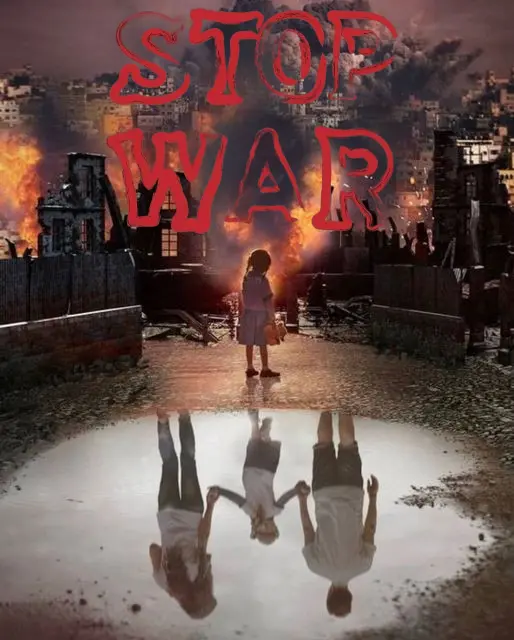
Ground War is on the Horizon: Because War Isn't Damaging the Economy, the Economy Is Waking Up War
The five-week-long US-Iran war has now gone beyond being a "tension limited to airstrikes." The Pentagon is planning weeks of ground operations. The USS Tripoli has landed in the region with 3,500 Marines. Officials speaking to the Washington Post say that Special Forces and infantry units are preparing to raid the Strait of Hormuz and Harg Island, through which 90% of Iranian oil flows.
Tehran's response is clear: "If American soldiers set foot on land, we will unleash fire upon them." Parliament Speaker Ghalibaf accuses the US of "publicly discussing, secretly planning an invasion." Twelve American soldiers have already been wounded in Saudi Arabia when an E-3 Sentry spy plane was shot down.
And we are still talking about "war affecting the economy."
Wrong. The economy isn't affecting war, the economy is calling for war.
The Math of the Strait of Hormuz
One-fifth of the world's oil passes through the Strait of Hormuz. The strait is effectively closed, tankers cannot pass through, and the Riyadh-Washington line is on edge. By allowing 20 Pakistani-flagged ships "two passages per day," Iran is essentially saying: I'm holding the valve.
The first point of the US's 15-point "ceasefire plan" is the opening of the strait. This is no coincidence. Because the issue is not the nuclear program, the issue is the flow of gas. Seizing Harg Island is described as "cutting off Iran's economic lifeline." In other words, the target is not the regime, but the income.
Trump is threatening to strike Iranian energy infrastructure if the strait is not opened. Tehran, on the other hand, says it will "boldly strike" US bases in the Gulf. Two missiles that hit the Ras Laffan gas facility in Qatar caused "limited damage" but created a shockwave in the markets. The message was received: If the next missile hits the desalination plant, the Gulf will run out of water.
The Price of the “Final Blow”
The White House is marketing the ground operation as the “final blow.” Not a full-scale invasion, but “just raids lasting weeks.” How wonderful. Iraq and Afghanistan also started as “weeks,” and as the Turkish Foreign Ministry reminded us, the result was “more radicalization and terrorism.”
The Pentagon says it has to “offer the commander-in-chief maximum options.” Translation: There’s a war on the table, and we’re preparing the menu. Rubio says “we’re not currently deployed for a ground operation,” but adds in the same sentence, “objectives can be achieved without them.” So the door is ajar.
Meanwhile, 13 US soldiers have been killed and more than 300 wounded in the last month. Trump was saying as early as March 20th, “I’m not sending troops, it’s a waste of time.” He changed his mind when Iran rejected the offers. So what was considered a “waste of time” was actually a “bargaining chip.”
The Real Front: The Balance Sheets
Iran says it will make US soldiers “food for sharks in the Persian Gulf.” Ghalibaf shouts, “Our missiles are in place, our resolve has increased.” This isn’t rhetoric, it’s insurance. Because Tehran knows: the US’s concern isn’t exporting democracy, but supply security.
War ruins the economy, yes. The stock market experienced its “worst day” of the war on March 27th. But let’s be more honest: war comes because the economy is ruined. Inflation, energy prices, the election cycle… An “external enemy” is always the cleanest way to make the domestic price be paid.
And the most painful part is this: Egypt, Pakistan, Saudi Arabia, and Turkey are talking about peace in Islamabad. Neither the US nor Iran is at the table. Because both sides actually want Harg Island, not the table. One to cut it off, the other to protect it.
The possibility of a ground war is no longer a “threat,” but an “option.” And this option is triggered not by ideology, but by a valve.
Ground War is on the Horizon: Because War Isn't Damaging the Economy, the Economy Is Waking Up War
The five-week-long US-Iran war has now gone beyond being a "tension limited to airstrikes." The Pentagon is planning weeks of ground operations. The USS Tripoli has landed in the region with 3,500 Marines. Officials speaking to the Washington Post say that Special Forces and infantry units are preparing to raid the Strait of Hormuz and Harg Island, through which 90% of Iranian oil flows.
Tehran's response is clear: "If American soldiers set foot on land, we will unleash fire upon them." Parliament Speaker Ghalibaf accuses the US of "publicly discussing, secretly planning an invasion." Twelve American soldiers have already been wounded in Saudi Arabia when an E-3 Sentry spy plane was shot down.
And we are still talking about "war affecting the economy."
Wrong. The economy isn't affecting war, the economy is calling for war.
The Math of the Strait of Hormuz
One-fifth of the world's oil passes through the Strait of Hormuz. The strait is effectively closed, tankers cannot pass through, and the Riyadh-Washington line is on edge. By allowing 20 Pakistani-flagged ships "two passages per day," Iran is essentially saying: I'm holding the valve.
The first point of the US's 15-point "ceasefire plan" is the opening of the strait. This is no coincidence. Because the issue is not the nuclear program, the issue is the flow of gas. Seizing Harg Island is described as "cutting off Iran's economic lifeline." In other words, the target is not the regime, but the income.
Trump is threatening to strike Iranian energy infrastructure if the strait is not opened. Tehran, on the other hand, says it will "boldly strike" US bases in the Gulf. Two missiles that hit the Ras Laffan gas facility in Qatar caused "limited damage" but created a shockwave in the markets. The message was received: If the next missile hits the desalination plant, the Gulf will run out of water.
The Price of the “Final Blow”
The White House is marketing the ground operation as the “final blow.” Not a full-scale invasion, but “just raids lasting weeks.” How wonderful. Iraq and Afghanistan also started as “weeks,” and as the Turkish Foreign Ministry reminded us, the result was “more radicalization and terrorism.”
The Pentagon says it has to “offer the commander-in-chief maximum options.” Translation: There’s a war on the table, and we’re preparing the menu. Rubio says “we’re not currently deployed for a ground operation,” but adds in the same sentence, “objectives can be achieved without them.” So the door is ajar.
Meanwhile, 13 US soldiers have been killed and more than 300 wounded in the last month. Trump was saying as early as March 20th, “I’m not sending troops, it’s a waste of time.” He changed his mind when Iran rejected the offers. So what was considered a “waste of time” was actually a “bargaining chip.”
The Real Front: The Balance Sheets
Iran says it will make US soldiers “food for sharks in the Persian Gulf.” Ghalibaf shouts, “Our missiles are in place, our resolve has increased.” This isn’t rhetoric, it’s insurance. Because Tehran knows: the US’s concern isn’t exporting democracy, but supply security.
War ruins the economy, yes. The stock market experienced its “worst day” of the war on March 27th. But let’s be more honest: war comes because the economy is ruined. Inflation, energy prices, the election cycle… An “external enemy” is always the cleanest way to make the domestic price be paid.
And the most painful part is this: Egypt, Pakistan, Saudi Arabia, and Turkey are talking about peace in Islamabad. Neither the US nor Iran is at the table. Because both sides actually want Harg Island, not the table. One to cut it off, the other to protect it.
The possibility of a ground war is no longer a “threat,” but an “option.” And this option is triggered not by ideology, but by a valve.





 :
: